
Part of our Meta Ads Platform guide series.
Attribution is where Meta reporting, site analytics, and revenue data often disagree. The right tool helps reconcile those gaps by connecting ad clicks and views to on-site behavior, purchases, and longer-term value. This guide focuses on tools that can improve decision-making for Meta campaigns without relying on guesswork, especially when privacy changes and tracking limits blur the path from impression to sale. The ranking below highlights different approaches—server-side tracking, blended attribution, incrementality testing, and LTV reporting—so teams can match a tool to their stack, budget expectations, and reporting needs.
Comparison table
| Rank | Tool | Best for | Standout feature | Pricing from | Free option | Rating |
|---|---|---|---|---|---|---|
| 1 | AdBid - Facebook Ads Attribution [1] | Teams syncing Meta Ads performance with revenue and LTV signals | Live sync of ad accounts and attribution data | $42 | — | 73/100 |
| 2 | Triplewhale | Ecommerce brands needing clearer Meta performance with blended ROAS and survey-backed attribution | Triple Pixel cross-device, cross-platform tracking | $1 | Free plan | 71/100 |
| 3 | Northbeam | Mid-market and enterprise brands with significant ad spend | Multi-touch attribution (MTA) | $1,000 per month (US) | No free plan | 71/100 |
| 4 | Hyros | Advertisers who want attribution priced by tracked revenue, not ad spend | Pricing based on monthly tracked revenue | $69 /month | — | 70/100 |
| 5 | Polaranalytics | Shopify brands that want clearer Meta conversion signals and unified dashboards | Server-side tracking with Meta CAPI enhancements | $2,770 per month (US) | — | 70/100 |
| 6 | Rockerbox | Mid-market and enterprise marketers who need unified measurement across Meta and other paid channels | Unifies multi-touch attribution, MMM, and incrementality testing | $2,000 per month (US) | — | 70/100 |
| 7 | Measured | Teams that want causal lift testing alongside cross-channel reporting for Meta campaigns | AI-powered media plan optimization to maximize ROAS | $0.054 (US) | — | 69/100 |
| 8 | Wickedreports | eCommerce and subscription brands that need LTV-based attribution beyond Meta’s native reporting | FunnelVision pre-built performance views | $199 per month | Free tools available | 69/100 |
| 9 | Getelevar [2] | E-commerce teams that need more complete Meta conversion data via server-side tracking | Server-side tracking with API framework access | $0.04 | Free trial | 69/100 |
| 10 | Redtrack | Media buyers, DTC brands, and agencies needing ad-level measurement and conversion signal feedback | Ad-level tracking and attribution measurement | $1,999 per month | Free trial | 68/100 |
How we evaluated the tools
Each product is scored using a weighted rubric designed for Meta-focused measurement. Task fit (30%) checks how well it supports common attribution workflows for Meta campaigns. Features and automation (20%) cover tracking options, rules, and reporting depth. Ease of use (15%) reflects setup, learning curve, and day-to-day navigation. Integrations and workflow (15%) assess connections to ecommerce, CRMs, and ad platforms. Value and pricing transparency (10%) consider clarity and predictability. Limits, support, and transparency (10%) review constraints, documentation, and vendor communication.
- Source basis: checks start with adbid.me [1] and continue through every linked official product page.
Scores are editorial assessments on a 100-point scale rather than customer ratings. Product pages supply the feature and access facts, and the same weighted rubric applies to every entry.
The order reflects fit for this comparison, not market share or brand familiarity. Each product links back to an official source so readers can verify current details.
1. AdBid
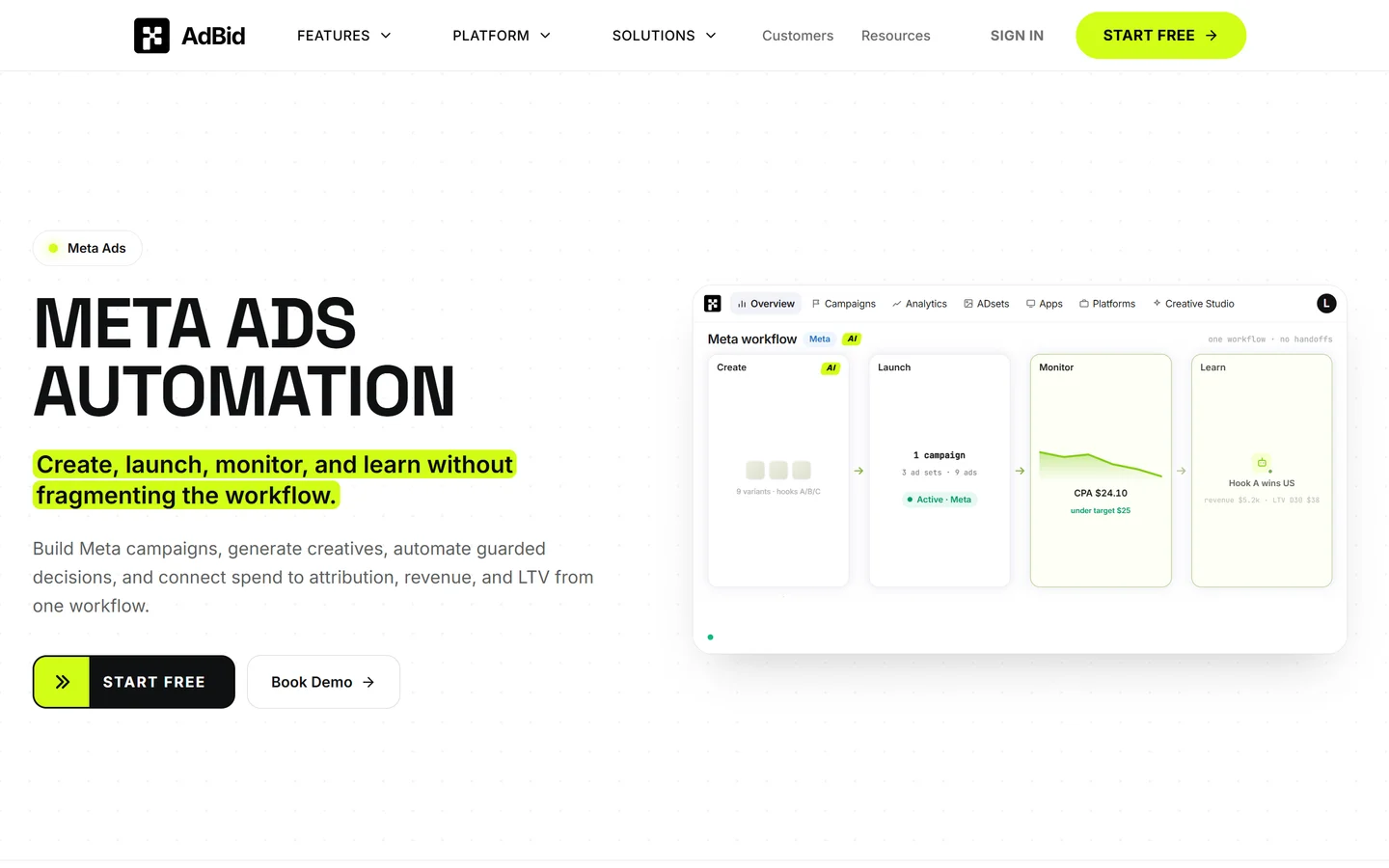
Best for: Teams syncing Meta Ads performance with revenue and LTV signals.
AdBid
Facebook Ads Attribution unifies Meta Ads, attribution, analytics, and warehouse revenue in one shared operating context, with live sync across connected accounts.
It’s built to help buyers connect campaign decisions to downstream value, not just on-platform metrics.
Features and trade-offs
Key features
- Live sync of ad accounts and attribution data.
- Warehouse revenue included in reporting context.
- CPA, budget, approvals, and stop-loss rules.
- Cross-account publishing and monitoring workflows.
Set CPA targets, budgets, markets, approvals, and stop-loss rules once, then publish clean campaign structures to every connected ad account. Ongoing monitoring pauses weak combinations before budget leaks and scales winners inside your guardrails, closing the loop with revenue and LTV.
Why it ranks here
Strong cross-account sync plus revenue/LTV feedback makes it a practical facebook ads attribution tool for performance teams managing spend at scale.
Pros
- Connects campaign decisions to revenue and LTV.
- Automates pausing weak combinations before budget leaks.
- Publishes to every connected ad account at once.
Limitations
- Starting plan price is $42, with limited pricing detail.
- Creative generation focus may be unnecessary for some teams.
Pricing and verdict
Verdict: AdBid fits marketers who want attribution tied to revenue outcomes and rule-based control across multiple Meta accounts, with live syncing baked in.
2. Triplewhale

Best for: Ecommerce brands needing clearer Meta performance with blended ROAS and survey-backed attribution.
Triplewhale pulls paid, owned, subscription, and organic performance into one real-time view, reducing tab-hopping when diagnosing Meta spend. Triple Pixel adds cross-device tracking plus first- and last-click models from day one for cleaner readouts.
Key features
Triple Pixel cross-device, cross-platform tracking; First- and last-click attribution from day one.
Also documented: Built-in post-purchase survey for buyer feedback.
Built-in post-purchase surveys capture what actually led to a sale, complementing pixel-based tracking. When teams need a facebook ads attribution tool that also supports no-code dashboards, custom metrics, and a SQL editor, Triplewhale scales into multi-touch attribution.
Triplewhale — why it ranks here
Strong attribution foundation with Triple Pixel and surveys, plus flexible reporting; pricing transparency is weaker as advanced tiers require walkthroughs.
Strengths: Blended ROAS and real-time business overview; Multi-touch attribution available on higher plans; Push first-party signals back to key platforms.
Limitations: Advanced plans are expensive for smaller brands; Some tiers emphasize booking walkthroughs to proceed.
Verdict: A solid pick for scaling ecommerce teams that want dependable tracking plus survey context, but budget carefully for higher-tier attribution and automation.
3. Northbeam
- Best for: Mid-market and enterprise brands with significant ad spend.
Northbeam delivers multi-touch attribution and deterministic views, providing insights into ad performance. It integrates directly with Shopify, supporting broad data analysis for e-commerce businesses. This makes it most relevant for mid-market and enterprise brands with significant ad spend.
Key features
- Deterministic views for routine facebook ads attribution workflow work.
- Creative analytics (higher tiers).
Its pricing structure scales with data volume and ad spend, catering to larger organizations. Northbeam offers solutions for brands needing detailed creative analytics and API access.
Quick assessment
Strongest points: dependable multi-touch attribution; direct Shopify integration; Advanced creative analytics available.
Main limitations: High starting price point; No free trial offered.
Why it ranks here: It ranks well for its dependable multi-touch attribution and direct e-commerce integrations.
Though its premium pricing and lack of a free trial limit broader accessibility.
Starting plan: $1,000 per month — US.
Verdict: A premium choice for larger brands requiring deep attribution insights and willing to invest in a broad solution.
4. Hyros
Best for: Advertisers who want attribution priced by tracked revenue, not ad spend.
Hyros focuses on ad attribution with pricing tied to monthly tracked revenue, aimed at companies already spending on advertising. It bundles “all tracking functionalities” alongside VIP support, dedicated setup assistance, and a 1-to-1 analyst for hands-on measurement help.
Key features
Pricing based on monthly tracked revenue; VIP support included in business tiers.
Also documented: Dedicated setup assistance; 1-to-1 analyst support.
For Shopify stores, Hyros offers a lower-barrier Shopify Plan starting around $69/month covering up to $5k in tracked monthly revenue. Expect a more involved onboarding: setup can require a demo call and custom configuration, and the lowest rates typically come with annual commitments.
Hyros — why it ranks here
Strong support and analyst access help teams interpret attribution, but setup complexity and annual-billing incentives reduce accessibility for smaller advertisers.
Strengths: Revenue-based pricing fits performance-focused reporting; Hands-on support with dedicated setup assistance; 1-to-1 analyst helps troubleshoot attribution questions.
Limitations: Setup can be complex and demo-call driven; Cheapest pricing typically requires annual commitment.
- Shopify Plan: $69 /month.
Verdict: It suits scaling advertisers who value guided attribution, but it’s less friendly if you need quick, lightweight setup or month-to-month pricing.
5. Polaranalytics
- Best for: Shopify brands that want clearer Meta conversion signals and unified dashboards.
Polaranalytics is built for Shopify brands that need steadier ad measurement when browser tracking falls short. It pairs BI-style dashboards with server-side tracking enhancements for Meta, helping teams connect campaign performance to revenue with fewer blind spots.
Key features
- Server-side tracking with Meta CAPI enhancements.
- Customizable BI dashboards for performance analysis.
- 45+ Native connectors, including Klaviyo Audiences, Unlimited users, connectors, and historical data.
Beyond reporting, Polaranalytics offers 45+ native connectors and unlimited users, connectors, and historical data. It also includes Polar MCP (Marketing Coach Pro) and other AI agents aimed at analysis and media buying, plus Klaviyo Audiences and advertising signals integrations.
Why it ranks here
Strong Meta Conversion API enhancements and broad connectors, but pricing scales quickly with GMV and can be hard to justify mid-market.
Pros
- Improves Meta attribution resilience with server-side signals.
- Wide integration coverage for Shopify marketing stacks.
- Unlimited users supports cross-team reporting workflows.
Limitations
Pricing scales steeply as GMV increases.
Higher tiers can exceed typical SMB analytics budgets.
Starting plan: $2,770 per month — US.
Verdict: A solid choice for Shopify teams prioritizing Meta signal quality and unified reporting, as long as GMV-based pricing fits the budget.
6. Rockerbox
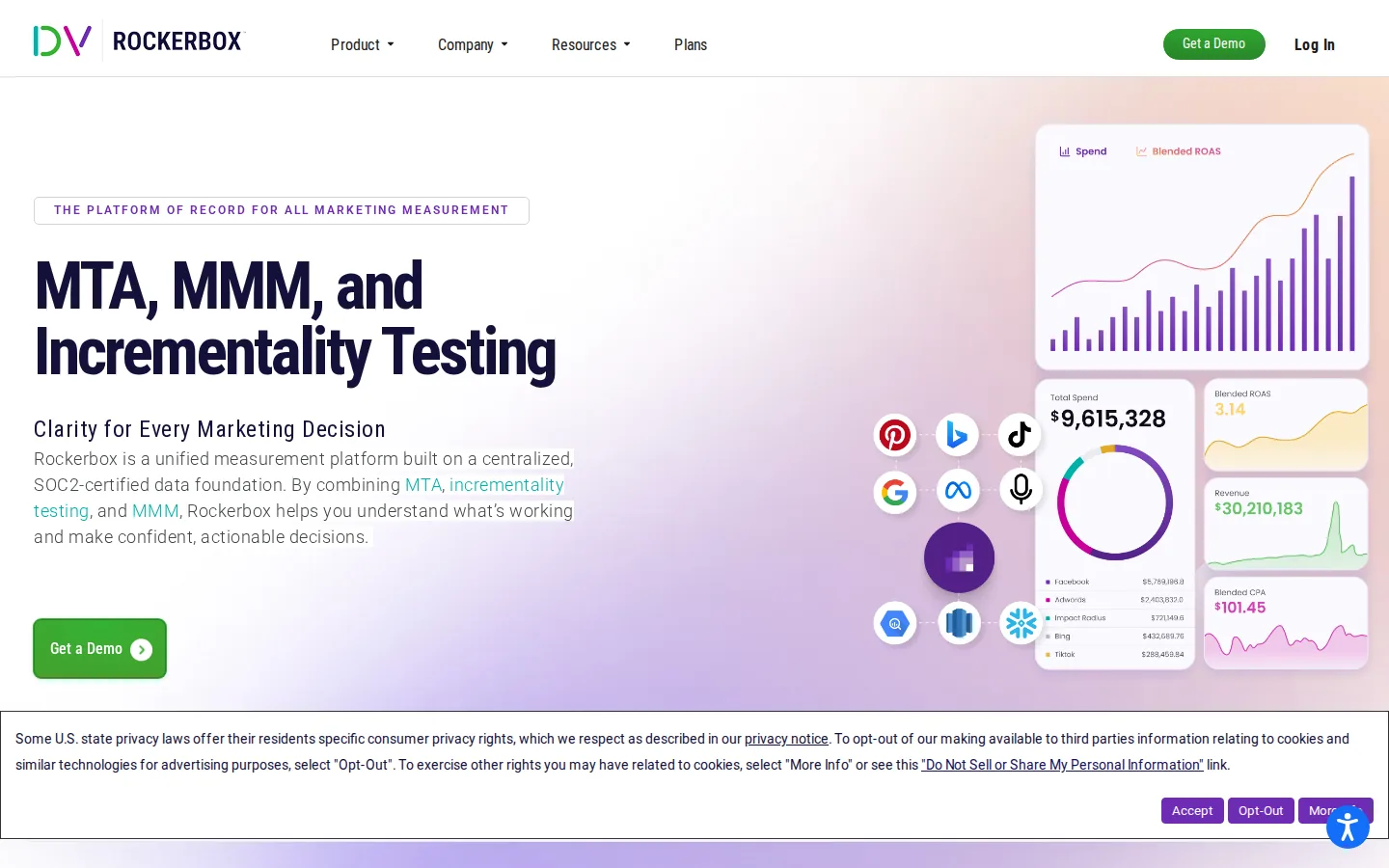
- Best for: Mid-market and enterprise marketers who need unified measurement across Meta and other paid channels.
Rockerbox is built for teams that need clearer crediting across Meta campaigns and the rest of the media mix. It brings together multi-touch attribution, marketing mix modeling, and incrementality testing to reduce blind spots in reporting.
Key features
- Unifies multi-touch attribution, MMM, and incrementality testing.
- Custom pricing based on spend and channel complexity.
- Optional implementation services with one-time fees.
- Designed for multi-channel, higher-spend marketing teams.
Pricing is typically custom and tied to marketing spend, channel complexity, and service level. A publicly listed starting point exists, but mid-market contracts are generally higher, with potential one-time implementation fees depending on setup and integrations.
Quick assessment
Strongest points: Combines three measurement methods in one platform; Fits complex, multi-channel paid media reporting needs; Service level can scale with reporting depth.
Main limitations: Pricing is not publicly standardized for most buyers; Implementation fees may add meaningful upfront cost.
Why it ranks here: Ranks well for combining MTA, MMM, and incrementality in one measurement stack.
Cost transparency and higher contracts can limit fit for smaller advertisers.
Starting plan: $2,000 per month — US.
Verdict: It suits larger Meta advertisers who need blended attribution and testing, but budget planning is harder without standardized pricing.
7. Measured
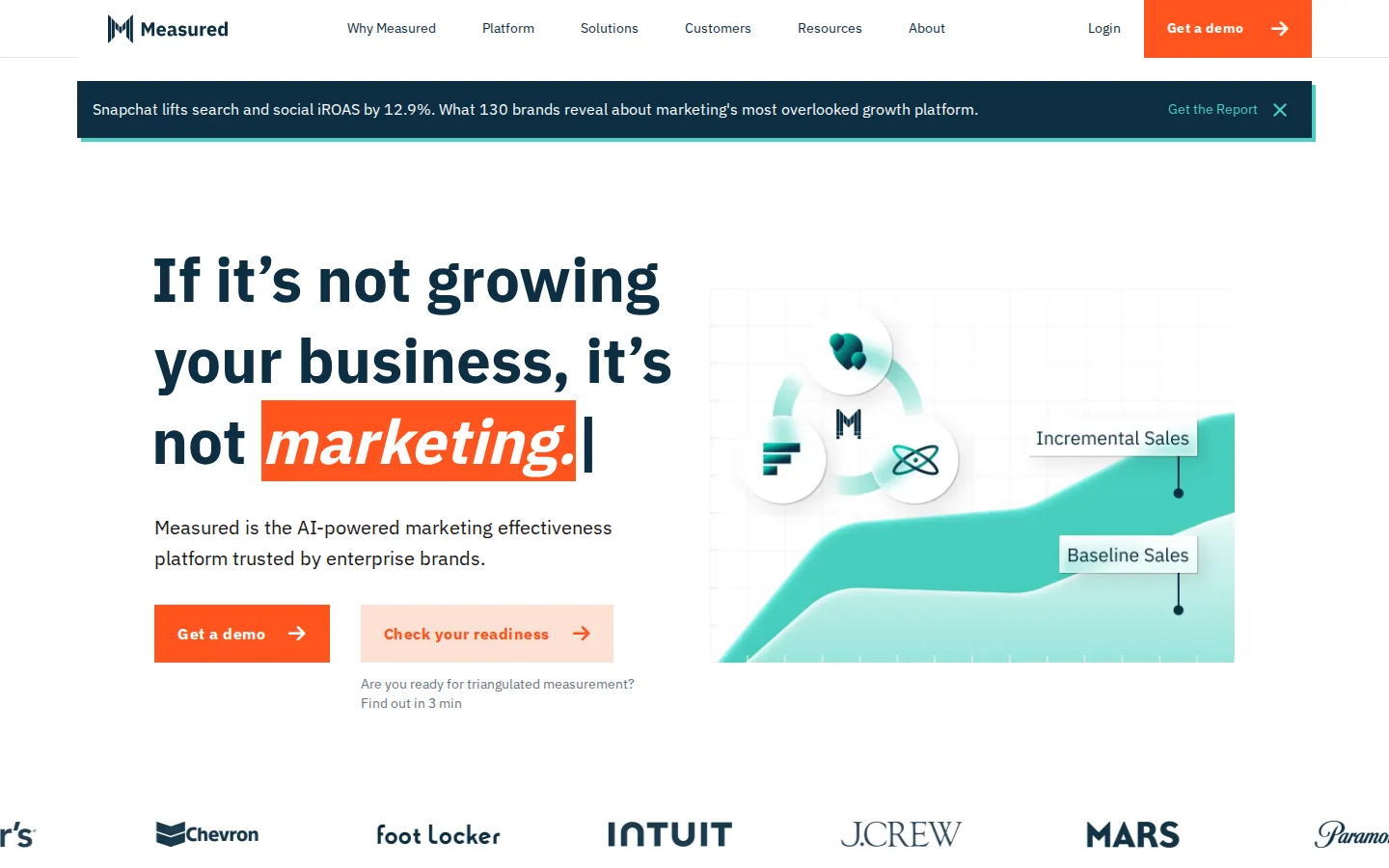
Best for: Teams that want causal lift testing alongside cross-channel reporting for Meta campaigns.
Measured positions itself as a marketing effectiveness platform that pairs causal experiments with cross-channel reporting. For Meta-heavy budgets, that emphasis helps separate incremental impact from platform-reported results and keeps attribution discussions grounded in Measured outcomes.
Key features
AI-powered media plan optimization to maximize ROAS; Causal experiments to estimate incremental impact.
Also documented: Cross-channel reporting for marketing performance.
Its Media Plan Optimizer focuses on improving ROAS by turning measurement learnings into planning decisions. Pricing is listed as a starting plan at $0.054, but broader packaging isn’t detailed here, so it may suit buyers comfortable with usage-based or custom commercial terms.
Measured — why it ranks here
Strong on incrementality and planning, but limited published detail on features, integrations, and support keeps it mid-pack for paid social attribution needs.
Strengths: Clear focus on causal measurement, not just click paths; Connects measurement insights to media planning decisions; Supports cross-channel context beyond a single platform.
Limitations: Limited public transparency on full pricing and packaging.
- Starting plan: $0.054 — US.
Verdict: It is a solid pick for incrementality-minded Meta advertisers who also want planning guidance, but shoppers may need a sales conversation for full cost clarity.
8. Wickedreports
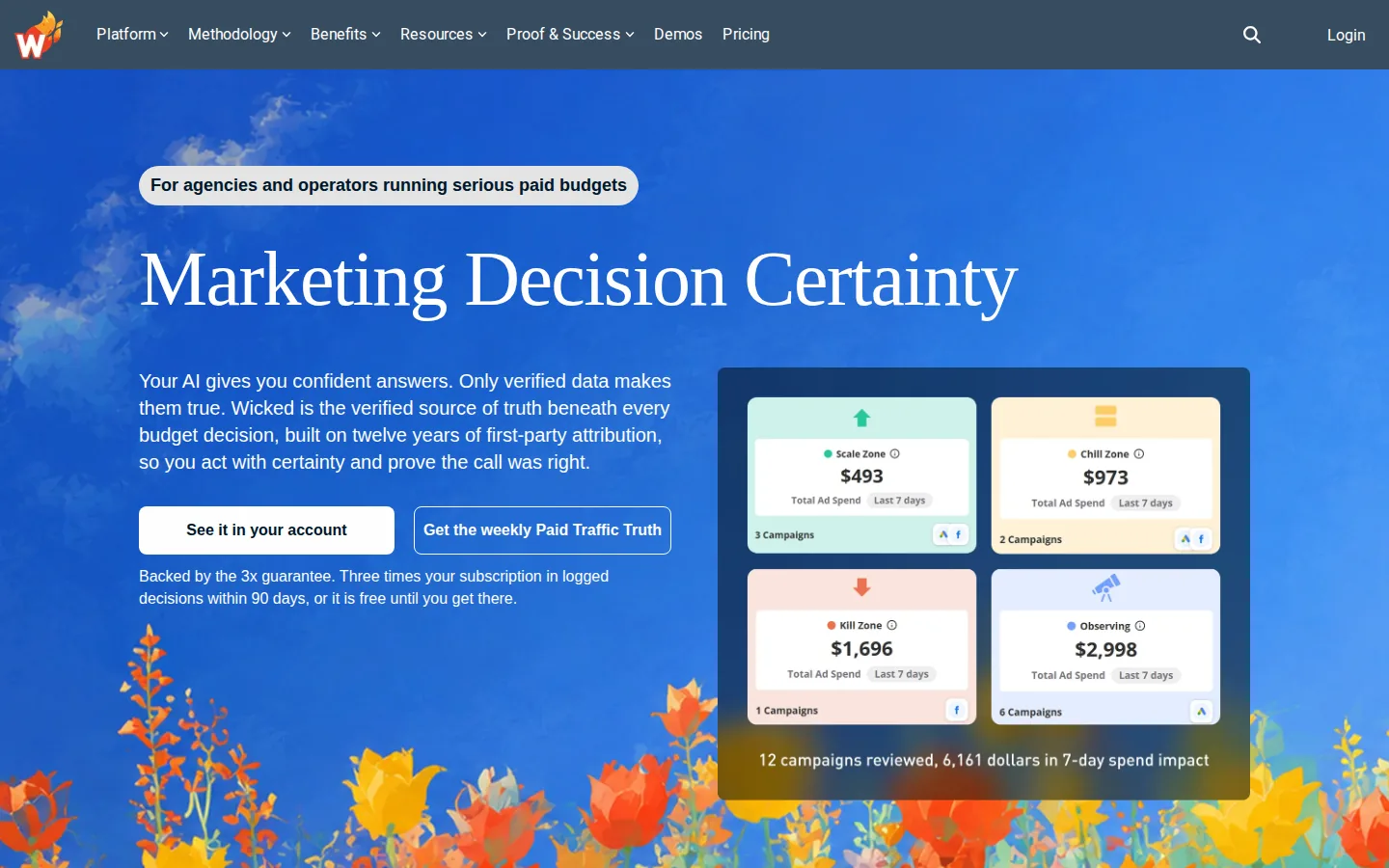
Best for: eCommerce and subscription brands that need LTV-based attribution beyond Meta’s native reporting.
Wickedreports focuses on tying Meta-driven spend to revenue outcomes, with FunnelVision views plus cohort and LTV reports for longer-term performance analysis. It also supports major ad platforms alongside standard cart and CRM integrations to unify conversion paths.
Key features
FunnelVision pre-built performance views; Cohort and LTV reports.
Also documented: Major ad platform, cart, and CRM integrations.
For teams dealing with iOS measurement gaps, Wickedreports highlights Advanced Signal with Meta CAPI and 1st-party data workflows. Higher tiers add API integrations, currency conversion, and international time-zone loading, making it easier to compare results across regions.
Wickedreports — why it ranks here
Strong LTV and cohort reporting with Meta CAPI support, but pricing starts high and advanced capabilities sit in pricier tiers.
Strengths: Clear focus on revenue and lifetime value attribution; Supports Meta CAPI for stronger signal quality; Pre-built views reduce reporting setup time.
Limitations: Starting plan pricing may be steep for small teams; Advanced features require higher-tier plans.
- Starting plan: $199 per month.
Verdict: A solid choice for Meta-centric advertisers who need LTV attribution and CAPI support, if the monthly cost fits the budget.
9. Getelevar
Official source: getelevar.com [2].
Best for: E-commerce teams that need more complete Meta conversion data via server-side tracking.
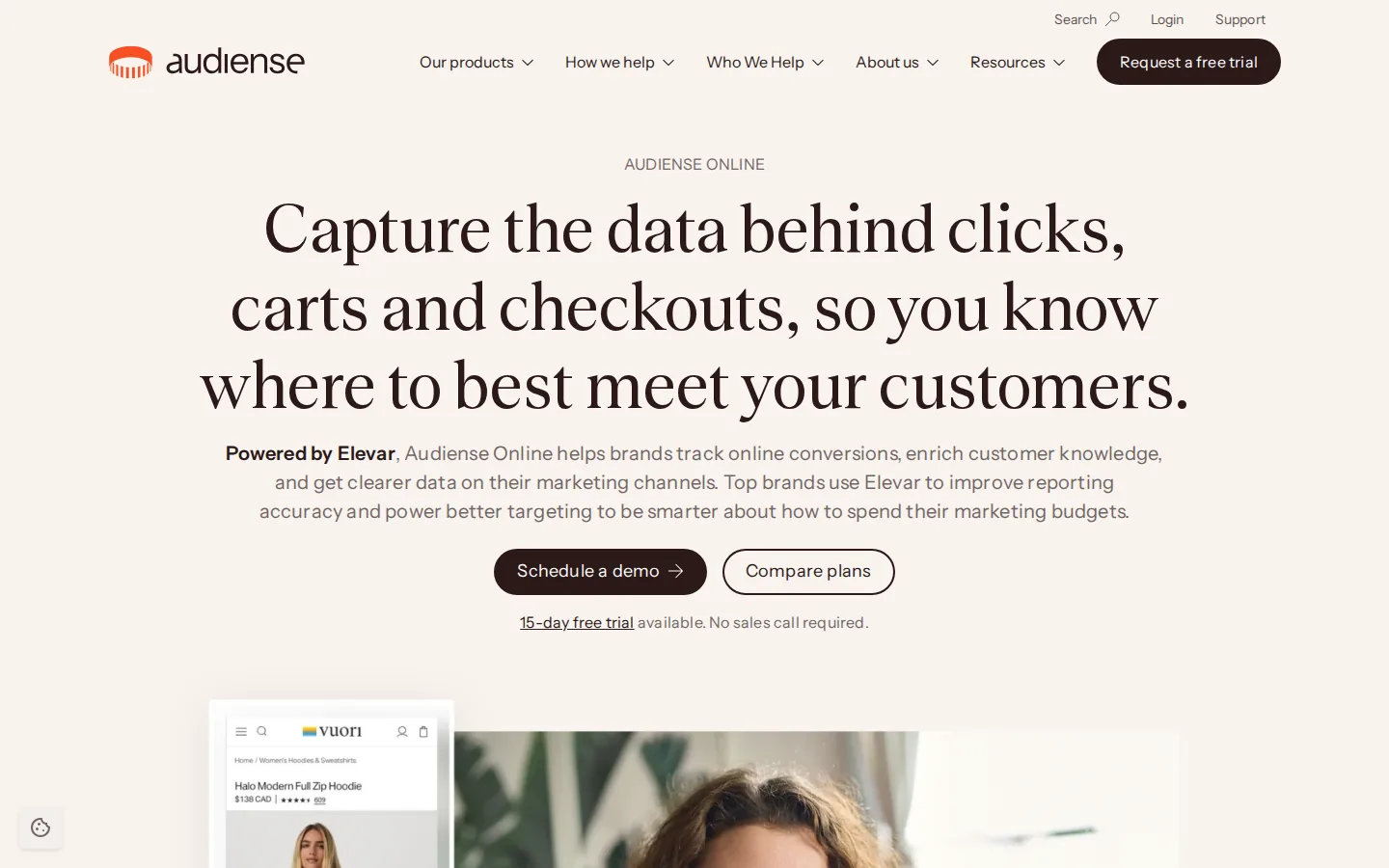
Getelevar (Elevar) focuses on online conversion tracking and targeting refinement for e-commerce, helping Meta measurement hold up when browser signals drop. Its server-side tracking aims to capture near 100% of online conversion data and preserve session context across visits.
Key features
- Server-side tracking with API framework access.
- Data layer and ecommerce event pipeline.
- Identity resolution for returning users.
- Session enrichment for better attribution signals.
Elevar also emphasizes a clean data layer and event pipeline for GTM, Shopify Web Pixel, and server-side setups. With session enrichment and identity resolution, it can improve attribution by capturing customer, marketing, cookie, and user ID signals.
Why it ranks here
Strong server-side measurement and broad destinations list, but plan details and pricing in the provided materials are inconsistent for quick comparison.
Pros
- Captures near 100% of online conversion data.
- Pushes data to multiple ad and analytics destinations.
- Supports GTM and Shopify Web Pixel workflows.
Limitations
- Pricing information appears inconsistent across sources.
Verdict: A solid pick for Meta measurement in ecommerce, especially when you need server-side conversion capture and richer session signals.
10. Redtrack
- Best for: Media buyers, DTC brands, and agencies needing ad-level measurement and conversion signal feedback.
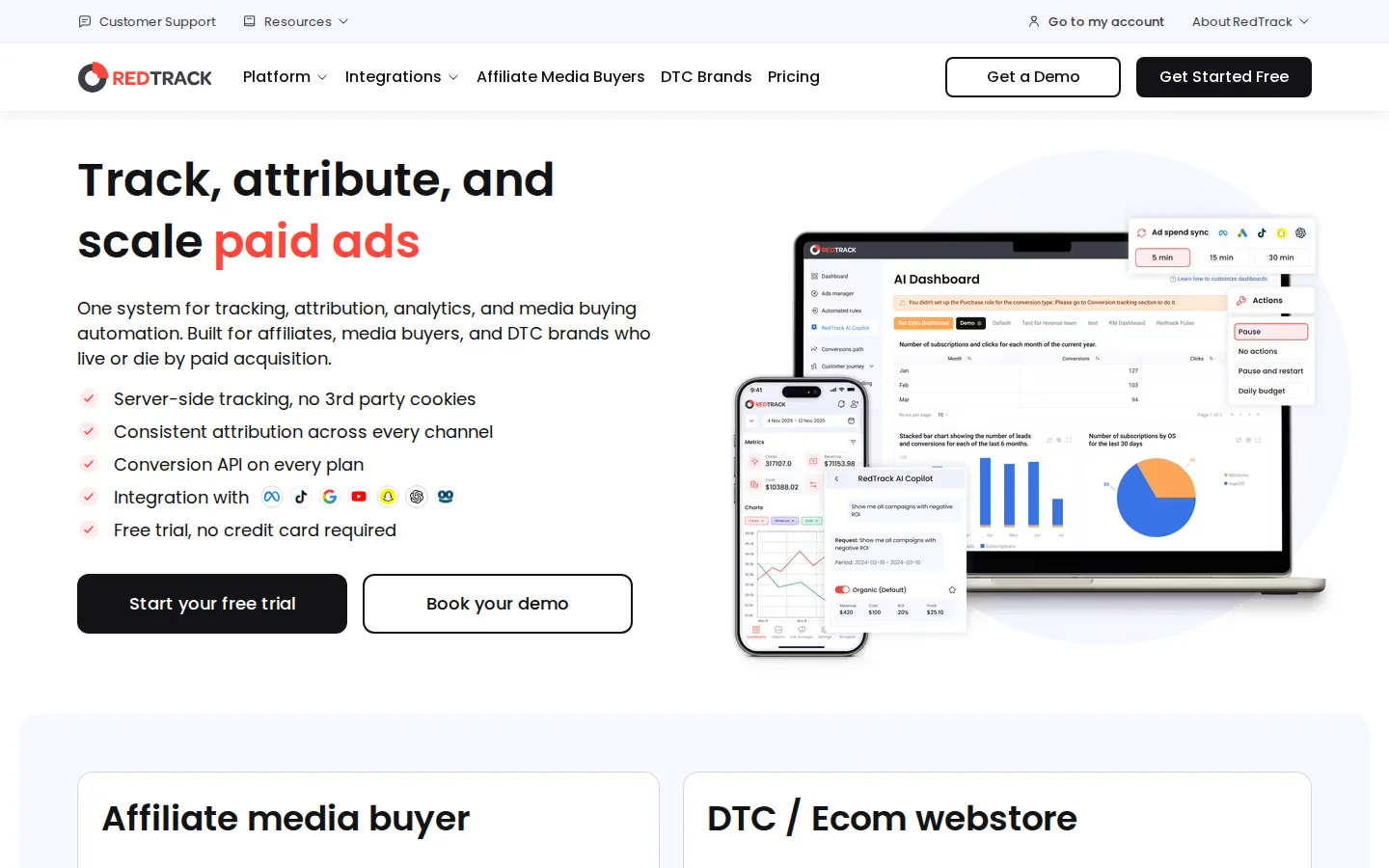
Redtrack focuses on tracking and attribution that reduces blind spots with measurement down to the ad level. It also supports sending enriched conversion data back to ad platforms via Conversion API, helping optimization systems learn from cleaner, more complete events.
Key features
- Ad-level tracking and attribution measurement.
- Conversion API for enriched conversion signals.
- Rule-based automation to protect margins.
- Ads Manager for cross-platform campaign control.
Beyond measurement, Redtrack adds analytics for sanity-checking performance numbers before scaling and automation rules designed to protect margins as spend grows. An Ads Manager layer centralizes campaign work across ad platforms, backed by reliability, security, and raw data access via APIs.
Quick assessment
Strongest points: Reliable measurement helps reduce attribution blind spots; Sends enriched conversion data back to ad platforms; Automation rules support margin protection at scale.
Main limitations: Starting plan is $1,999 per month.
Why it ranks here: Strong attribution plus Conversion API and automation, but the $1,999/month starting plan limits accessibility for smaller advertisers.
- Starting plan: $1,999 per month.
Verdict: It suits teams scaling paid social who need dependable attribution, conversion signal feedback, and automation—if the pricing fits the budget.
How to choose
Workflow fit
Start by defining what “truth” means for your team: platform-reported conversions, blended performance, or revenue and LTV tied to customers. Next, confirm the tracking method you can support—pixel-only, Conversions API, or fuller server-side setups—and whether you need identity resolution or survey inputs.
Validation
Map required integrations (Shopify, GA4, CRM, data warehouse) and decide who owns implementation. Look closely at attribution windows, model flexibility, and how the tool handles view-through credit. Finally, demand pricing clarity, data retention details, and support expectations before committing to a facebook ads attribution tool.
Final recommendations
Shortlist
- Facebook Ads Attribution when you need Meta performance synced to revenue and LTV signals across multiple accounts with rule-based control.
- Pick Triplewhale if you run ecommerce and want blended ROAS views plus survey context, while planning carefully for higher-tier attribution needs.
- Select Northbeam for larger spend and deeper cross-channel attribution requirements, especially when your team can support a more involved rollout.
Before rollout
- Consider Hyros when revenue-based pricing aligns with your model and you want guided attribution, but prefer longer-term commitments over quick trials.
- Use Getelevar when server-side conversion capture and richer session signals are the priority, and you want cleaner Meta conversion data feeding optimization.