CTR Calculator: Calculate Click-Through Rate
Use the CTR calculator to measure how often impressions become clicks. CTR helps evaluate creative attention, hook strength, placement fit, and audience match, but it should be interpreted with post-click quality and revenue outcomes.
Enter Your Numbers
CTR Formula
Click-Through Rate (CTR) measures how often people click on your ad after seeing it. A higher CTR indicates that your ad is relevant and engaging to your target audience. Because the result is a percentage, a CTR of 1.5% means roughly 15 clicks for every 1,000 impressions.
Example: If your ad receives 150 clicks from 10,000 impressions, your CTR is 1.5% (150 / 10,000 × 100).
CTR Benchmarks by Platform
| Platform | Avg. CTR | Your Status |
|---|---|---|
| 🔍Google Search Ads | 3.17% | |
| 🖼️Google Display Ads | 0.46% | |
| 📘Facebook Ads (Feed) | 1.11% | |
| 📷Instagram Ads (Feed) | 0.88% | |
| 🎵TikTok Ads | 1.5% | |
| 💼LinkedIn Ads | 0.44% | |
| 🐦Twitter/X Ads | 0.86% | |
| 📺YouTube Ads | 0.65% |
* Benchmarks are industry averages and may vary by campaign type, targeting, and creative quality.
How to Improve Your CTR
What is a CTR calculator?
A CTR calculator divides clicks by impressions and returns the result as a percentage.
- 500 clicks on 25,000 impressions is a CTR of 2%
- CTR explains attention, not revenue
- A strong CTR does not prove the traffic was valuable
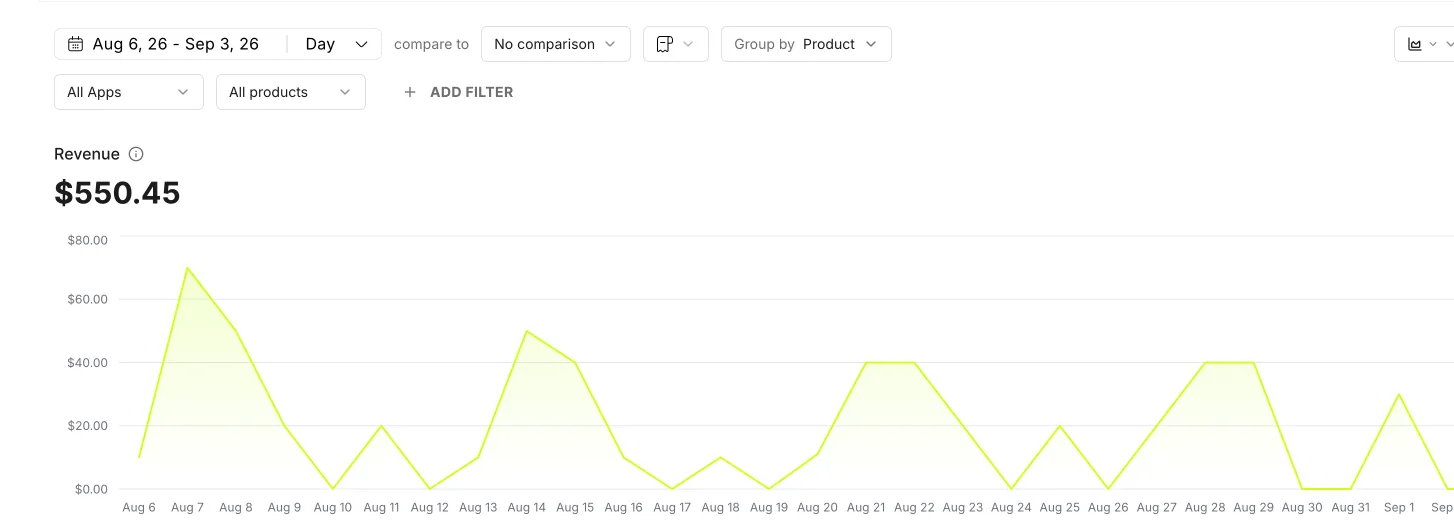
- In AdBid it sits next to conversion rate, ROAS and LTV
Attention only counts if it converts
A CTR calculator explains attention, not revenue
A strong CTR means the ad earned a click, but it does not prove the traffic was valuable.
- Compare creative families and hooks.
- Watch CTR changes by placement and audience.
- Connect click quality to downstream events.

Connect attention to the next event
A click only matters when the revenue signal confirms it was useful.
- Review landing-page and conversion performance.
- Separate curiosity clicks from qualified traffic.
- Keep creative learning connected to revenue outcomes.
Get started in 5 steps
Enter the campaign inputs
Spend, impressions, clicks or revenue — the calculator solves for the rest.
Read the result beside its neighbours
A metric on its own misleads; pair it with CTR, conversion rate and revenue.
Check it against the benchmarks
Industry averages on the page are orientation, not targets.
Connect an account for live numbers
The same metrics, computed from real spend and revenue instead of estimates.
Let attribution replace the estimates
ROAS, CPA and LTV are read against real paying users from then on.
Common questions about CTR and how to calculate it
Open the next layer



Guides & resources




Turn creative attention into creative learning.
AdBid helps teams generate, launch, and evaluate creative tests without losing the performance context.