
Server-side measurement helps teams keep conversion and event data consistent when browsers, ad blockers, and privacy controls reduce client-side reliability. This article explains how to compare server-side tracking tools with an editorial rubric focused on practical outcomes: cleaner signals, clearer governance, and fewer gaps between marketing platforms and analytics. The goal is not to crown a “best for everyone” option, but to map common needs—hosted tagging, first‑party routing, Shopify-focused setups, or full event pipelines—to the tools that fit them. Use the sections below to understand what matters, what to verify, and how to shortlist confidently.
Comparison table
| Rank | Tool | Best for | Key capabilities | Limitations | Access/source status |
|---|---|---|---|---|---|
| 1 | AdBid - Server-Side Tracking Tools [1] | Teams that want attribution embedded in campaign and creative decisions | AdBid connects spend, clicks, installs, events, revenue; AdBid surfaces optimization logs beside performance numbers | May not cover complex MMP requirements | Official source: adbid.me [1] |
| 2 | Stape [2] | Agencies and businesses that want server-side tagging without heavy infrastructure work | Stape Server GTM Hosting for sGTM; Meta Signals Gateway for data routing | Product lineup can feel fragmented at first | Official source: Stape.io [2] |
| 3 | Addingwell [3] | Marketing teams that need more complete conversion data despite ad blockers and browser restrictions | Addingwell runs on sGTM server-side tagging; Addingwell pairs tagging with Didomi consent infrastructure | Marketing-centric positioning may feel narrow for product analytics | Official source: Addingwell.com [3] |
| 4 | Jentis [4] | Teams that want governed first-party data routing with privacy controls | Jentis provides server-side tag management at scale; Jentis supports persistent server-side data capture | Marketing claims can feel hard to quantify | Official source: Jentis.com [4] |
| 5 | Taggrs [5] | Agencies and marketing teams standardizing first‑party tracking across clients | Taggrs routes events via your subdomain; Tracking checker audits pixels, cookies, consent | Some support availability is limited to working hours | Official source: Taggrs.io [5] |
| 6 | Analyzify [6] | Shopify merchants who need dependable conversion measurement across ad platforms | Analyzify delivers server-side tracking for GA4 and ads; Data layer exposes 150+ tracking parameters | Shopify-only positioning limits non-Shopify use cases | Official source: Analyzify.com [6] |
| 7 | Customerlabs [7] | Teams needing privacy-safe first‑party data, identity resolution, and ad-platform signal activation | Customerlabs resolves identity across browser, CRM, ad clicks; First-party domain tracking via server-side cookies | Broader platform scope may increase implementation complexity | Official source: Customerlabs.com [7] |
| 8 | Littledata [8] | Shopify brands wanting reliable ad and analytics attribution across Google, Meta, and email | Littledata maintains server-side conversion tracking; Littledata unifies browser and server events | Primarily geared toward Shopify ecosystems | Official source: Littledata.io [8] |
| 9 | Snowplow [9] | teams prioritizing a focused server side tracking workflow | Snowplow keeps the documented server side tracking workflow focused; Snowplow provides official access for direct workflow review | Broader integration details for Snowplow may require separate review | Official source: Snowplow.io [9] |
| 10 | Rudderstack [10] | Teams that want a unified event layer across web, mobile, and backend sources | Rudderstack collects events from web, mobile, backend; Transformations reshape data in flight | Agent-focused workflows may add conceptual overhead | Official source: Rudderstack.com [10] |
How we evaluated the tools
Each product is scored using a weighted rubric: task fit (30%) for how well it matches common tracking jobs; features and automation (20%) for event handling, routing, and controls; ease of setup and use (15%) for implementation and ongoing management; integrations and workflow (15%) for destinations, connectors, and team handoffs; access transparency (10%) for clarity on data handling and permissions; and limits, support, and transparency (10%) for documented constraints, reliability signals, and help resources. Scores reflect documented capabilities and clarity, not hype.
- Source basis: checks start with adbid.me [1] and continue through every linked official product page.
Scores are editorial assessments on a 100-point scale rather than customer ratings. Product pages supply the feature and access facts, and the same weighted rubric applies to every entry.
The order reflects fit for this comparison, not market share or brand familiarity. Each product links back to an official source so readers can verify current details.
1. AdBid
- Server side tracking tools.
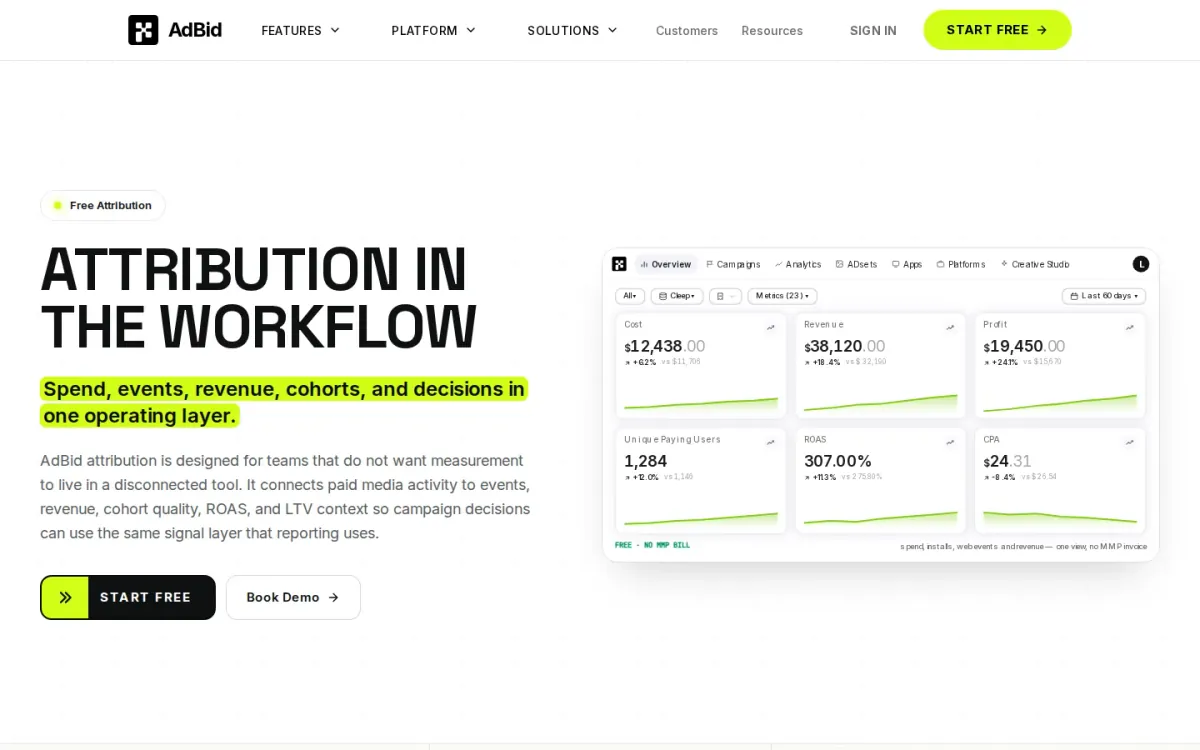
Best for: Teams that want attribution embedded in campaign and creative decisions.
AdBid brings attribution alongside campaign structure, creative context, events, revenue, and optimization logs, so performance shifts can be read in context. By pairing numbers with the change that preceded them, teams spend less time reconciling reports and more time acting.
Features and trade-offs
Key features
- AdBid connects spend, clicks, installs, events, revenue.
- AdBid surfaces optimization logs beside performance numbers.
- AdBid supports CAPI and server-side signals.
- AdBid monitors missing or mismatched event inputs.
Signal setup is treated as product infrastructure: event definitions, dataset setup, conversion mapping, attribution windows, and revenue fields are visible in the workflow. For server side tracking tools needs, AdBid supports CAPI and server-side signal workflows and flags missing, delayed, or mismatched inputs.
Why it ranks here
Strong workflow design ties attribution to optimization decisions, with traceable settings like windows and conversion priorities when reports disagree.
Pros
- Attribution stays tied to campaign and creative context.
- Traceable attribution windows and conversion priorities.
- Clear visibility into event and revenue inputs.
Limitations
- May not cover complex MMP requirements.
Access and verdict
Access: Current access details: adbid.me [1]. Verdict: AdBid suits growth teams that need reliable signals and attribution context to guide optimization, not just produce reports.
2. Stape
- Official source: stape.io [2].
Best for: Agencies and businesses that want server-side tagging without heavy infrastructure work.
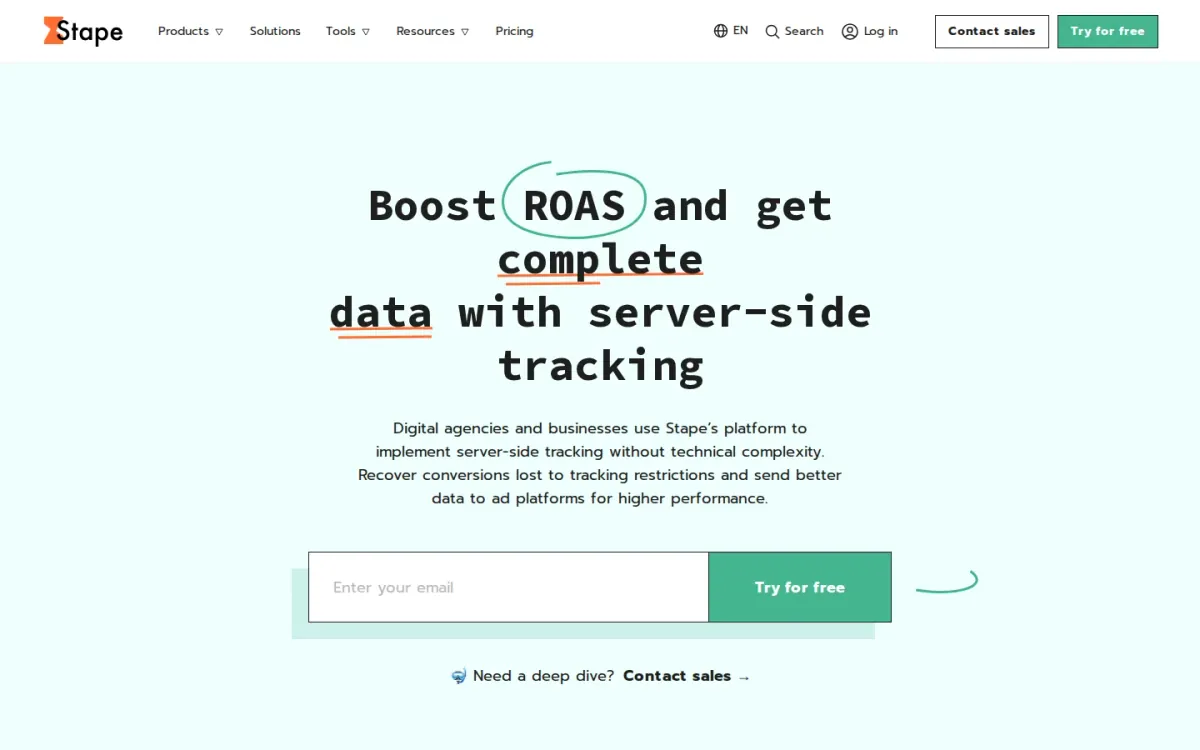
Stape helps digital agencies and businesses implement server-side tracking without technical complexity, aiming to recover conversions lost to tracking restrictions and send better data to ad platforms. It focuses on first-party data collection and delivery across platforms, with built-in security.
Key features
Stape Server GTM Hosting for sGTM; Meta Signals Gateway for data routing.
Also documented: Gateways for platform-specific server integrations; Built-in security for first-party data delivery.
Core options include Server GTM Hosting for Google Tag Manager and Meta Signals Gateway for routing data from many sources to many destinations. For single-platform needs, Stape’s Gateways emphasize no-code setup and more accurate data sent to popular ad platforms.
Stape — why it ranks here
It ranks highly for simplifying server-side tagging via hosted sGTM and gateways, balancing security, cross-platform delivery, and quick setup for teams.
Strengths: No-code setup for popular ad platforms; Reduces technical complexity for agencies; Supports cross-platform first-party data delivery.
Limitations: Product lineup can feel fragmented at first.
Access: Current access details: stape.io [2]. Verdict: It is a strong pick when you want hosted sGTM and ad-platform gateways that improve data quality with less engineering overhead.
3. Addingwell
Official source: addingwell.com [3].
Best for: Marketing teams that need more complete conversion data despite ad blockers and browser restrictions.
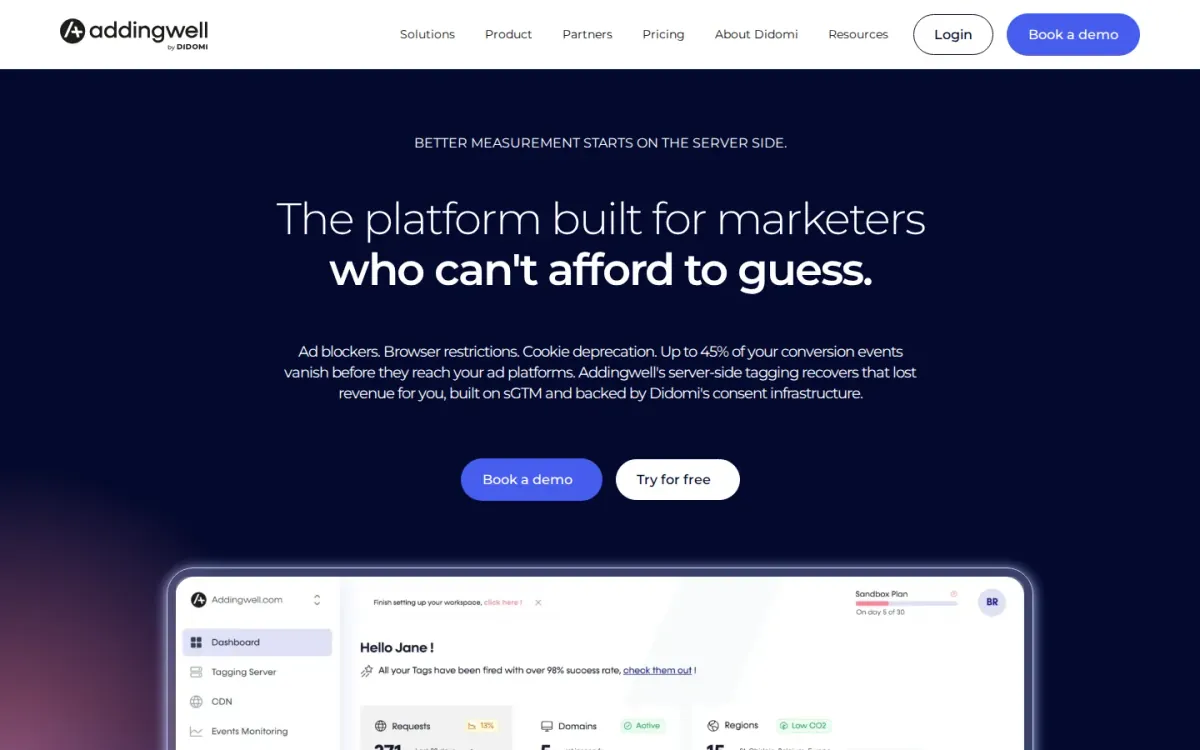
Addingwell focuses on server-side tagging built on sGTM to reduce data loss from ad blockers, restrictive browsers, and cookie deprecation. It aims to recover conversion events before they vanish on the way to ad platforms, improving measurement reliability.
Key features
- Addingwell runs on sGTM server-side tagging.
- Addingwell pairs tagging with Didomi consent infrastructure.
- Tag Health provides real-time alerts and error logs.
- Multi-region servers target 99.99% uptime.
Backed by Didomi’s consent infrastructure, Addingwell emphasizes audit-ready compliance where consent travels with the data. Multi-region hosting, monitoring, and guided setup help teams get stable collection quickly, while keeping control over what data moves and where.
Quick assessment
Strongest points: Recovers events blocked by browsers and ad blockers.
Consent travels with data for compliance workflows.
Guided setup and current documentation speed rollout.
Main limitations: Marketing-centric positioning may feel narrow for product analytics.
Advanced data-flow control can require technical coordination.
- Why it ranks here: Ranks highly for consent-backed server-side tagging, strong uptime claims, and practical monitoring, with a clear focus on recovering lost events.
Access: Current access details: addingwell.com [3]. Verdict: It is a strong pick among server side tracking tools when consent, uptime, and event recovery matter more than broad analytics features.
4. Jentis
- Official source: jentis.com [4].
Best for: Teams that want governed first-party data routing with privacy controls.
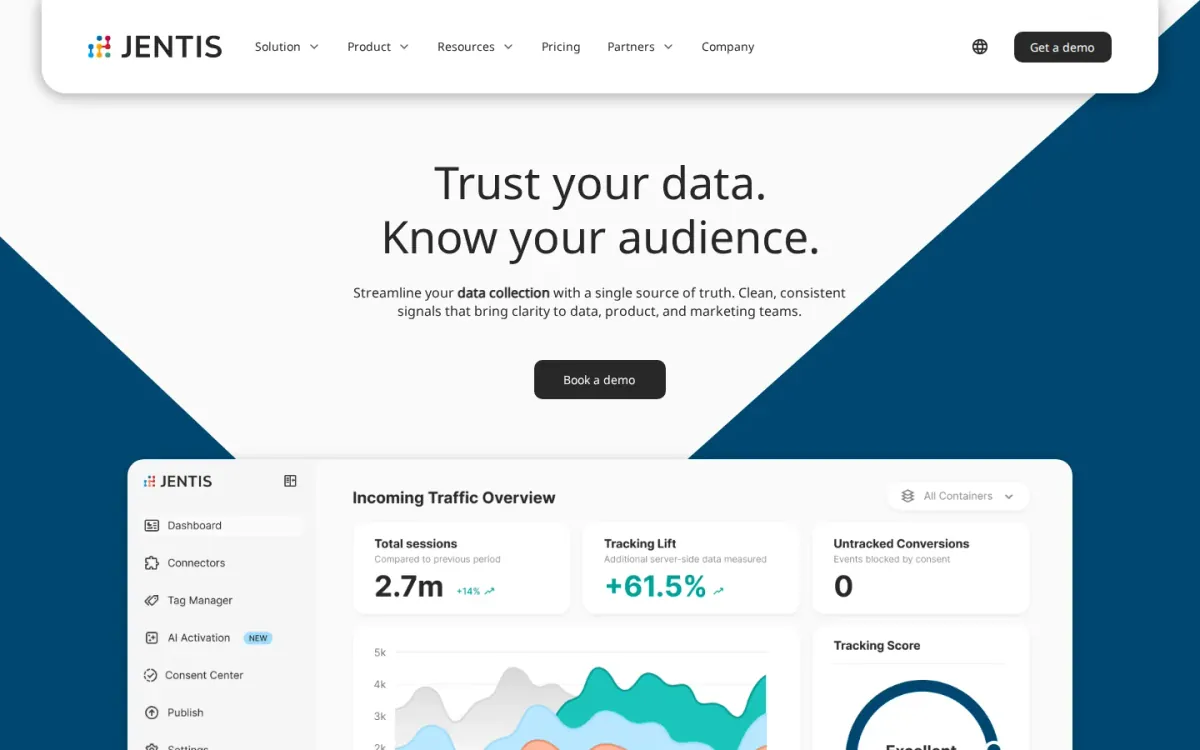
Jentis positions itself as an all-in-one server-side tagging platform that replaces messy third-party tracking with a single, compliant measurement script you control. It focuses on persistent data capture to counter ad blockers and tracking prevention across websites and apps.
Key features
Jentis provides server-side tag management at scale; Jentis supports persistent server-side data capture.
Also documented: Jentis enables server-side event routing to destinations; Jentis includes built-in privacy controls.
Beyond collection, Jentis adds data-point governance and compliance layers, then routes events to analytics, ad tech, and other destinations from one pipeline. It also supports scaling client- and server-side tagging across multiple brands and domains from one platform.
Jentis — why it ranks here
Ranked highly for combining server-side tag management, granular governance, and broad event routing, though some claims lean marketing-heavy and may need hands-on evaluation.
Strengths: Single governed pipeline for consistent numbers; Granular data-point compliance and governance controls; Counters ad blockers and tracking prevention.
Limitations: Marketing claims can feel hard to quantify.
Access: Current access details: jentis.com [4]. Verdict: It is a strong pick for privacy-minded first-party tracking and destination routing, especially when consistency across teams and domains matters.
5. Taggrs
Official source: taggrs.io [5].
Best for: Agencies and marketing teams standardizing first‑party tracking across clients.
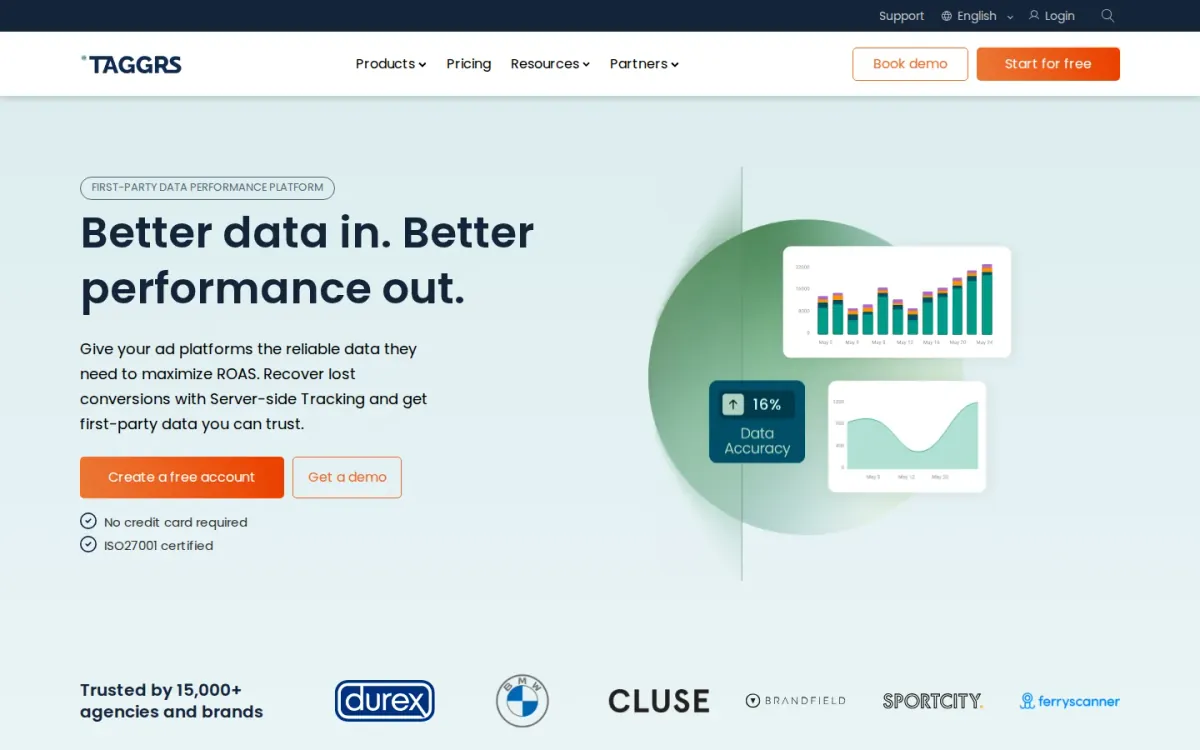
Taggrs is a first‑party data performance platform that collects, enriches, and distributes consented data through a server‑based tracking setup. It routes events via your subdomain to stay resilient to blockers and deliver cleaner signals to ad and analytics platforms.
Key features
- Taggrs routes events via your subdomain.
- Tracking checker audits pixels, cookies, consent.
- Real-time monitoring pinpoints signal loss.
- Server GTM hosting for first-party data.
The built-in tracking checker scans your site to surface pixels, server connections, cookies, and consent settings in one report, then pairs each finding with a status and step-by-step fix. Real-time monitoring helps pinpoint where data loss occurs and supports more reliable reporting.
Why it ranks here
It earns a mid-pack spot for pairing subdomain event routing and monitoring with an audit-style tracking checker, plus broad compatibility with existing CMS, CMP, and marketing stacks.
Pros
- Smooth setup with broad stack compatibility.
- Step-by-step fixes for tracking gaps.
- ISO27001-certified security and GDPR compliance focus.
Limitations
- Some support availability is limited to working hours.
Access: Current access details: taggrs.io [5]. Verdict: It suits teams that need dependable first‑party signals, practical audits, and monitoring, especially when rolling out a repeatable server-based tracking stack.
6. Analyzify
Official source: analyzify.com [6].
Best for: Shopify merchants who need dependable conversion measurement across ad platforms.
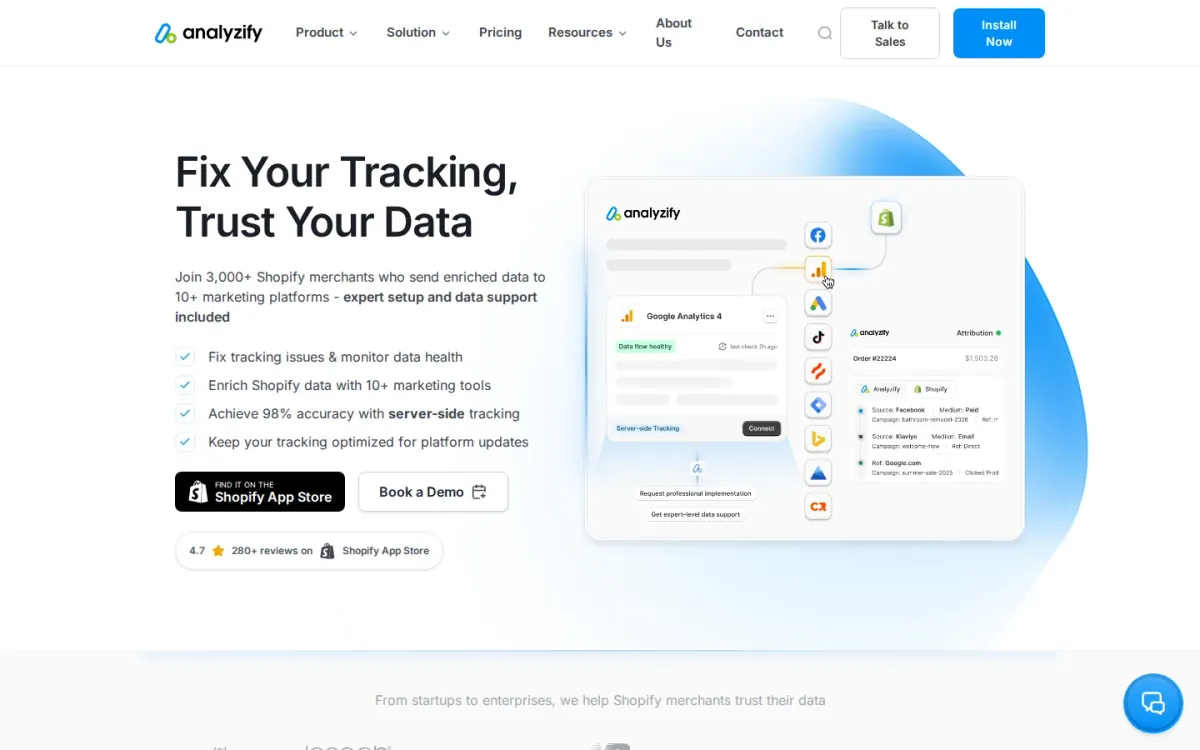
Analyzify is a Shopify-exclusive tracking and analytics app built around server-based data collection. It connects to 10+ marketing platforms and aims for up to 98% tracking accuracy, helping teams keep conversion signals consistent across GA4 and ad channels.
Key features
- Analyzify delivers server-side tracking for GA4 and ads.
- Data layer exposes 150+ tracking parameters.
- Google Consent Mode supports compliant measurement.
- Purchase attribution report tracks touchpoints to purchase.
Beyond event capture, Analyzify exposes a data layer with access to 150+ tracking parameters, supports Google Consent Mode for compliant measurement, and adds marketing analytics plus purchase attribution reporting to unify performance insights across touchpoints to purchase.
Quick assessment
Strongest points: Shopify-exclusive focus reduces configuration guesswork.
Integrations connect to 10+ marketing platforms.
High tracking accuracy claim for conversion signals.
Main limitations: Shopify-only positioning limits non-Shopify use cases.
Accuracy claims may vary by implementation details.
- Why it ranks here: Ranked #6 for combining Shopify-specific setup, broad integrations, and strong accuracy claims, while still feeling less universal than platform-agnostic tracking stacks.
Access: Current access details: analyzify.com [6]. Verdict: It suits Shopify teams prioritizing accurate, compliant conversion tracking and attribution across major ad platforms, especially when a Shopify-native workflow matters.
7. Customerlabs
- Official source: customerlabs.com [7].
Best for: Teams needing privacy-safe first‑party data, identity resolution, and ad-platform signal activation.
Customerlabs positions its 1PD Ops Platform as infrastructure for first‑party data operations: fixing tracking gaps, connecting CRM and offline truth, and sending optimization-ready signals into ad platforms. It pulls inputs from website, CRM, backend, webhooks, POS, and offline sources.
Key features
Customerlabs resolves identity across browser, CRM, ad clicks; First-party domain tracking via server-side cookies.
Also documented: Audience segmentation by lifecycle, value, CRM stage; Offline conversion tracking from CRM and in-store sales.
Identity resolution creates one profile per person across browser, CRM, and ad clicks, supported by first‑party domain tracking and server-side cookies that persist beyond ITP limits. Audience building and routing to Meta, Google, LinkedIn, and TikTok support real-time sync and offline conversion tracking.
Customerlabs — why it ranks here
Ranked for strong identity and offline-to-ads feedback loops, plus consent-aware governance; setup and breadth can feel heavier than simpler event forwarders.
Strengths: Connects online, CRM, and offline truth sources; Routes events and audiences to major ad destinations; Consent and security controls for compliant activation.
Limitations: Broader platform scope may increase implementation complexity; Signal governance features can require careful configuration.
Access: Current access details: customerlabs.com [7]. Verdict: It suits marketers who need durable first‑party signals, cleaner identity, and offline conversion feedback to improve optimization across ad platforms.
8. Littledata
- Official source: littledata.io [8].
Best for: Shopify brands wanting reliable ad and analytics attribution across Google, Meta, and email.
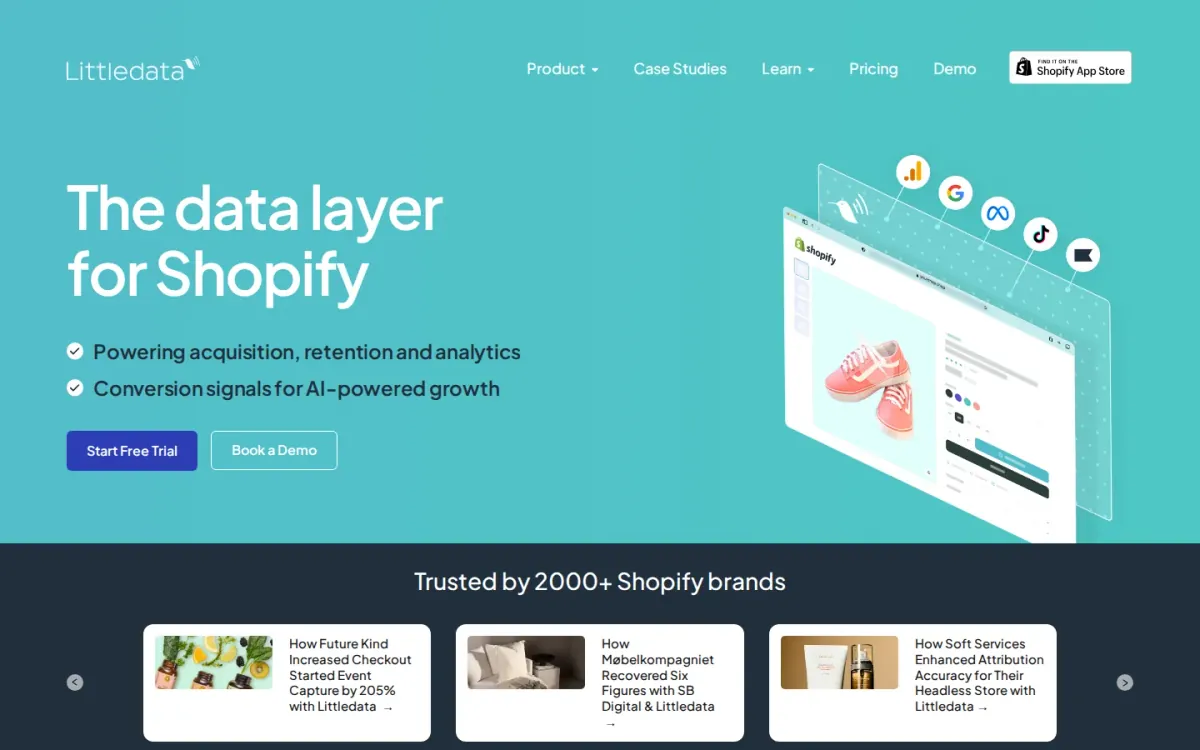
Littledata maintains server-side conversion tracking between Shopify and key marketing destinations like Google, Meta, and Klaviyo, reducing reliance on browser tags. It unifies browser and server events into a consistent data layer for cleaner acquisition and retention measurement.
Key features
Littledata maintains server-side conversion tracking; Littledata unifies browser and server events.
Also documented: Session Enrichment reconnects returning customer journeys; Persistent ID improves attribution and targeting.
Session Enrichment and Persistent ID help reconnect returning shoppers who may appear as new after iOS changes, improving attribution and retargeting. The Shopify app is positioned as quick to set up and avoids Google Tag Manager and custom code for core tracking.
Littledata — why it ranks here
Ranks well for Shopify-native integrations and identity enrichment, but its value is tightly tied to Shopify-centric workflows rather than broader, multi-platform implementations.
Strengths: Strong Shopify-to-Google and Meta conversion signals; Reduces reliance on Google Tag Manager; Supports modern Shopify architectures like Headless.
Limitations: Primarily geared toward Shopify ecosystems.
Access: Current access details: littledata.io [8]. Verdict: It is a solid pick for Shopify teams that need dependable conversion signals and cleaner attribution when browser tracking falls short.
9. Snowplow
Official source: snowplow.io [9].
Best for: teams prioritizing a focused server side tracking workflow.
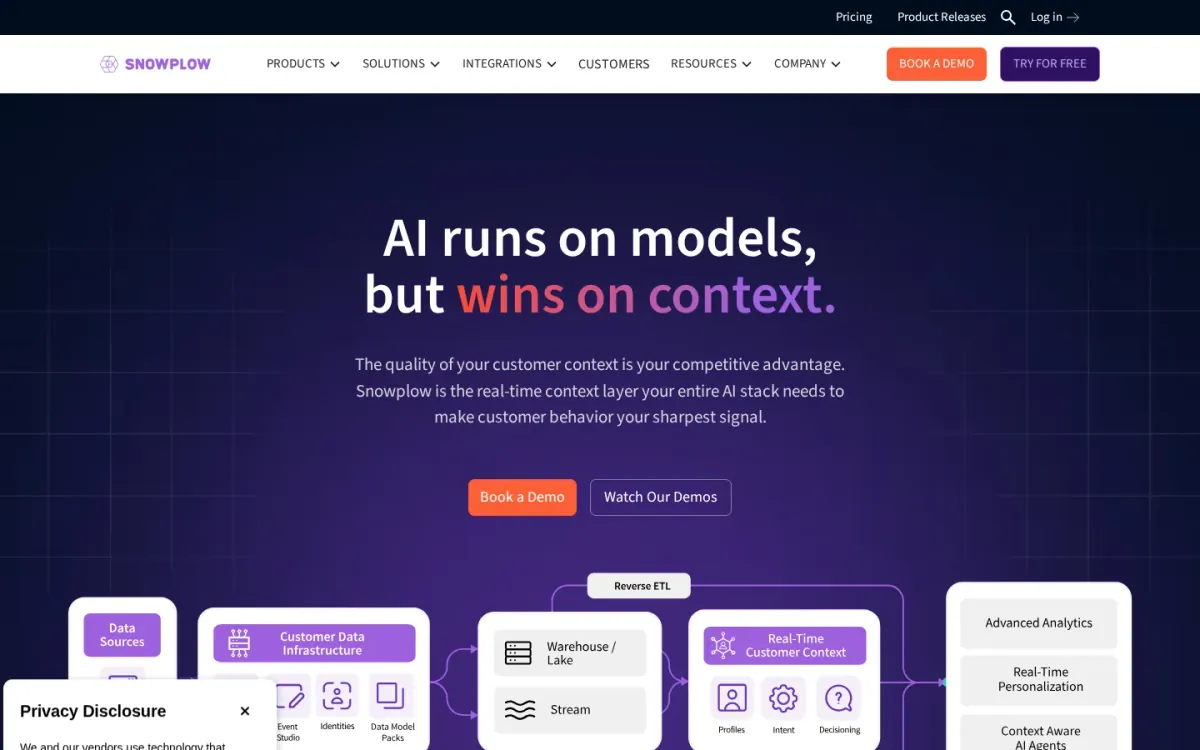
Snowplow is included because its official product materials directly address server side tracking workflow. The available information shows a defined task flow, identifiable controls, and enough product-specific context to compare its role with the other entries in this ranking.
Key features
- Snowplow keeps the documented server side tracking workflow focused.
- Snowplow provides official access for direct workflow review.
- Snowplow has a defined scope for side-by-side comparison.
Snowplow's strongest fit is a team whose primary requirement matches that documented scope. Buyers should compare the listed capabilities with the stated limitations, then confirm that access conditions and surrounding services fit their operating environment.
Why it ranks here
Its rank reflects documented task fit, usable workflow detail, access transparency, and the balance between available capabilities and stated limitations.
Pros
- Snowplow's focused scope keeps the primary job easy to identify.
- Direct access to Snowplow supports pre-adoption workflow review.
Limitations
- Broader integration details for Snowplow may require separate review.
Access: Current access details: snowplow.io [9]. Verdict: Shortlist Snowplow when its documented scope matches the core job and its limitations remain acceptable for the intended workflow.
10. Rudderstack
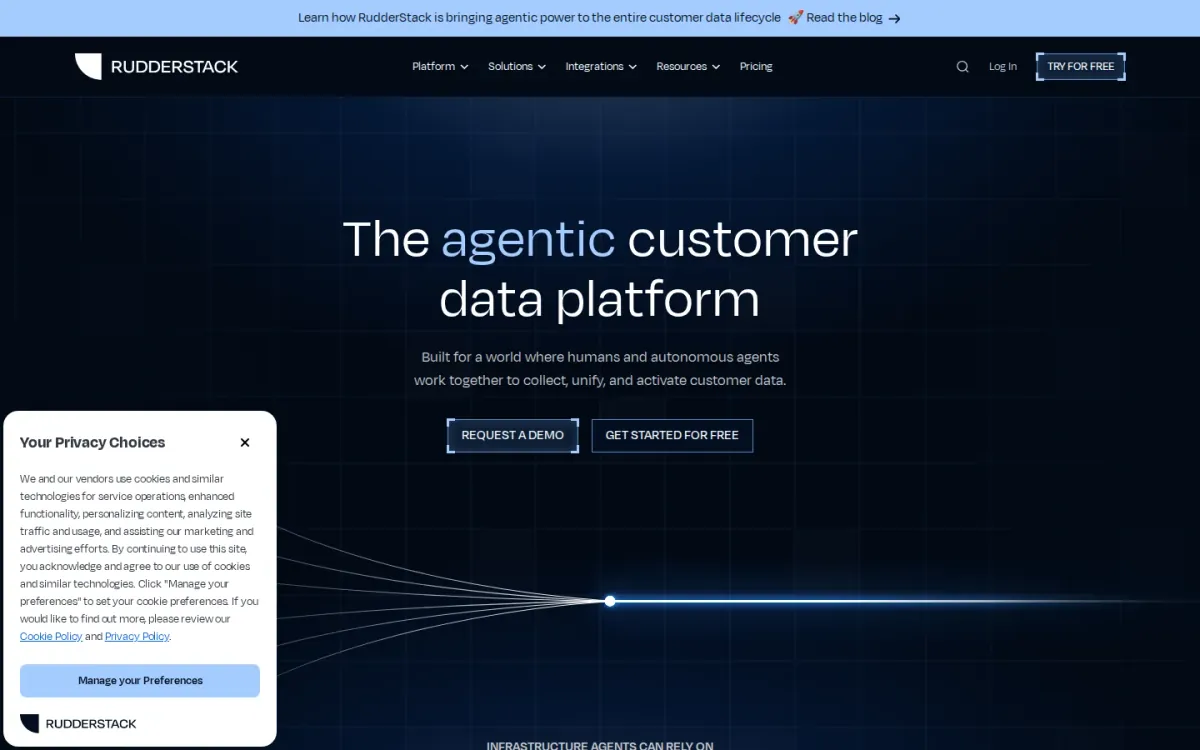
Official source: rudderstack.com [10].
Best for: Teams that want a unified event layer across web, mobile, and backend sources.
Rudderstack focuses on collecting standardized events from websites, apps, and backend systems, then routing them downstream in real time. High-performance SDKs and webhooks support consistent instrumentation across channels, reducing gaps between product behavior and usable analytics.
Key features
- Rudderstack collects events from web, mobile, backend.
- Transformations reshape data in flight.
- Schema management and event validation workflows.
- 200+ Real-time destination integrations.
Data can be reshaped in flight using Transformations to clean and enrich events while masking PII. Governance features such as schema management, event validation, consent automation, and a central data catalog help keep downstream destinations aligned and compliant.
Quick assessment
Strongest points: Clean, standardized event collection across channels.
Strong compliance controls for PII and consent.
Real-time routing to warehouses and business tools.
Main limitations: Agent-focused workflows may add conceptual overhead.
Why it ranks here: It earns this spot for strong collection-to-activation plumbing and built-in governance.
Its agentic messaging can distract from core tracking needs for some teams.
Access: Current access details: rudderstack. Verdict: It suits organizations that need governed event pipelines and real-time activation across many destinations, especially when data quality is non-negotiable.
How to choose
Workflow fit
Start by defining the job: conversion recovery for ads, governed first‑party routing, or a broader event pipeline across web, app, and backend. Next, confirm how events are collected, enriched, and forwarded, including consent handling, identity stitching, and deduplication where relevant.
Validation
Check integrations that matter to your workflow—ad platforms, analytics, CRM, and data warehouse—and verify how failures are monitored and retried. Finally, review documentation for data access, permissions, and operational limits so engineering and marketing teams share the same expectations.
Final recommendations
Shortlist
- Server side tracking tools when attribution needs to inform campaign and creative decisions, not just populate dashboards and exports.
- If the priority is hosted server-side tagging with minimal infrastructure work, shortlist Stape and verify the ad-platform gateways you rely on.
Before rollout
- For privacy-governed first‑party routing across teams and domains, compare Jentis with alternatives based on consent controls and destination governance.
- Shopify-focused teams should compare Analyzify and Littledata around platform-native workflows, event coverage, and how reliably conversions reach ad platforms.
Sources
- AdBid - Server-Side Tracking Tools
- Stape
- Addingwell
- Jentis
- Taggrs
- Analyzify
- Customerlabs
- Littledata
- Snowplow
- Rudderstack
Related reading: Server-Side Tracking Guide 2026