
The Cracks in ROAS as a KPI
:::warning Hard Truth ROAS can spotlight strong growth on dashboards while hiding serious inefficiencies. That 4x ROAS you're celebrating? It might be masking wasted spend. :::
Here's a truth that took me years (and a lot of wasted budget) to fully internalize: ROAS can spotlight strong growth on dashboards while hiding the weak spots.
For teams optimizing spend around payback quality, AdBid's predictive LTV helps connect acquisition decisions to customer value.
Discounts can inflate short-term numbers. Last-click attribution skews credit. Signal loss from iOS changes leaves blind spots everywhere.
Don't get me wrong — ROAS is useful. But treating it as your only north star metric is how you end up scaling campaigns that look profitable but actually aren't.
ROAS vs ROI: What Most Marketers Get Wrong
Let me clarify something that confuses even experienced marketers:
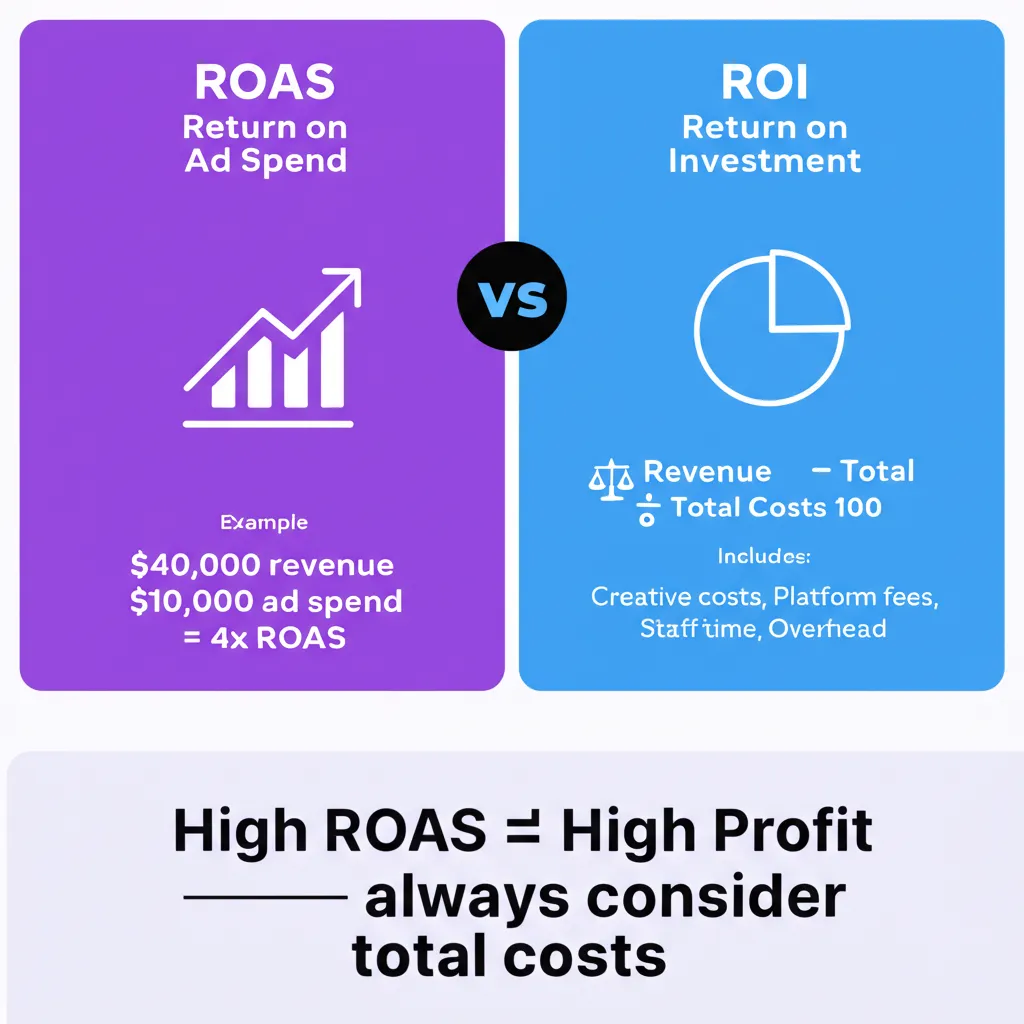
ROAS shows revenue per advertising dollar spent. It's a campaign efficiency snapshot.
ROI extends further by including ALL costs: creative production, staffing, platform fees, and overhead. It reveals actual profitability.
Here's why this matters: A campaign can show high ROAS but destroy your margins through heavy discounts or expensive creative that requires constant manual work.
To get the complete financial picture:
- Track all campaign costs including creative, platform, and operational expenses
- Factor in customer lifetime value (LTV) to understand which channels bring repeat buyers
- Include margins and discount impacts in your ROAS calculations
- Test incremental spend scenarios before scaling
The Problem with Last-Click Attribution
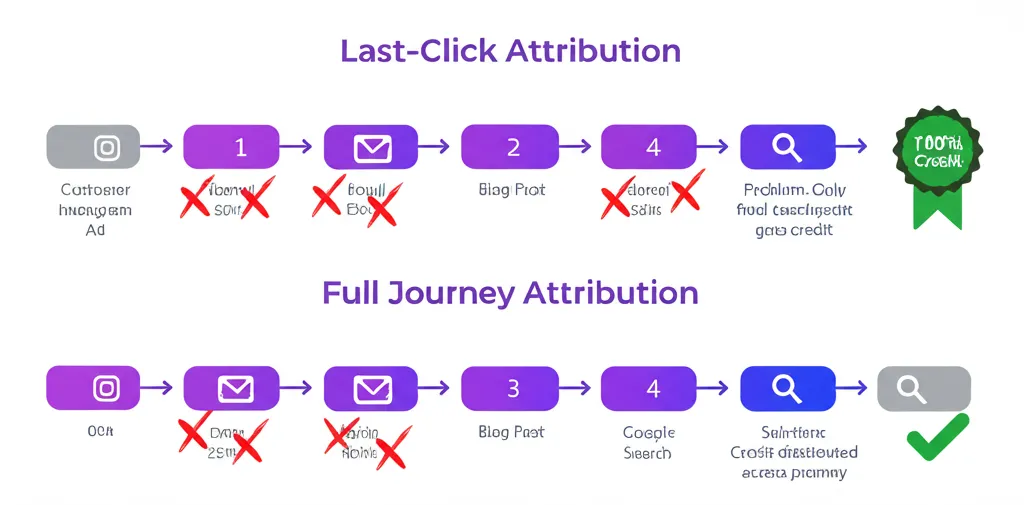
Traditional last-click attribution skews ROAS by crediting only the final touchpoint. This isolates channels instead of showing how they work together.
:::info What Gets Lost in Last-Click
- Upper-funnel awareness campaigns that start the journey
- Mid-funnel content that nurtures consideration
- Cross-device interactions that don't get tracked
- Assisted conversions from organic and email :::
The result? You redirect spend away from channels essential for sustainable growth because they don't "close" the sale.
:::warning The iOS Effect With iOS privacy changes, conversions still happen but many aren't directly attributed to ads. Platforms use modeled data to fill gaps — often favoring channels with more complete tracking, artificially inflating their ROAS. :::
Incremental ROAS: The Smarter Way to Measure
Incremental ROAS measures the actual lift your campaigns create — not just the revenue that happened to occur after an ad was shown.
Here's how to calculate it:
Using incrementality tests:
- Geo experiments compare exposed regions with control regions
- Holdout groups show what would have happened without ads
- These methods reveal campaigns that create genuine new value
Platform tools that help:
- Meta's Conversion Lift automates test and control groups
- Google's Brand Lift surveys measure awareness impact
- Marketing mix modeling (MMM) tools like Sellforte integrate broader factors
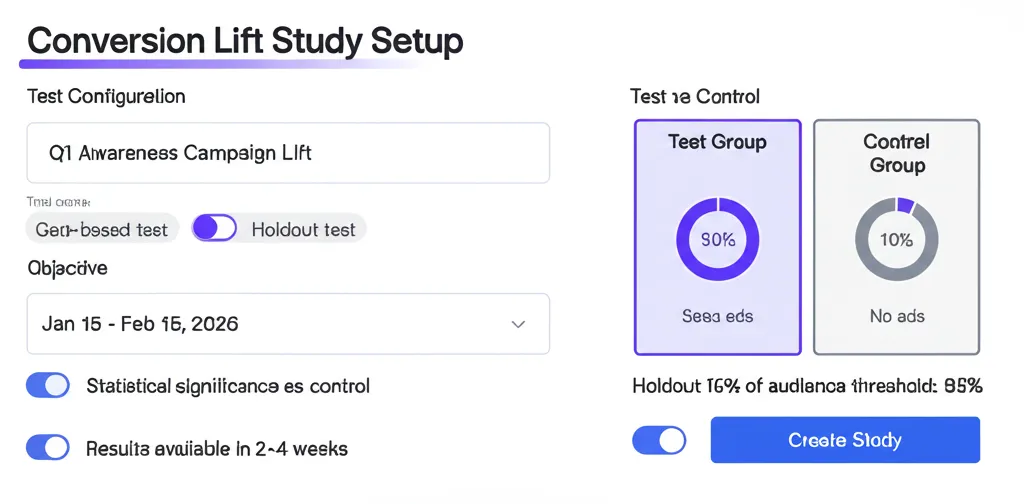
I've seen brands discover their "highest ROAS" campaign was actually just capturing demand that would have converted anyway, while their "underperforming" awareness campaigns were driving most of the incremental growth.
Split Branded and Non-Branded Campaigns
This is one of the simplest optimizations most advertisers miss.
When you combine branded and non-branded ROAS into single figures, you inflate perceived efficiency and mask where the problems really are.
Branded campaigns typically show incredible ROAS — sometimes 10x or higher. These reach people already searching for your brand name. They were probably going to convert anyway.
Non-branded campaigns are crucial for growth. They expand reach to new audiences. But they're less efficient by nature — higher CPCs, lower conversion rates.
A B2B study found branded Google Search delivered 1,299% ROAS compared to just 68% (Dreamdata) for non-branded campaigns. Yet marketers were allocating 82% of budget to non-branded (Dreamdata).
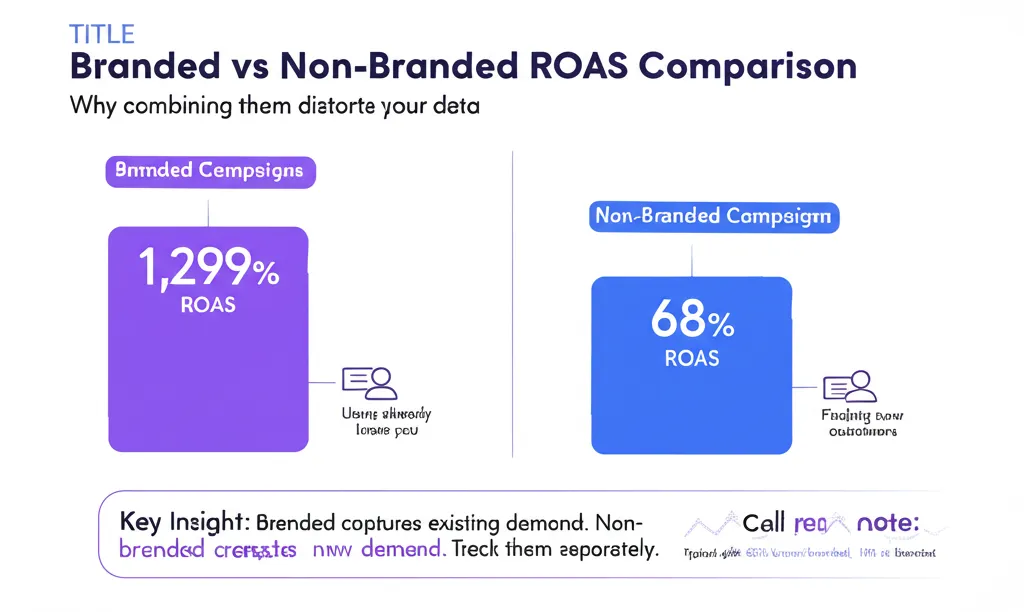
Neither approach is wrong. But you need to understand what each is actually doing for your business.
Separate them. Budget accordingly. Protect branded campaigns while testing and scaling non-branded for long-term growth.
Cross-Platform Attribution Uncovers Hidden Value
Cross-platform attribution connects touchpoints across devices and channels, linking activity to single users through logins or device IDs.
Here's the typical customer journey that gets missed:
- Sees Instagram ad on mobile
- Clicks email link on laptop
- Searches brand name and converts via Google
Under last-click, Google Search gets all the credit. Instagram and email show zero ROAS despite being essential to the sale.
Capturing complete journeys reveals which channels reinforce each other. You can optimize spend, reduce waste, and focus on campaigns that actually drive impact across your full marketing mix.
Automate Budget Pacing and Bid Adjustments
Manual budget management is a losing game. You can't respond to real-time performance changes. You waste spend and miss opportunities.
Here's what automation enables:
- Set pacing rules based on live ROAS data
- Automatically reallocate spend to top performers
- Adjust bids based on time of day, audience signals, device
- Pause underperforming ads before they waste more budget
One e-commerce brand I worked with saved 100+ hours per month and reduced wasted spend by 30% simply by implementing automated rules for their Meta campaigns.
The key is setting clear thresholds:
- If ROAS drops below 2x for 24 hours, reduce budget by 20%
- If ROAS exceeds 4x for 48 hours, increase budget by 15%
- If spend exceeds daily target by 10am, pause campaign until tomorrow
Creative Testing: Your Biggest ROAS Lever
:::highlight The #1 Lever As targeting and bidding become increasingly automated, creative becomes the main differentiator. I've seen single creative changes drive 50%+ improvements in ROAS. Nothing else comes close. :::
What to test:
- Headlines and messaging: Different value propositions, emotional triggers, tones
- Visuals: Product-focused vs. lifestyle, colors, layouts
- Copy length: Concise vs. detailed
- CTAs: "Buy now" vs. "Get started" vs. "Learn more"
How to test:
- Change one variable at a time
- Wait for statistical significance (usually 1,000+ impressions per variant)
- Document learnings in a swipe file
- Kill losers fast, scale winners aggressively
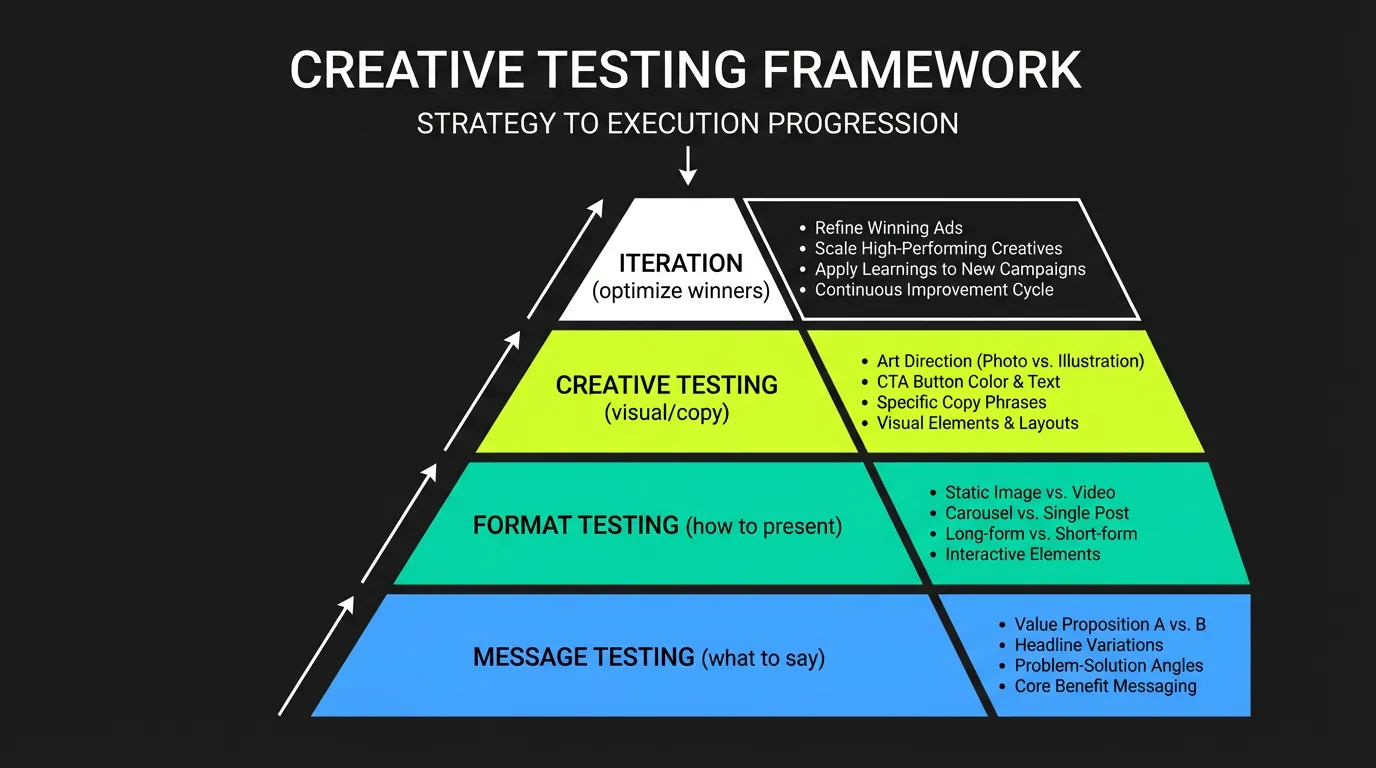
Creative testing separates dashboard-appearing efficiency from true performance. It lets you scale campaigns on reliable insights rather than misleading metrics.
Link ROAS to Retention and Lifetime Value
This is where most ROAS optimization falls short: it ignores what happens after the first purchase.
A customer generating 3x ROAS on first purchase might deliver 10x or more annually through repeat buying. Another might never return.
Effective approaches:
- Segment audiences by predicted LTV to identify highest-value customers
- Adjust bids based on projected lifetime value, not just first-purchase value
- Track retention metrics to distinguish one-time buyers from loyal customers
- Balance acquisition and retention spending
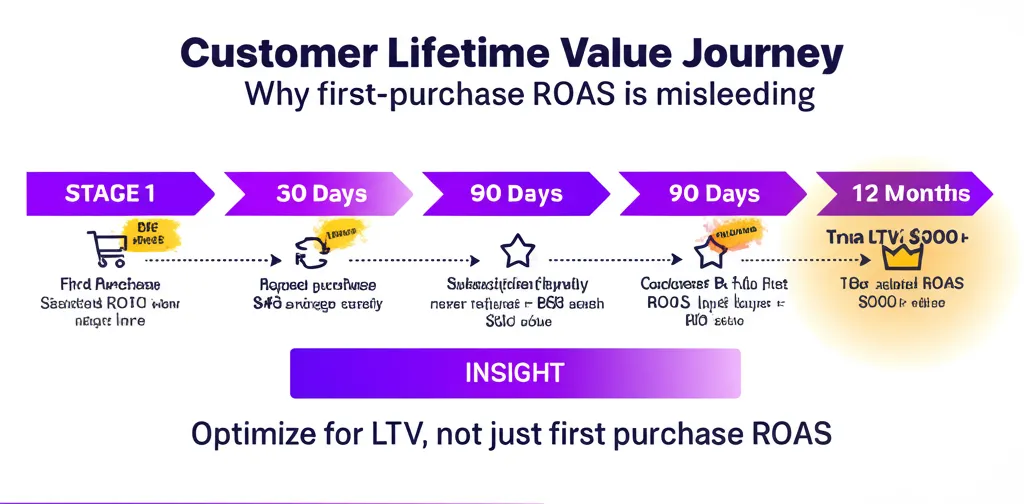
Factoring in LTV reduces reliance on short-term tactics like heavy discounting that improve immediate ROAS but weaken margins and attract low-quality customers.
Real-Time Alerts Catch ROAS Drops Early
Don't wait for your weekly report to discover a campaign cratered three days ago.
Set up alerts for:
- ROAS dropping below threshold for X hours
- Spend pacing ahead of schedule
- CPA exceeding target
- Frequency getting too high
You can configure these through platform native tools or third-party automation platforms. The key is getting notified when something goes wrong — not discovering it after you've burned through budget.
The Bottom Line
ROAS is still useful. But on its own, it's a narrow KPI that can easily mislead you.
Last-click attribution and signal loss make results look stronger (or weaker) than they really are. Looking past surface-level returns reveals the true picture.
What actually improves ROAS:
- Measure incremental impact, not just attributed revenue
- Split branded vs. non-branded for clarity
- Test creative systematically — it's your biggest lever
- Automate budget and bid optimizations
- Connect ad performance to customer lifetime value
The advertisers who win in 2026 aren't chasing higher ROAS numbers. They're building systems that reliably identify what's actually working and scale it efficiently.
Summary
Ready to automate your ROAS optimization? Try AdBid free for 14 days and set up rules that adjust bids, reallocate budgets, and alert you to problems in real-time.
Why Does Tracking Accuracy Come First?
Tracking accuracy is the foundation of every ROAS decision, and skipping it makes the rest of this playbook unreliable. If your pixel double-counts conversions or misattributes revenue, you will scale the wrong campaigns and pause the right ones. Before optimizing spend, confirm your measurement layer reports clean, deduplicated, server-side-verified data you actually trust.
Audit Your Measurement Layer
Start with a structured tracking audit. Check that your pixel or conversion API fires once per event, that purchase values pass through correctly, and that your attribution window matches your sales cycle. A short window starves long-consideration products of credit. A long window inflates ROAS with conversions ads barely influenced.
Run a few test purchases yourself and trace them end to end. Does the reported revenue match your backend? Do refunds get deducted? These boring checks prevent expensive mistakes later. For a deeper walkthrough of clean measurement and offer testing, see our performance marketing guide.
Align Attribution With Reality
Different platforms claim the same conversion. When you sum reported ROAS across channels, the total often exceeds your actual revenue. Pick one source of truth, usually your own backend or a neutral analytics layer, and reconcile platform numbers against it. Decisions built on a single trusted dataset beat decisions built on three conflicting ones.
How Should You Reallocate Budget Between Campaigns?
Budget reallocation is one of the fastest ROAS levers available, because it requires no new creative or audience research. The principle is straightforward: move money away from underperformers and toward proven winners. Spreading budget evenly across campaigns feels fair, but it caps your best performers while funding mediocre ones that drag down blended returns.
Cut, Hold, or Scale Each Campaign
Sort every active campaign into three buckets. Campaigns well below your target ROAS get paused or have budgets cut sharply. Borderline campaigns get held while you test a new creative or audience. Campaigns beating target get incremental budget increases.
Avoid large overnight budget jumps on winners. Sudden spend changes can reset the learning phase and temporarily hurt delivery. Raise budgets gradually so the platform's optimization stays stable. Patience here protects the very performance you are trying to scale.
Respect the Learning Phase
Algorithms need enough conversion volume to optimize. Campaigns starved of data behave erratically, which tempts teams into premature pausing. Give new campaigns a fair window and sufficient budget to exit learning before you judge them. Killing a campaign on day two tells you almost nothing reliable about its true potential.
What Creative and Landing Page Changes Move ROAS Fastest?
Creative and landing pages typically deliver the largest ROAS gains because they shape both click-through and conversion at the same time. A stronger hook lowers your cost per click, while a clearer landing page lifts conversion rate. When both improve together, returns compound. This is usually where the biggest, most durable wins hide.
Build a Creative Testing Rhythm
Treat creative as a pipeline, not a one-off. Test new hooks, formats, and value propositions on a steady cadence so you always have fresh winners entering rotation as old ones fatigue. Change one major variable at a time when possible, so you learn which element actually drove the result.
Document what wins and why. Over time you build a library of proven angles you can remix instead of starting from scratch. Our creative testing framework guide breaks down how to structure these experiments without wasting spend on inconclusive tests.
Tighten the Landing Page
The click is only half the funnel. If your landing page is slow, unclear, or mismatched with the ad, you pay for traffic that never converts. Improve page speed, sharpen the headline, make the call to action obvious, and add credible social proof near the decision point.
Match the landing page promise to the ad promise. When the message stays consistent from impression to checkout, conversion rate climbs and ROAS follows. For a structured approach to lifting on-site conversion, see our conversion rate optimization guide.
How Do You Refine Targeting and Bidding for Better Returns?
Targeting and bidding refinements protect ROAS by aligning spend with the audiences and outcomes that actually generate value. Broad, unfiltered targeting wastes budget on placements, demographics, and regions that rarely convert. Optimizing for revenue rather than raw conversion count keeps the algorithm focused on customers worth acquiring, not just cheap clicks.
Prune Wasteful Placements and Audiences
Review your placement, demographic, and geographic breakdowns. Identify segments consuming budget while returning little, then exclude or reduce them. Also exclude recent purchasers from prospecting campaigns; paying to re-acquire someone who just bought drains efficiency for no incremental gain.
Be careful not to over-restrict. Aggressive exclusions can shrink your audience below the volume the algorithm needs to optimize. Trim the clear waste, then watch delivery before cutting further. The goal is precision, not a starved campaign that can no longer learn.
Shift Toward Value-Based Bidding
Optimizing for purchase value, rather than conversion count, tells the platform to chase high-value customers instead of any conversion. This matters most when customer value varies widely. Pairing value signals with longer-term metrics helps you avoid winning cheap, low-value buyers that look good short term but erode real returns.
When Should You Automate ROAS Optimization?
Automation becomes valuable once your account grows beyond what manual review can handle reliably each day. Humans cannot monitor dozens of campaigns, fatigue signals, and budget shifts in real time without missing things. Rules-based and AI-driven tools react faster, adjust continuously, and free your team to focus on strategy and creative rather than repetitive checks.
Start With Guardrails, Then Expand
Begin automation with simple guardrails: pause rules for spend without conversions, alerts for ROAS drops, and budget caps. Once you trust those, layer in algorithmic budget allocation and bidding. Automation amplifies whatever logic you give it, so clean tracking and clear targets must come first, or you will scale mistakes faster.
For teams ready to move beyond manual optimization, an AI layer can watch performance continuously and act within the limits you set. Explore AdBid's AI agents for ads management to see how automated monitoring and reallocation fit into this playbook. For the broader strategic context behind these tactics, our proven ways to increase ROAS in 2026 covers the why behind each lever.