
Key Takeaways
- AI ad optimization shifts bids, budgets, and creatives automatically across thousands of campaigns no human team could track manually.
- High-volume campaigns learn fastest because algorithms need a steady flow of conversion signals.
- First-party data now drives targeting quality as third-party cookies fade out.
- Patience during the learning phase matters: early interference resets the model and wastes spend.
What Is AI-Powered Ad Optimization in 2026?
AI-powered ad optimization uses machine learning to adjust bids, budgets, audiences, and creatives in real time, replacing slow manual edits. Instead of a buyer checking dashboards a few times a day, the system reads conversion signals continuously and reallocates spend within milliseconds toward the outcomes you care about.
The core idea is simple. You define a goal, like purchases or qualified leads, and feed the system clean conversion data. The model then learns which users, placements, and creative combinations produce results, and it doubles down on them.
This matters more in 2026 than it did a few years ago. Privacy rules tightened, signal loss grew, and ad platforms moved most of their controls behind automated bidding. Manual lever-pulling now fights against systems built to run on their own.
If you want a broader view of how automation fits the wider stack, see our AI marketing automation guide.
The Building Blocks
Five components do most of the work in any optimization system:
- Predictive scoring: estimating which users are likely to convert.
- Automated bidding: setting bid amounts per auction based on that score.
- Creative selection: surfacing the ads that perform and retiring the rest.
- Audience discovery: finding new segments that resemble your best customers.
- Budget allocation: moving money toward campaigns that pay back.
Why Do Manual Methods Struggle to Keep Up?
Manual campaign management hits hard ceilings that machines do not. A skilled buyer can watch maybe a dozen or two campaigns closely. An optimization engine handles thousands at once, reacting to auction signals far faster than any person refreshing a report.
Three limits stand out. First, bandwidth: humans sleep, take breaks, and lose focus, while the system runs every hour of every day. Second, reaction time: auctions resolve in fractions of a second, and a buyer simply cannot bid that fast. Third, pattern depth: models weigh hundreds of variables per impression, spotting combinations a person would never notice.
Does this mean buyers become useless? Not at all. The job shifts from pulling levers to setting strategy, feeding clean data, and judging whether the goals themselves still make sense. The machine optimizes the path; people pick the destination.
How Does the Optimization Loop Actually Work?
The strongest systems run a self-reinforcing loop. Every impression, click, and conversion becomes training data, so the model gets sharper the longer it runs and the more volume it sees. This compounding effect is why scaled accounts often pull away from smaller ones over time.
The loop moves through five stages:
- Collect: gather signals from every interaction.
- Recognize: identify patterns separating buyers from non-buyers.
- Predict: forecast the value of the next impression.
- Act: adjust bids and budgets accordingly.
- Learn: feed fresh outcomes back into the model.
The catch is data hunger. A loop starved of conversions cannot learn much, which is why volume and signal quality decide whether the whole thing flies or stalls. Tools like an AI ad generator feed the creative side of this loop with fresh variations to test.
What Strategies Make AI Optimization Pay Off?
The strategies that separate strong accounts from weak ones come down to discipline, not secret settings. Most failures trace back to too little data, dirty tracking, or constant manual interference. Get the inputs right and the system usually rewards you.
Start Where the Data Lives
Point optimization at your highest-volume campaigns first. These give algorithms the steady signal they need to find patterns quickly. Low-volume campaigns often need a hybrid approach, where you optimize for an earlier event, like add-to-cart, so the model still receives enough feedback to learn.
Respect the Learning Phase
New campaigns enter a learning period while the model gathers data. Meta advises aiming for roughly 50 conversions per week per ad set to exit learning efficiently (Meta Business Help). Editing budgets, creatives, or targeting during this window can reset the clock and burn budget on relearning.
So the hardest part is often doing nothing. Let the system stabilize before you judge it.
Protect Signal Quality
Garbage in, garbage out applies fully here. Track the events that match real business value, use value-based optimization when you can, and confirm your conversion API or pixel fires correctly. A model trained on noisy or duplicated events will confidently optimize toward the wrong thing.
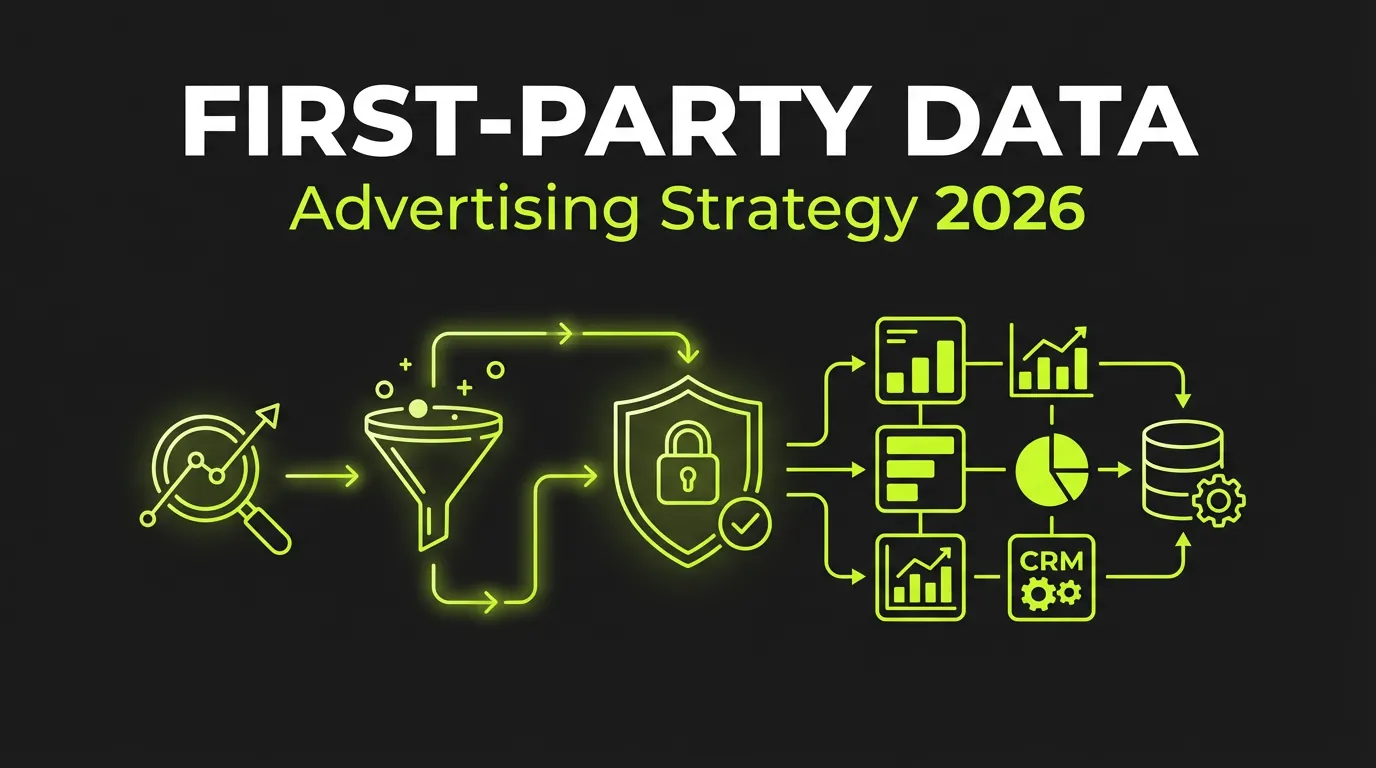
Build on First-Party Data
With third-party cookies winding down, your own data becomes the edge. Customer lists power lookalike modeling, CRM records drive exclusions so you stop paying to re-acquire existing buyers, and purchase history feeds lifetime-value prediction. Owned data is harder for competitors to copy than any bidding trick.
Which Advanced Techniques Are Worth Adopting?
Beyond the basics, three techniques tend to move results for accounts that already have clean tracking and steady volume. They share a theme: optimizing for long-term value rather than the cheapest possible click.
Lifetime-Value Optimization
Optimizing for immediate conversions can attract cheap, low-value customers. Training the model on predicted lifetime value instead shifts the focus toward buyers who stick around and spend more. The trade-off is that LTV signals take longer to mature, so you need patience and reliable downstream data.
Cross-Platform Allocation
Modern platforms can compare performance across Meta, Google, and TikTok and move budget toward whichever channel pays back best at a given moment. This reduces the manual guesswork of splitting spend by gut feel. Our performance marketing guide digs deeper into measuring channel efficiency.
Creative Automation
Optimization is not only about bids. Systems now generate and test ad variations at scale, run dynamic creative combinations, and retire fatigued assets automatically. Creative quality has become a major performance lever, a shift covered in our piece on how AI is reshaping ad creation.
How Do You Measure Whether It Is Working?
Measurement keeps optimization honest. Without a clear baseline, it is easy to credit the algorithm for results it did not cause. Compare AI-managed campaigns against a manually managed control over the same window before declaring victory.
Track four signals over time:
- Return on ad spend: AI-managed versus a manual baseline.
- Time saved: hours your team no longer spends on manual tuning.
- Scale: how many campaigns you can run effectively.
- Stability: how much performance swings week to week.
The last one is underrated. A system that delivers steady, predictable returns is often more valuable than one that spikes and crashes.
What Pitfalls Trip Up Most Advertisers?
Most disappointments come from a short list of avoidable mistakes rather than the technology failing. Knowing them in advance saves both budget and frustration.
- Over-constraining: piling on rules and exclusions leaves the model no room to optimize.
- Underfunding: a budget too small to gather conversions starves the learning loop.
- Weak tracking: broken or duplicated events teach the model the wrong lessons.
- Impatience: judging performance before the learning phase ends usually leads to premature resets.
Strip these away and the system has a fair chance to do its job.
Frequently Asked Questions
How long before AI ad optimization shows results?
Most campaigns need to clear the learning phase first, which Meta frames as roughly 50 conversions per week per ad set (Meta Business Help). Until then, performance is unstable by design. Plan for a few weeks of patience before comparing results against your manual baseline.
Does AI optimization replace media buyers?
No. The role changes rather than disappears. Buyers stop adjusting bids by hand and instead set goals, maintain clean tracking, manage creative supply, and decide whether the targets still fit the business. The machine handles execution; people own the strategy and the judgment calls.
Why does first-party data matter so much now?
Third-party cookies are being phased out, weakening cross-site tracking that targeting once relied on. Your own customer lists, CRM records, and purchase history fill that gap. They power lookalikes, exclusions, and value prediction, and competitors cannot easily replicate them, which makes owned data a durable advantage.
What is the most common reason AI optimization underperforms?
Poor signal quality tops the list. If conversion events are missing, duplicated, or mismatched to real value, the model optimizes toward the wrong outcome with full confidence. Fixing tracking, using value-based events, and giving campaigns enough volume usually resolves most underperformance.
Conclusion
AI-powered ad optimization in 2026 is less a bonus feature and more the default way performance campaigns run. As platform controls move behind automated systems, the advertisers who feed clean data, respect the learning phase, and build on first-party signals tend to pull ahead. Those still pulling manual levers fight an uphill battle against their own tools.
The practical takeaway: start where you have volume, protect your tracking, measure against a real baseline, and resist the urge to interfere too early. The technology rewards discipline more than clever tricks.
Ready to put this into practice? Explore the AI Agents Ads Manager to see how automated optimization fits your campaigns.