
Part of our TikTok Ads Platform guide series.
Key Takeaways
- 92% of consumers trust UGC more than (Nielsen (via AMA)) traditional advertising
- UGC-based ads achieve 4x higher CTR and 50% lower CPC
- Ads with UGC are 31% more memorable
- Brands report up to 41% increase in conversion rates with effective UGC
- UGC is 8x more effective than influencer content in decision-making
:::highlight The Authenticity Premium "By 2026, up to 90% of online content could be AI-generated. User-generated content will become even more valuable as the authentic signal in a sea of synthetic content." :::
What Is UGC Advertising?
User-generated content (UGC) in advertising includes any brand-related content created by customers, fans, or commissioned creators rather than the brand itself.
For teams that need more campaign-ready variations, AdBid's AI creative factory helps turn briefs into hooks, copy, and ad assets faster.
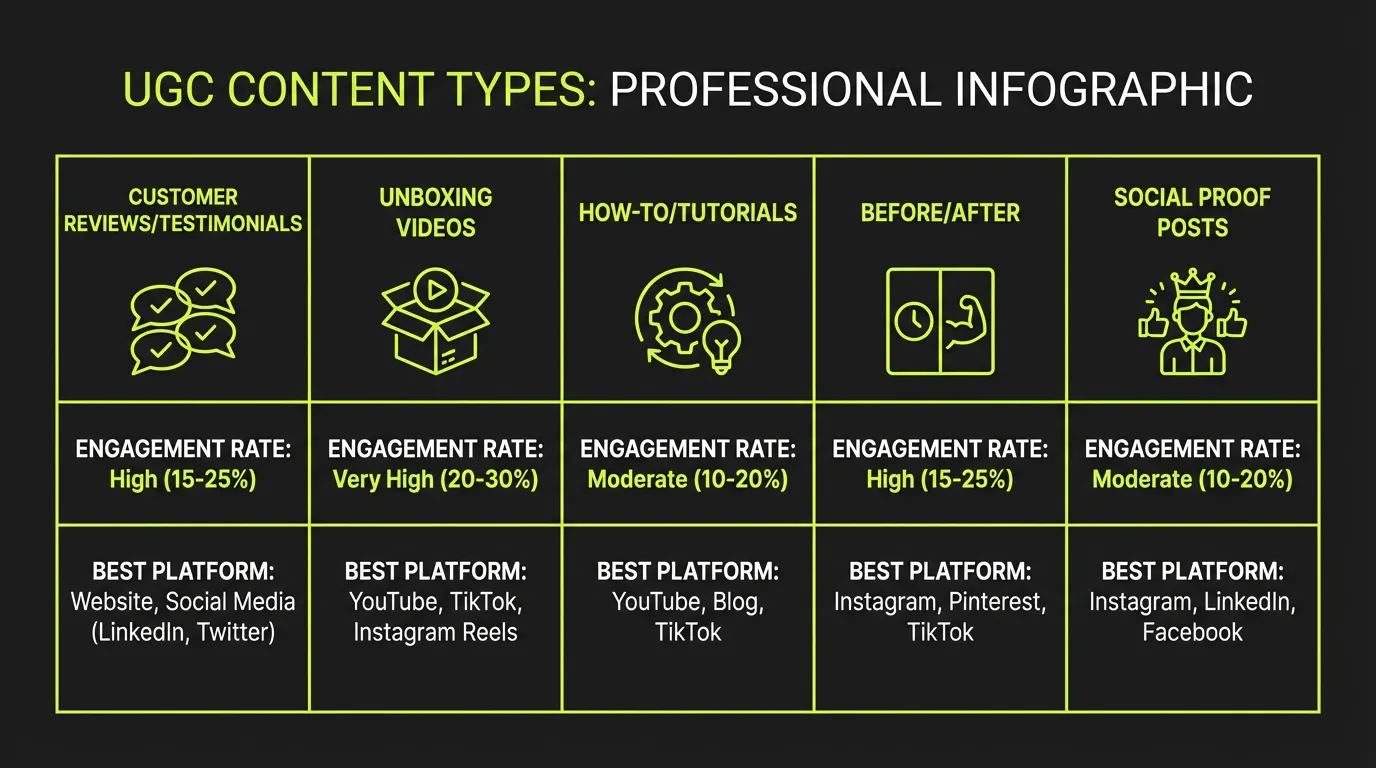
Types of UGC for Advertising
| Type | Definition | Best For |
|---|---|---|
| Organic UGC | Content customers create naturally | Social proof, testimonials |
| Incentivized UGC | Content from contests, rewards | Volume, specific themes |
| Creator UGC | Content from paid creators | Control + authenticity balance |
| Employee UGC (EGC) | Content from staff | Brand trust, behind-scenes |
Why UGC Outperforms Traditional Ads
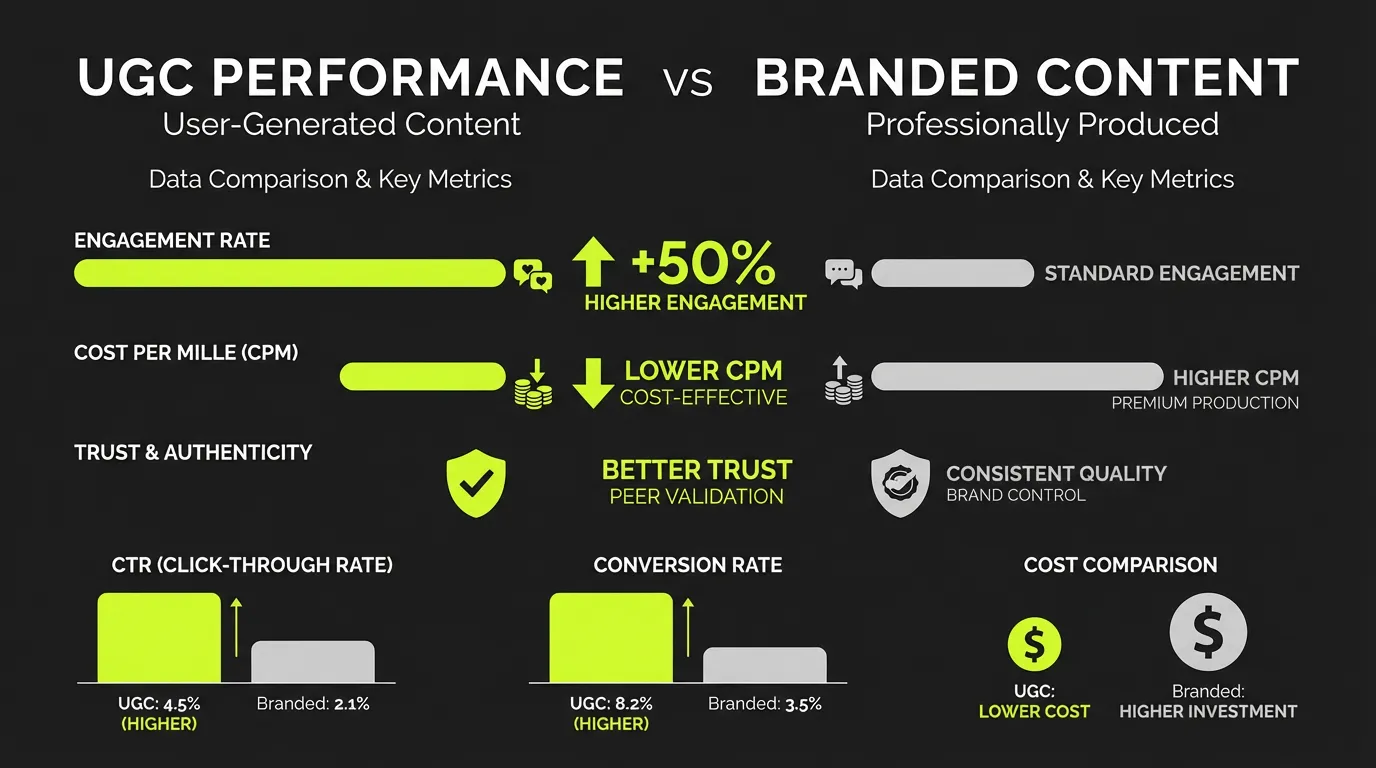
The numbers are compelling:
| Metric | UGC Ads | Traditional Ads |
|---|---|---|
| Click-through rate | 4x higher | Baseline |
| Cost per click | 50% lower | Baseline |
| Memorability | 31% more memorable | Baseline |
| Conversion rate | Up to 41% higher | Baseline |
| Trust | 92% consumer trust | 20-30% trust |
"UGC is seen as 8x more effective than influencer content in decision-making."
Why It Works
- Authenticity — Looks like real people, not ads
- Relatability — Viewers see themselves
- Social proof — Others have bought and liked
- Lower production costs — No expensive shoots
- Platform native — Fits TikTok, Reels naturally
Sourcing UGC
Method 1: Organic Collection
Harvest existing customer content:
Finding organic UGC:
- Monitor brand mentions on social
- Search branded hashtags
- Check product tags and reviews
- Encourage posting with packaging inserts
Rights acquisition:
- Always get written permission
- Use clear, simple contracts
- Offer something in return (discount, feature)
- Document everything
:::tip GoPro's Success "GoPro uses UGC to sustain its YouTube channel, with its top three videos all originally filmed by customers. Those three videos have racked up over 420 million combined views — content that cost GoPro nothing to produce." :::
Method 2: Creator Partnerships
Commission UGC from content creators:
Finding creators:
- UGC platforms (Billo, Insense, JoinBrands)
- Creator marketplaces
- Social media outreach
- Agency relationships
Creator tiers:
| Tier | Followers | Cost | Best For |
|---|---|---|---|
| Nano | <10K | $50-150/video | High volume, testing |
| Micro | 10K-50K | $150-500/video | Authenticity + reach |
| Mid | 50K-500K | $500-2K/video | Credibility |
| Macro | 500K+ | $2K+/video | Awareness |
Brief essentials:
- Product to feature
- Key messages (2-3 max)
- Tone and style guidance
- Do's and don'ts
- Usage rights and duration
- Revisions included
Method 3: Employee-Generated Content
"In 2025, employees are increasingly becoming the faces of brands on platforms like TikTok, Instagram Reels, and LinkedIn, sharing personal stories and behind-the-scenes content that humanize brands."
EGC benefits:
- Zero creator costs
- Deep product knowledge
- Authentic brand advocacy
- Content ownership
Implementation:
- Create content guidelines
- Provide training and tools
- Incentivize participation
- Quality review process
UGC Creative Best Practices
The Lo-Fi Advantage
"Lo-Fi UGC offers a significant advantage by humanizing brands and fostering closer connections. This approach embraces imperfection, allowing brands to experiment with more authentic content while reducing production costs."
Lo-Fi principles:
- Natural lighting (no studio)
- Phone-shot video
- Casual, conversational tone
- Minimal editing
- Genuine reactions
Video Structure That Works
Hook (0-3 seconds):
- Relatable statement
- Problem callout
- Unexpected opening
Body (4-20 seconds):
- Product introduction
- Key benefit demonstration
- Personal experience/story
Close (final 5 seconds):
- Clear recommendation
- Call to action
- Social proof reinforcement
Platform-Specific UGC
| Platform | Duration | Style | Tips |
|---|---|---|---|
| TikTok | 15-30s | Trendy, fast-paced | Use trending sounds |
| Instagram Reels | 15-30s | Polished casual | Music-driven |
| 30-60s | Relatable, story-based | Caption for sound-off | |
| YouTube Shorts | 30-60s | Educational, demo-style | Searchable content |
:::warning Common UGC Mistakes
- Over-scripting creators (sounds fake)
- Too many product mentions
- Poor audio quality (biggest turn-off)
- Ignoring usage rights
- Not testing multiple creators/angles :::
Scaling UGC Production
Volume Requirements
For active paid media programs:
| Monthly Spend | UGC Videos/Month | Rationale |
|---|---|---|
| $10K | 8-12 | Test 2-3 per week |
| $50K | 20-30 | Fresh creative weekly |
| $100K+ | 40-60+ | Multiple angles constantly |
Production Workflow
- Brief creation — Standardized templates
- Creator selection — Roster of proven performers
- Content delivery — 7-10 day turnaround
- Review process — Quality check + feedback
- Ad deployment — Launch in ad platforms
- Performance tracking — Identify winners
- Iteration — Brief refinements based on data
AI-Assisted UGC
"With tools such as those from Arcads, brands can produce content faster, more cost-effectively, and at larger scale."
AI applications in UGC:
- Script generation and variation
- Avatar/synthetic creators (use carefully)
- Voice cloning (with permissions)
- Auto-captioning and editing
- Performance prediction
:::danger Authenticity Warning Synthetic UGC risks backlash if viewers feel deceived. Always disclose AI-generated content and prioritize real creator partnerships. :::
UGC Performance Measurement
Key Metrics
| Metric | What It Tells You | Target |
|---|---|---|
| Hook rate (3s) | Opening effectiveness | 70%+ |
| Watch time | Content engagement | 50%+ of duration |
| CTR | Click intent | 1.5-3% |
| CVR | Purchase conversion | Industry-specific |
| CPA | Acquisition efficiency | Below target CAC |
Testing Framework
Test variables:
- Creator type — Demographics, style, energy
- Hook approach — Problem, question, statement
- Length — 15s vs. 30s vs. 60s
- CTA style — Soft vs. hard sell
- Product focus — Feature vs. benefit vs. use case
Identifying Winning Patterns
Track and analyze:
- Which creators consistently perform?
- What hooks get highest retention?
- Which scripts drive best CVR?
- What product angles resonate?
Build a UGC playbook based on learnings.
Legal and Compliance
Rights Management
:::info Essential Documentation "A successful UGC strategy requires a proactive, responsible approach: clear consent, real data protection, and constant transparency." :::
Required agreements:
- Content usage rights
- Platform permissions
- Duration of use
- Geographic scope
- Modification rights
- Exclusivity terms
FTC Compliance
For paid UGC:
- Clear disclosure required (#ad, #sponsored)
- Disclosure must be prominent
- Can't be buried in hashtags
- Applies to all paid relationships
Platform Guidelines
Each platform has UGC ad policies:
- Meta: Branded content tools
- TikTok: Spark Ads for boosting
- YouTube: Paid promotion disclosure
Building a UGC Program
Phase 1: Foundation (Months 1-2)
- Define UGC strategy and goals
- Create brief templates
- Build creator roster (10-20 creators)
- Establish rights management process
Phase 2: Production (Months 3-4)
- Launch first batch (15-20 videos)
- Test across platforms
- Identify top performers
- Refine briefs based on data
Phase 3: Scale (Months 5-6)
- Expand creator network
- Increase volume
- Build content calendar
- Systematize production workflow
Phase 4: Optimization (Ongoing)
- Continuous testing
- Creator performance management
- Brief optimization
- New format experimentation
The Bottom Line
Effective UGC advertising in 2026 requires:
- Authenticity first — Lo-fi, genuine content beats polished ads
- Creator relationships — Build a roster of proven performers
- Volume and testing — More content = more learning
- Clear rights — Document everything, disclose properly
- Data-driven iteration — Let performance guide your briefs
"60% of CMOs plan to embrace authenticity with brand-approved UGC by 2026."
The future of advertising looks more human, not less.
AdBid helps you track UGC ad performance across platforms. See which creator content drives real results. Start tracking.