
Part of our TikTok Ads Platform guide series.
Influencer Marketing ROI Guide 2026
Influencer marketing crossed a major threshold in 2025. Global spend reached $32.55 billion, a figure that signals the channel has graduated from experiment to core performance line item (Influencer Marketing Hub, 2025). Yet many brands still chase followers and likes instead of revenue. This guide breaks down where the real returns come from in 2026, why smaller creators often beat celebrities, and how to measure ROI you can actually defend. The brands winning today treat influencer spend like any other media buy: tracked, attributed, and optimized against business outcomes rather than vanity numbers.
Key Takeaways
- Global influencer marketing spend hit $32.55 billion in 2025 (Influencer Marketing Hub, 2025).
- Businesses earn an average of $5.20 for every $1 spent on influencer campaigns.
- Micro-influencers with 10K-100K followers post higher engagement rates than mega accounts.
- Long-term partnerships of three to six months tend to outperform one-off posts.
- Without unique codes or UTM links, roughly half of marketers still struggle to prove ROI.
Why Does Influencer Marketing Drive Such Strong ROI?
Influencer marketing returns an average of $5.20 for every $1 spent, and that ratio reflects a shift toward measurable outcomes (Influencer Marketing Hub, 2025). The channel works because audiences trust people more than brands. A recommendation from a creator someone already follows lands closer to a friend's advice than an ad.
The 2026 market reflects a clear move away from vanity metrics. Brands now ask harder questions. How much revenue did this post drive? What was the cost per acquisition? Did the creator's audience actually convert, or just scroll past?
That discipline pays off. Influencer content also carries longer than a single post. Top-performing assets get repurposed into paid social, landing pages, and email, stretching the original investment across multiple channels and weeks.
Want to see how creator content fits a wider plan? Our social media advertising strategy guide shows how organic and paid efforts reinforce each other.
What Counts as Real ROI Here?
Real ROI ties campaign spend to revenue, not reach. A million impressions mean little if nobody buys. The strongest programs track three numbers: attributed revenue, customer acquisition cost, and lifetime value of acquired customers. Those tell you whether a creator partnership is profitable or just busy.
Are Micro-Influencers Worth More Than Celebrities?
Micro-influencers, creators with 10,000 to 100,000 followers, consistently post higher engagement rates than mega accounts with millions of followers (Influencer Marketing Hub, 2025). Smaller audiences feel like communities. Followers read the comments, reply to the creator, and treat recommendations as genuine rather than paid placements.
The math favors smaller creators for performance goals. A mega-influencer might charge tens of thousands for one post and deliver a 1% engagement rate. Five micro-influencers can cost the same, reach a more targeted audience, and convert better because trust runs deeper.
How Do the Influencer Tiers Compare?
Each tier serves a different goal. Pick based on the outcome you need, not the follower count that looks impressive on a slide.
| Tier | Followers | Engagement | Cost | Best For |
|---|---|---|---|---|
| Nano | 1K-10K | Highest | Lowest | Hyper-local, niche launches |
| Micro | 10K-100K | High | Low-Medium | Niche authority, conversions |
| Mid-Tier | 100K-500K | Medium | Medium | Reach plus engagement balance |
| Macro | 500K-1M | Lower | High | Brand awareness |
| Mega | 1M+ | Lowest | Highest | Mass reach, celebrity effect |
For a deeper look at the smallest, most cost-efficient creators, read our micro and nano-influencer marketing guide.
How Should You Split the Budget?
Performance-focused brands usually weight spend toward smaller creators. A common starting mix puts most of the budget on micro-influencers, a smaller share on mid-tier accounts for reach, and a thin slice on macro or mega names for awareness. This keeps efficiency high while still building visibility at the top of the funnel.
How Do You Measure Influencer ROI Accurately?
Attribution remains the hardest part of the channel, and a large share of marketers still cannot reliably tie revenue back to influencer activity (Influencer Marketing Hub, 2025). Without tracking in place from day one, you are guessing. The fix is simple to describe and easy to skip: tag everything before the campaign goes live.
Three direct methods do most of the work. Each gives a clean line from a creator's post to a sale.
What Tracking Methods Actually Work?
- Unique discount codes per creator, so every redemption maps to one influencer.
- UTM-tagged links that feed your analytics with source, medium, and campaign data.
- Dedicated landing pages built for a specific partnership.
- Affiliate links with built-in tracking and payout rules.
Platform-native tools add a second layer. Instagram Shopping tags, TikTok Shop checkout, and YouTube product links keep the buyer inside the app and report conversions back to you.
How Do You Calculate the ROI Figure?
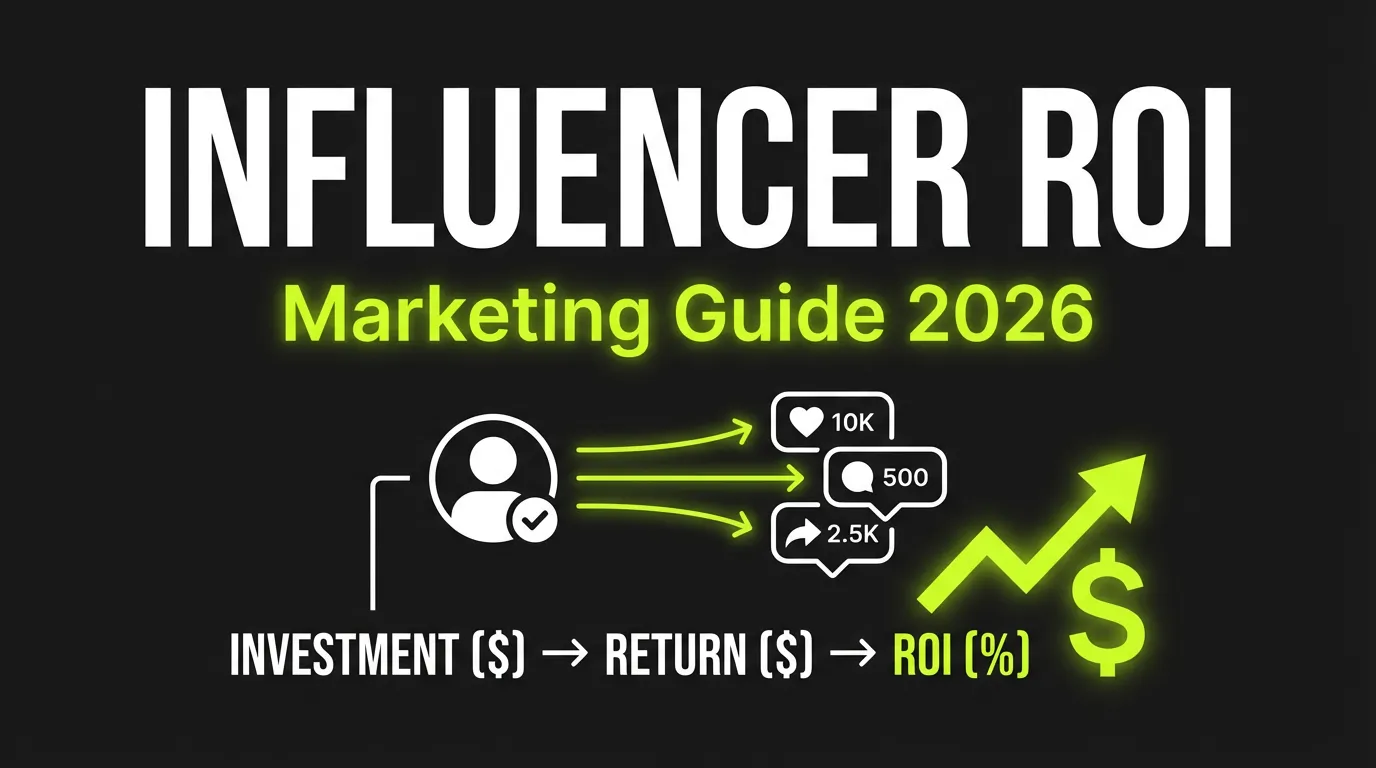
The formula stays simple. Subtract campaign cost from attributed revenue, divide by the cost, and multiply by 100. Spend $5,000 and earn $27,500 in tracked revenue, and you land at a 450% return, or 4.5x. The number is only as honest as your tracking, which is why codes and UTMs come first.
Creators often produce content you can reuse far beyond the original post. Our UGC advertising guide covers how to turn that footage into high-performing paid ads.
What Partnership Structure Delivers the Best Returns?
Three to six-month creator partnerships tend to outperform one-off campaigns, because trust and content quality both compound over time (Influencer Marketing Hub, 2025). A single sponsored post feels transactional. A creator who mentions your product across several months reads as a genuine user, and audiences respond accordingly.
Longer commitments also improve economics. Creators offer better rates for multi-post deals, and you spend less time on outreach and negotiation for each new piece of content.
Why Do Long-Term Deals Beat One-Off Posts?
- Audience familiarity builds across repeated exposure, lifting trust.
- Creators become advocates rather than one-time billboards.
- Content improves as the creator learns what resonates with their audience.
- Rates drop when you commit to a series instead of a single post.
- Integration feels natural because the product becomes part of the creator's routine.
Sourcing the right people matters as much as the contract. Our complete UGC creator guide walks through finding and briefing creators who fit your brand.
Frequently Asked Questions
What is a good ROI for influencer marketing in 2026?
The benchmark sits near $5.20 earned per $1 spent, though strong campaigns reach 10:1 or higher (Influencer Marketing Hub, 2025). Micro-influencer programs often beat the average because lower fees and higher engagement combine. Treat $5 per dollar as a baseline, not a ceiling, and push for better through tighter targeting.
How much should a small brand budget for influencer campaigns?
Start with what you can track, not a fixed dollar figure. Many small brands begin with five micro-influencers on three-month deals and unique codes, then scale the creators who convert. This keeps risk low while generating enough attributed data to judge real performance before committing larger budgets.
Do follower counts still matter for ROI?
Follower counts matter far less than engagement and audience fit. Micro accounts with 10K-100K followers often convert better than millions-strong celebrity pages because their audiences trust them more. For performance goals, weigh engagement rate and relevance over raw reach when choosing partners.
How do I prove influencer ROI to leadership?
Tie every campaign to unique codes, UTM links, or dedicated landing pages before launch. With that tracking, you can report attributed revenue, cost per acquisition, and return multiple in plain numbers. Roughly half of marketers struggle here precisely because they add tracking too late, so set it up first.
The Bottom Line
Influencer marketing in 2026 is a performance channel, not just a branding play. The brands earning 5x to 10x returns share a pattern: they favor micro-influencers for efficiency, build partnerships that run for months instead of days, and put tracking in place before the first post goes live. They also stretch every dollar by repurposing top creator content into paid media.
Start small and measured. Identify a handful of micro-influencers who genuinely fit your brand, set up three-month deals with unique codes, and let the data tell you who to scale. To plan, brief, and track creator campaigns alongside your paid media in one place, explore the AI Ads Manager and connect your channels for a full view of acquisition.