
Part of our TikTok Ads Platform guide series.
Key Takeaways
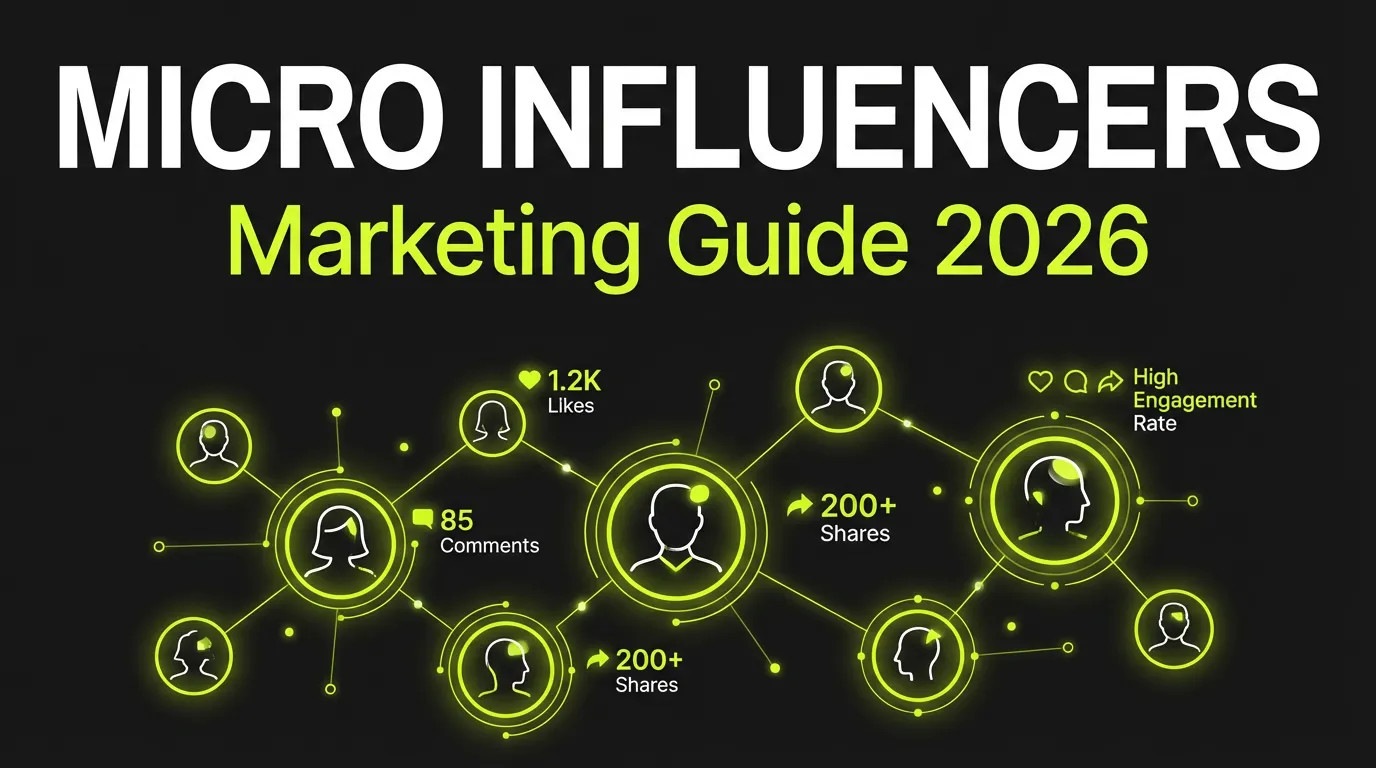
:::highlight The Micro/Nano Advantage Micro-influencers can deliver up to 20x ROI. Nano creators achieve 6.15-6.76% engagement rates—far exceeding macro influencers. 81% of brands say micro-influencer content meets or exceeds expectations. :::
- Global influencer marketing: $32.55 billion in 2025 (Influencer Marketing Hub)
- Nano-influencers drive 7% conversion rate (vs. 3% for macro)
- 44% of brands prefer nano-influencers over other tiers
- Gifted collaborations deliver 12.9% more engagement than paid
- Micro-influencer campaigns generate 60% higher conversion rates
For teams that need more campaign-ready variations, AdBid's AI creative factory helps turn briefs into hooks, copy, and ad assets faster.
Why Smaller Creators Win in 2026
The influencer marketing playbook has flipped.
"Global spend has surged to $32.55 billion, driven by a measurable shift toward ROI-first strategies, AI integration, and a strong preference for micro and mid-tier creators."
Bigger isn't better anymore. Here's why:
The Trust Factor
Nano and micro-influencers feel like friends, not celebrities. Their audiences trust their recommendations because they seem authentic.
:::info The Authenticity Premium Gifted collaborations deliver 12.9% more engagement than paid partnerships (2.19% vs. 1.94% engagement rate). Audiences can smell inauthenticity. :::
The Engagement Math
| Tier | Followers | Engagement Rate | Conversion Rate |
|---|---|---|---|
| Nano | 1K-10K | 6.15-6.76% | ~7% |
| Micro | 10K-100K | 3-6% | ~5% |
| Mid-tier | 100K-500K | 2-3% | ~4% |
| Macro | 500K-1M | 1-2% | ~3% |
| Mega | 1M+ | 0.5-1.5% | ~2% |
Nano-influencers outperform micro-influencers by 49.7% in engagement.
The Cost Equation
| Tier | Cost Per Post | CPM Equivalent |
|---|---|---|
| Nano | $50-300 | $211 |
| Micro | $200-1,000 | $119 |
| Mid-tier | $1,000-5,000 | $85 |
| Macro | $5,000-20,000 | $45 |
Higher CPM, but dramatically higher performance.
Influencer Tier Definitions
Nano-Influencers (1K-10K followers)
Characteristics:
- Hyper-engaged small community
- Often unpaid or product-only
- Authentic, relatable content
- Specific niche expertise
Best for:
- Local businesses
- Niche products
- Building authentic UGC library
- Budget-conscious campaigns
:::tip Nano Strategy Volume is key. Work with 50+ nano-influencers instead of 5 micro-influencers for similar budget but broader reach and more content. :::
Micro-Influencers (10K-100K followers)
Characteristics:
- Established niche authority
- Professional content quality
- Measurable reach
- Reasonable costs
Best for:
- Most brands (sweet spot)
- Product launches
- Sustained campaigns
- Performance marketing
When to Use Macro/Mega
Don't abandon larger creators entirely:
- Major product launches
- Brand awareness campaigns
- Celebrity collaborations that fit brand
- Tentpole moments (Super Bowl, holidays)
Finding the Right Creators
Discovery Methods
1. Platform Native Search
- Instagram Creator Marketplace
- TikTok Creator Marketplace
- YouTube BrandConnect
2. Influencer Platforms
- Aspire
- Grin
- Creator.co
- Modash
- Upfluence
3. Organic Discovery
- Search relevant hashtags
- Check competitor mentions
- Monitor brand mentions
- Explore niche communities
Vetting Criteria
:::highlight The FATE Framework Fit — Does their content align with your brand? Audience — Are their followers your target customers? Trust — Is engagement authentic (not bought)? Engagement — Do followers actually interact? :::
Red flags to watch:
- Sudden follower spikes (bought followers)
- Low comments relative to likes
- Generic/spam comments
- Inconsistent posting frequency
- Multiple unrelated sponsorships
Engagement Authentication
Calculate true engagement rate:
- (Likes + Comments + Shares) / Followers × 100
- Compare to tier benchmarks
- Review comment quality (real vs. bot)
- Check follower/following ratio
Campaign Types & Structures
1. Product Seeding (Gifted)
Setup:
- Send free product
- No payment required
- No posting obligation
- Hope for organic content
Performance:
"Gifted collaborations deliver 12.9% more engagement than paid partnerships."
Best for:
- Building relationships
- Product feedback
- Authentic UGC
- Long-term partnerships
2. Sponsored Posts
Standard structure:
- Paid fee per post
- Specific deliverables
- Usage rights negotiated
- FTC disclosure required
Pricing models:
- Flat fee per post
- Performance bonus (CPE, CPA)
- Retainer/ambassador deals
- Affiliate commission
3. Affiliate Partnerships
Setup:
- Unique discount code per creator
- Commission on attributed sales
- Lower fixed cost, higher variable
- Natural alignment of incentives
:::tip Affiliate Tracking Give each influencer their own promo code, trackable link, or UTM parameters so you can see exactly who's driving sales. :::
4. Ambassador Programs
Structure:
- Long-term relationship (3-12 months)
- Multiple posts per month
- Exclusive to brand (in category)
- Deeper integration
Benefits:
- Consistent messaging
- Lower cost per post
- Authentic long-term relationship
- Exclusive content rights
5. UGC Creation (No Posting)
Setup:
- Pay for content creation only
- Creator doesn't post on their channel
- Brand uses content for paid ads
- Often called "whitelisting"
Advantage: Professional-quality UGC for ads without relying on organic reach.
Campaign Execution
Step 1: Set Clear Objectives
| Objective | Primary KPI | Secondary KPIs |
|---|---|---|
| Awareness | Reach, impressions | Engagement, saves |
| Engagement | Comments, shares | Saves, DMs |
| Traffic | Link clicks, UTM visits | Bounce rate, time on site |
| Sales | Conversions, ROAS | AOV, new customer % |
| Content | # of assets, quality | Engagement on repurposed |
Step 2: Brief Creation
:::highlight Brief Essentials
- Brand overview and values
- Campaign goal and KPIs
- Key messages (2-3 max)
- Do's and don'ts
- Product details
- Content requirements
- Timeline and deadlines
- FTC compliance requirements :::
What NOT to include:
- Word-for-word scripts (kills authenticity)
- Excessive brand mentions
- Unrealistic expectations
- Too many products/messages
Step 3: Contract Essentials
Cover these in writing:
- Deliverables (quantity, format, platform)
- Timeline (draft, revision, posting)
- Usage rights (duration, channels)
- Exclusivity (if any)
- Payment terms
- FTC compliance requirements
- Revision process
Step 4: Content Review
Review checklist:
- Brand guidelines followed
- Key messages included
- FTC disclosure present (#ad, #sponsored)
- No competitor products visible
- Audio/video quality acceptable
- Tone matches brief
:::warning Don't Over-Edit Heavy-handed edits kill authenticity. Trust the creator's voice—it's why their audience follows them. :::
Step 5: Amplification
Boost top-performing influencer content:
- Spark Ads (TikTok)
- Branded Content Ads (Meta)
- Whitelisting (run ads from creator's handle)
- Repurpose for other channels
Measurement & ROI
Essential Metrics
Engagement metrics:
- Engagement rate
- Comments (quality matters)
- Saves/bookmarks
- Shares
Traffic metrics:
- Link clicks (UTM tracked)
- Landing page sessions
- Bounce rate
- Time on site
Conversion metrics:
- Conversions attributed
- Revenue generated
- ROAS
- CAC per influencer
Attribution Methods
| Method | Accuracy | Implementation |
|---|---|---|
| Unique discount codes | High | Easy |
| UTM links | High | Easy |
| Affiliate tracking | High | Medium |
| Post-purchase survey | Medium | Easy |
| Promo-code lift analysis | Medium | Medium |
| Matched market testing | High | Complex |
ROI Calculation
Basic formula: ROI = (Revenue - Cost) / Cost × 100
Include all costs:
- Creator fees
- Product costs
- Shipping
- Agency fees
- Amplification spend
- Team time
:::info Benchmark ROI Average influencer marketing ROI: 5.78x (Influencer Marketing Hub). Top performers: 10-20x. If you're below 3x, something's wrong. :::
Optimization Strategies
1. Mix Influencer Tiers
"Don't put your entire budget into one mega-influencer. Mix nano, micro, and macro-influencers to diversify reach, boost engagement, and reduce risk."
Recommended mix:
- 60% micro-influencers
- 30% nano-influencers
- 10% mid-tier/macro
2. Long-Term Relationships
"Longer collaborations usually cost less per post and build stronger brand affinity."
Why it works:
- Lower cost per post
- More authentic integration
- Audience familiarity with brand
- Better performance over time
3. Niche Alignment
:::highlight Niche Matters Most Campaigns matching influencer niche to products see 13.59% higher engagement and 81.39% more views. :::
Don't hire a fitness influencer to promote finance apps—even if their numbers look good.
4. Repurpose Everything
Maximize content value:
- Use in paid social ads
- Feature on product pages
- Include in email marketing
- Display in-store
- Add to organic social
5. Test and Scale
The testing process:
- Start with 10-20 creators
- Measure performance by creator
- Identify top performers (top 20%)
- Expand relationship with winners
- Find similar creators (lookalikes)
- Scale systematically
Common Mistakes
1. Prioritizing Follower Count
Engagement and audience fit matter more than reach.
2. Over-Controlling Content
Let creators create. Heavy scripting destroys authenticity.
3. One-and-Done Campaigns
Single posts rarely move the needle. Plan for ongoing presence.
4. Ignoring FTC Compliance
Undisclosed sponsorships risk legal issues and damage trust.
5. Poor Attribution Setup
Without tracking, you can't measure ROI or optimize.
The Platform-Specific Playbook
TikTok
- Native, entertaining content wins
- Use TikTok Spark Ads to boost
- Trending sounds matter
- Vertical video only
- Shorter is better (15-60 sec)
- Feed posts for permanence
- Reels for reach
- Stories for authenticity
- Carousel posts for depth
- Mix formats for best results
YouTube
- Long-form integrations (30-60 sec)
- Dedicated videos for launches
- YouTube Shorts for discovery
- Higher production value expected
The Bottom Line
Micro and nano influencer marketing in 2026 delivers:
- Higher engagement — 6%+ vs. 1-2% for mega
- Better conversion — 7% vs. 3% for macro
- Authentic content — Trust drives results
- Cost efficiency — Up to 20x ROI possible
- Scalable volume — Many creators = diversified risk
:::tip Start Here Begin with 20 micro-influencers in your niche. Give each unique tracking. Run for 3 months. Double down on top 5 performers. That's your influencer marketing engine. :::
"81% of brands say content from micro-influencers meets or exceeds their expectations."
AdBid helps you track influencer marketing alongside your paid campaigns. See which creators drive real results. Start tracking.