
Part of our CTV Advertising guide series.
Key Takeaways
- Programmatic ad spend reached $595B in 2024, projected to hit $800B by 2028
- 90% of all display ad buying is now programmatic
- CTV ad spend hit $32.6B in the US in 2025, growing 13% YoY
- 91%+ of US programmatic display goes to private marketplaces and programmatic direct
- Video accounts for nearly 75% of new programmatic ad dollars from 2024-2026
:::info Market Scale Worldwide programmatic display ad spending will grow 14.6% in 2025 (EMARKETER). By 2026, programmatic will account for 90% of display advertising budgets worldwide (EMARKETER). :::
Want to see it in practice? Explore the AdBid platform — campaign planning, automation, and analytics live in one workspace.
The Display Advertising Evolution
Display advertising has transformed from simple banner placements to sophisticated, AI-driven, multi-format campaigns across screens. Understanding the landscape is essential for maximizing return.
Display Channel Overview
| Channel | 2025 US Spend | Growth | Best For |
|---|---|---|---|
| Programmatic Display | $65B | +10% | Broad reach, retargeting |
| Programmatic Video | $110B | +15% | Engagement, brand |
| CTV/OTT | $32.6B | +13% | Premium audiences |
| Digital OOH | $17.6B | +14.9% | Local, awareness |
| Social Display | Included above | Varies | Native integration |
The Shift to Private Marketplaces
"More than 91% of total US programmatic display ad spending will go towards private marketplaces (PMPs) and programmatic direct."
Why PMPs Are Growing:
- Better inventory quality
- More brand safety
- Direct publisher relationships
- Less fraud
- Premium pricing but better results
Programmatic Deep Dive
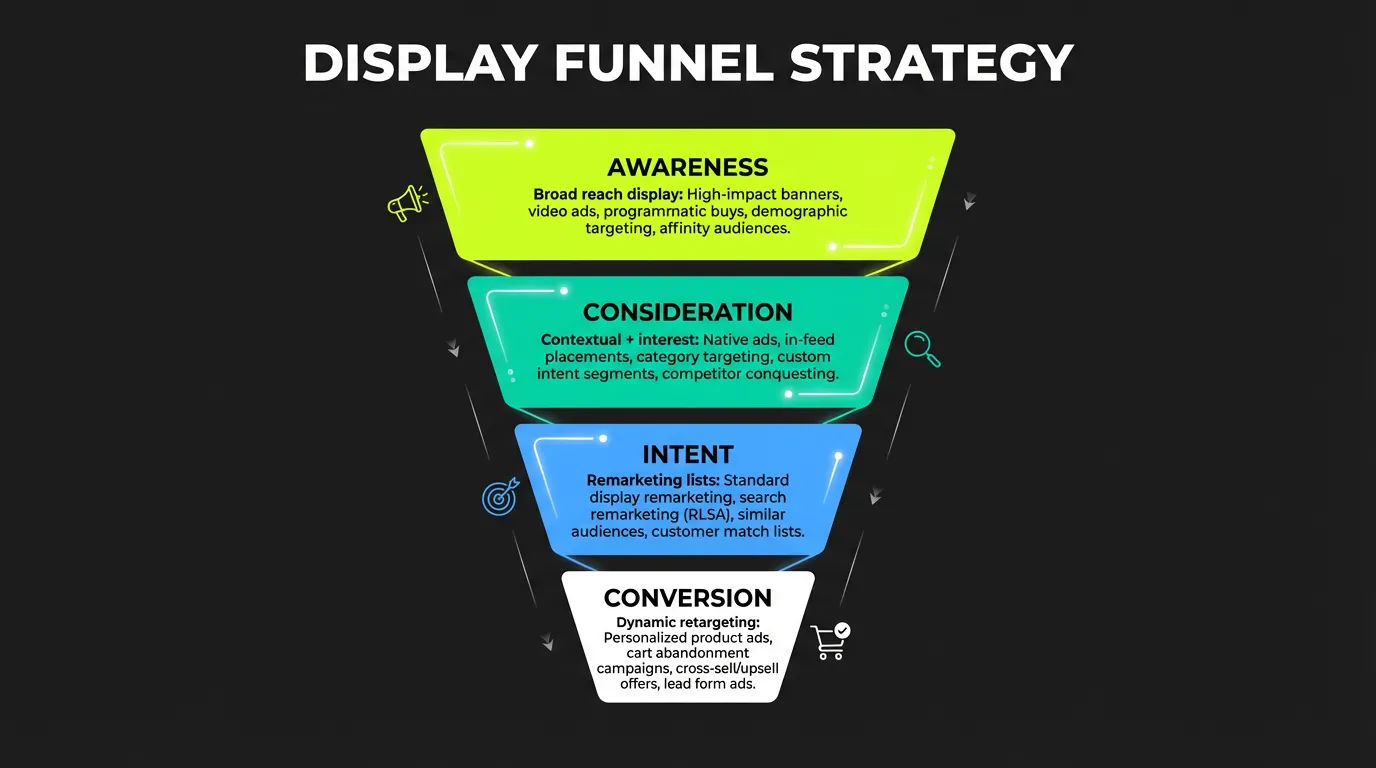
How Programmatic Works
Advertiser → DSP → Ad Exchange → SSP → Publisher
(Milliseconds per impression)
| Component | Role |
|---|---|
| DSP (Demand-Side Platform) | Where advertisers buy inventory |
| SSP (Supply-Side Platform) | Where publishers sell inventory |
| Ad Exchange | Marketplace connecting DSPs and SSPs |
| DMP (Data Management Platform) | Audience data for targeting |
| CDP (Customer Data Platform) | First-party data activation |
Buying Methods
| Method | Description | Best For |
|---|---|---|
| Open Auction (RTB) | Real-time bidding on open exchanges | Scale, broad reach |
| Private Marketplace | Invitation-only auctions | Quality inventory |
| Programmatic Guaranteed | Fixed price, reserved inventory | Premium placements |
| Preferred Deal | First-look at inventory, negotiated price | Specific publishers |
Major DSPs
| DSP | Strength | Best For |
|---|---|---|
| Google DV360 | Scale, Google ecosystem | Most advertisers |
| The Trade Desk | Independence, CTV strength | Mid-to-large advertisers |
| Amazon DSP | Amazon data, retail | E-commerce, CPG |
| Xandr (Microsoft) | Microsoft ecosystem | B2B, LinkedIn integration |
| MediaMath | Transparency | Performance focus |
Connected TV (CTV) Advertising
The CTV Opportunity
"CTV now commands 75% of its ad inventory programmatically, making it a dominant performance channel."
CTV vs. Linear TV:
| Factor | Linear TV | CTV |
|---|---|---|
| Targeting | Broad demographic | Precise, household-level |
| Measurement | Nielsen ratings | Impression-level |
| Attribution | Difficult | Possible |
| Minimum Buy | Large | Flexible |
| Completion Rate | Lower | Higher (less skip) |
CTV Platforms & Inventory
| Platform | Type | Reach |
|---|---|---|
| YouTube TV | Streaming | 5M+ subscribers |
| Hulu | Streaming | 50M+ subscribers |
| Roku Channel | FAST | 80M+ accounts |
| Tubi | FAST | 80M+ viewers |
| Peacock | Streaming | 30M+ subscribers |
| Amazon Freevee | FAST | Amazon ecosystem |
CTV Best Practices
- 15 and 30-second spots — Standard formats work
- Non-skip = high completion — Plan for full view
- Frequency capping — Household-level management
- Cross-screen strategy — CTV + mobile retargeting
- Brand-safe inventory — Premium content focus
:::highlight CTV Investment "56% of global marketers are increasing CTV and OTT advertising spend in 2025, especially in automotive, travel, pharma, and finance verticals." :::
Digital Out-of-Home (DOOH)
DOOH Goes Programmatic
"Half of all digital out-of-home campaigns are now purchased either fully or partly programmatically."
DOOH Formats
| Format | Location | Best For |
|---|---|---|
| Billboards | Highways, roads | Mass awareness |
| Street Furniture | Bus stops, benches | Local targeting |
| Transit | Subway, airports | Commuter reach |
| Place-Based | Malls, gyms, stores | In-context messaging |
Programmatic DOOH Benefits
- Dynamic creative — Change by time, weather, events
- Audience targeting — Mobile data for location
- Real-time bidding — Efficient buying
- Measurement — Exposure tracking
- Integration — Cross-channel campaigns
Display Creative Best Practices
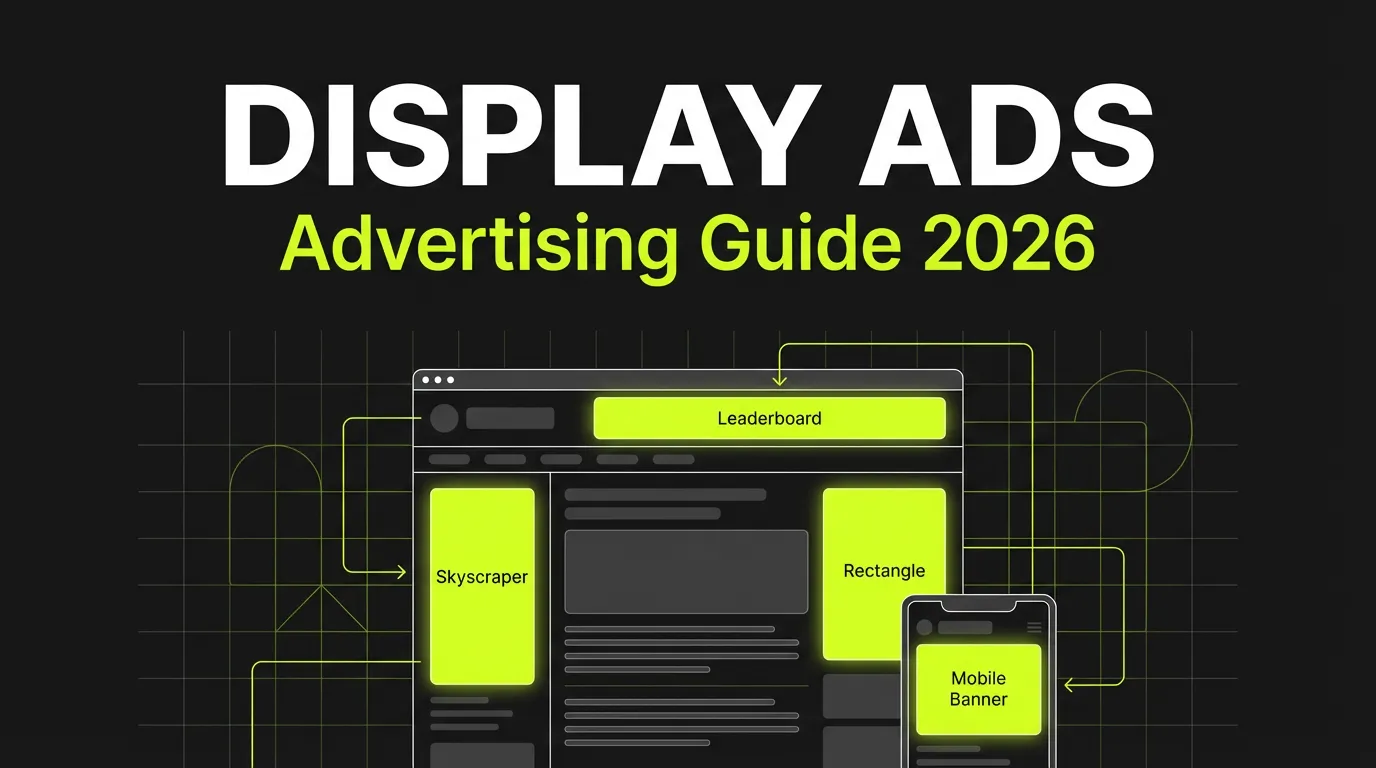
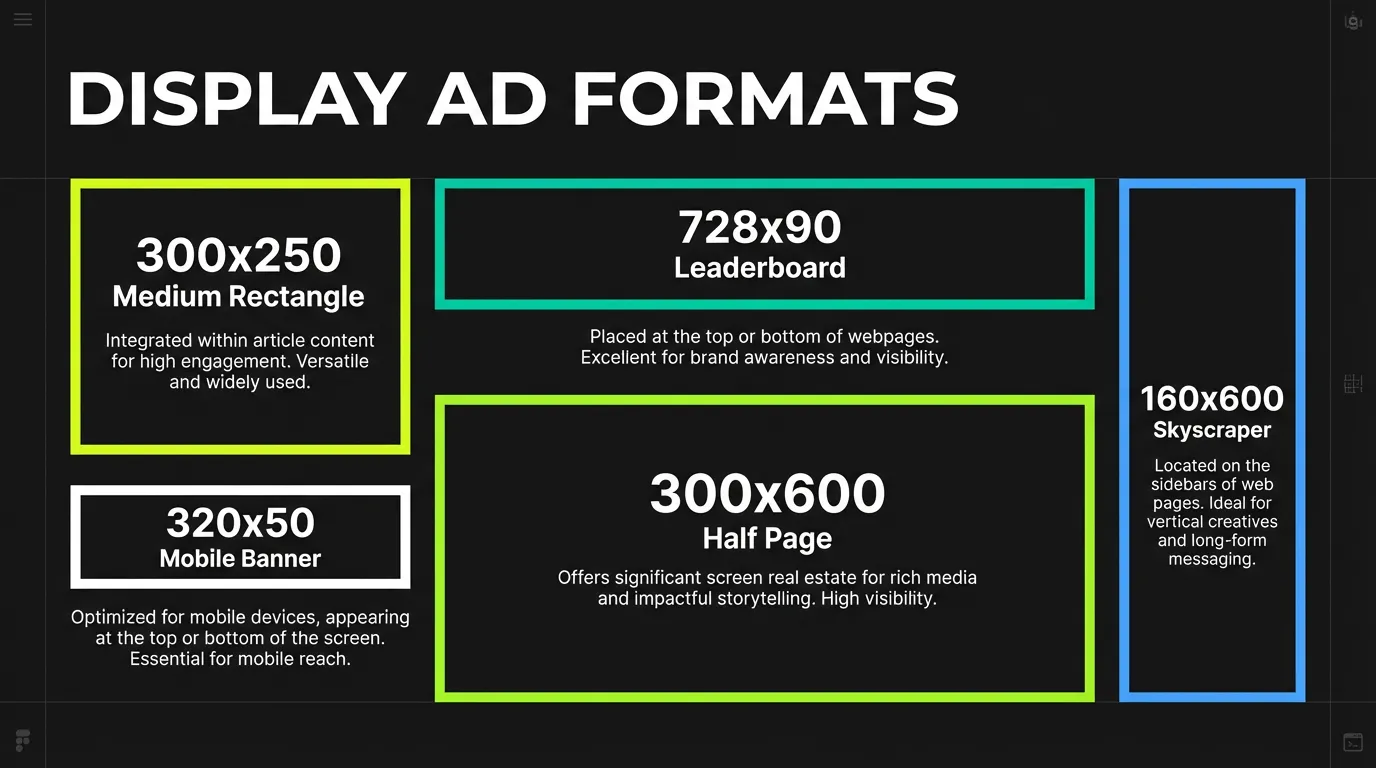
Standard Display Sizes
| Size | Name | Placement |
|---|---|---|
| 300x250 | Medium Rectangle | Universal |
| 728x90 | Leaderboard | Desktop top |
| 160x600 | Wide Skyscraper | Desktop sidebar |
| 320x50 | Mobile Banner | Mobile |
| 300x600 | Half Page | High impact |
Creative Guidelines
Do:
- Clear brand identification
- Single, focused message
- Strong CTA
- High contrast for visibility
- Mobile-optimized versions
- Multiple sizes for reach
Don't:
- Cluttered designs
- Too much text
- Auto-play audio
- Misleading elements
- Slow-loading creative
- Flash (deprecated)
Dynamic Creative Optimization (DCO)
| Element | Personalization Options |
|---|---|
| Headline | By audience segment |
| Image | By browsing history |
| CTA | By funnel stage |
| Price | By location |
| Product | By past purchases |
Targeting Strategies
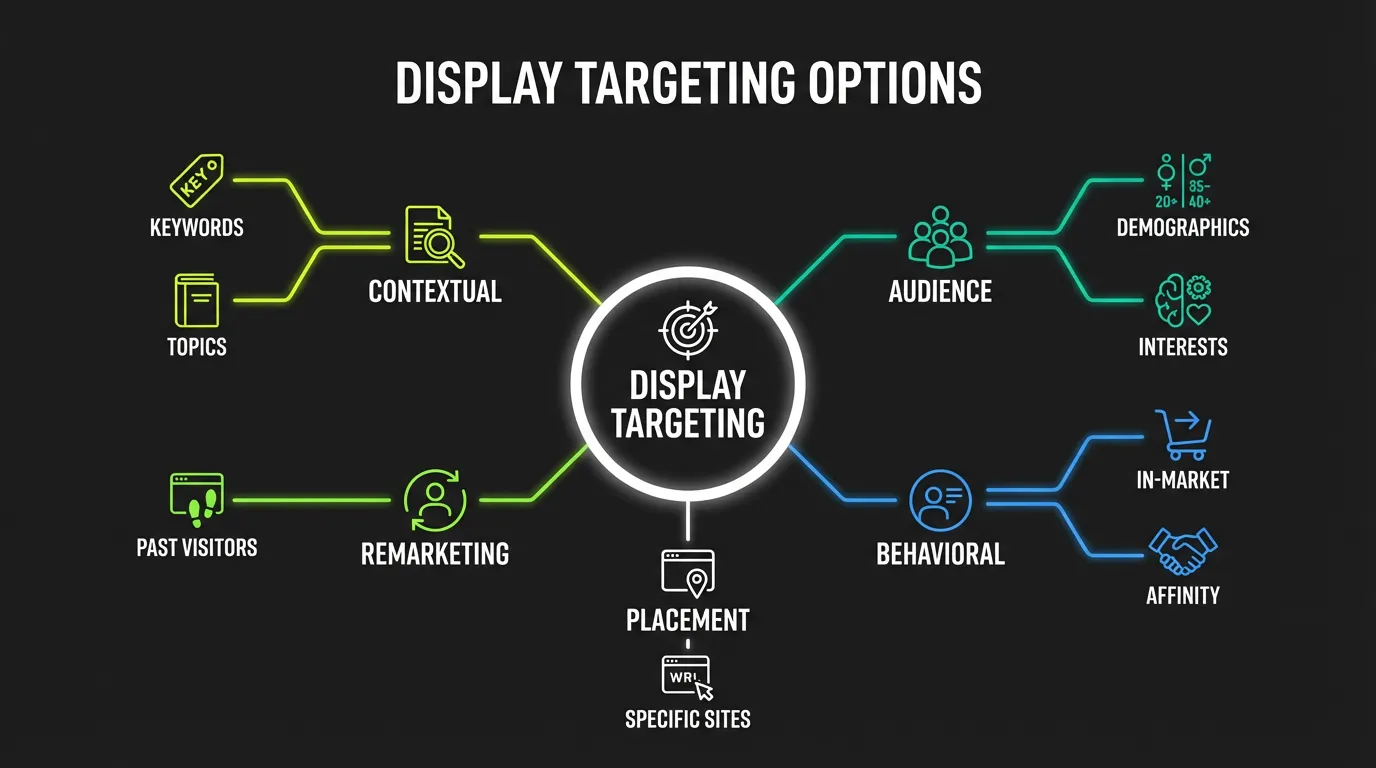
Audience Targeting Options
| Type | Description | Use Case |
|---|---|---|
| Contextual | Page content relevance | Brand safety, privacy-compliant |
| Behavioral | Past actions | Retargeting, interest-based |
| Demographic | Age, gender, income | Broad targeting |
| Geographic | Location-based | Local campaigns |
| First-Party | Your own data | Highest value |
| Third-Party | Data providers | Declining due to privacy |
| Lookalike | Similar to customers | Prospecting |
Privacy-First Targeting
"First-party data and contextual advertising are the clearest paths forward as wider privacy concerns around data management continue."
Privacy-Compliant Approaches:
- Contextual targeting — No user tracking needed
- First-party data — Your own consented data
- Privacy Sandbox APIs — Chrome's new approach
- Unified ID solutions — Industry alternatives
- Publisher first-party data — Co-op partnerships
Measurement & Attribution
Display Metrics
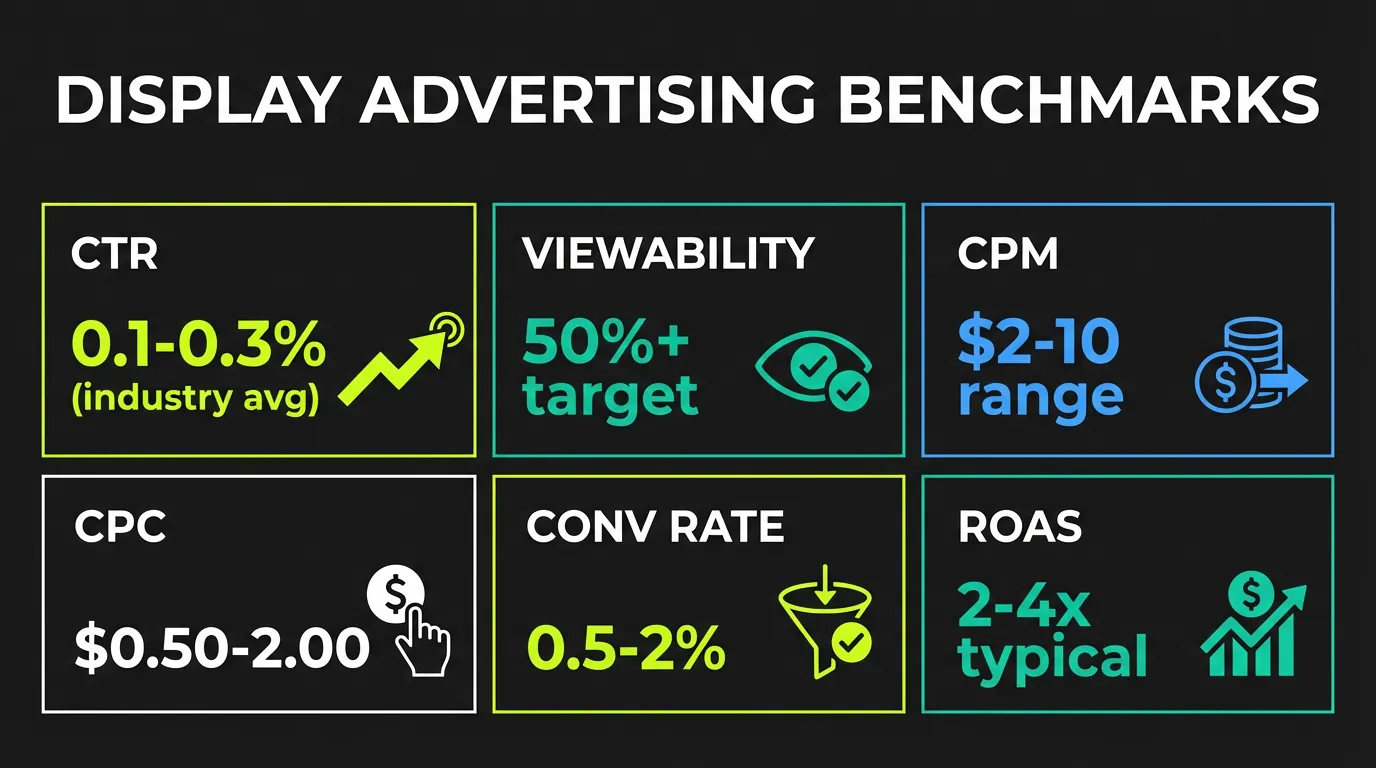
| Metric | Definition | Benchmark |
|---|---|---|
| CPM | Cost per 1,000 impressions | $2-$20+ varies |
| CTR | Clicks ÷ Impressions | 0.1-0.3% display |
| Viewability | Viewed ÷ Served | 70%+ target |
| VCR | Video completion rate | 70%+ |
| CPA | Cost per acquisition | Campaign-dependent |
| ROAS | Revenue ÷ Ad Spend | 3:1+ target |
Viewability Standards
| Format | MRC Viewability Definition |
|---|---|
| Display | 50% of pixels in view for 1 second |
| Video | 50% of pixels in view for 2 seconds |
| Large Display | 30% of pixels in view for 1 second |
Attribution Challenges
Display attribution is complex:
- View-through vs. click-through
- Cross-device journeys
- Assist vs. direct conversions
- Last-touch bias
- Cookie limitations
Recommended Approach:
- Multi-touch attribution models
- Incrementality testing
- Marketing Mix Modeling for upper funnel
- Brand lift studies
AI in Display Advertising
AI Applications
"Artificial intelligence is no longer an accessory in programmatic advertising — it is the engine. In 2025, AI technology and machine learning touch every stage of the workflow."
| Stage | AI Application |
|---|---|
| Planning | Audience modeling, budget optimization |
| Creative | Dynamic generation, optimization |
| Buying | Real-time bidding, pacing |
| Measurement | Attribution, incrementality |
| Reporting | Insights, anomaly detection |
Smart Bidding Strategies
| Strategy | Description | Best For |
|---|---|---|
| Target CPA | Hit cost per acquisition target | Performance campaigns |
| Target ROAS | Hit return on ad spend target | E-commerce |
| Maximize Conversions | Get most conversions | Lead gen |
| Maximize Clicks | Get most traffic | Awareness |
Common Challenges
Brand Safety Concerns
"Brand safety (58%) and cookie deprecation (52%) are top concerns for programmatic experts in 2025."
Mitigation:
- Pre-bid brand safety filters
- Whitelist premium publishers
- Third-party verification (IAS, DV, MOAT)
- Private marketplace buying
- Regular placement audits
Ad Fraud
- Invalid traffic detection
- Pre-bid fraud filtering
- Post-campaign analysis
- Certified partners (TAG)
Signal Loss
With cookie deprecation:
- Contextual targeting resurgence
- First-party data priority
- Clean room solutions
- Publisher partnerships
The Bottom Line
Display advertising in 2026 requires:
- Programmatic fluency — 90% of display is programmatic
- CTV investment — Fastest-growing, highest engagement channel
- Privacy adaptation — First-party data and contextual targeting
- AI adoption — Every stage benefits from automation
- Quality over quantity — PMPs over open exchange
- Cross-screen thinking — Display, video, CTV, DOOH together
"Display CPMs fell by 33% YoY in January 2025 — but this reflects market volatility, not diminished value. Smart buyers are getting more efficient inventory at better prices."
AdBid tracks your display advertising across DSPs and channels. See unified reporting for programmatic, CTV, and more. Consolidate your reporting.