
Key Takeaways
- There are 8 main types of audience segmentation: demographic, behavioral, psychographic, technographic, transactional, contextual, lifecycle, and predictive
- AI adoption in marketing has doubled since 2023, with 37% using AI in everyday tasks
- Properly segmented retargeting delivers 147% higher conversions than standard display
- The best strategies use 8+ data sources to build audiences
- Privacy-compliant personalization is now standard — contextual signals replace cookies
:::info The Segmentation Advantage Segmented retargeting audiences see a 76% increase in CTR and 147% boost in conversions compared to standard display advertising. :::
Pricing scales with spend, not seats — see how AdBid works for teams running paid acquisition seriously.
The 8 Types of Audience Segmentation
I've built audience strategies for brands spending $1M+ monthly on ads. The single biggest lever? Getting segmentation right. Not just demographic boxes, but deep behavioral and intent signals.
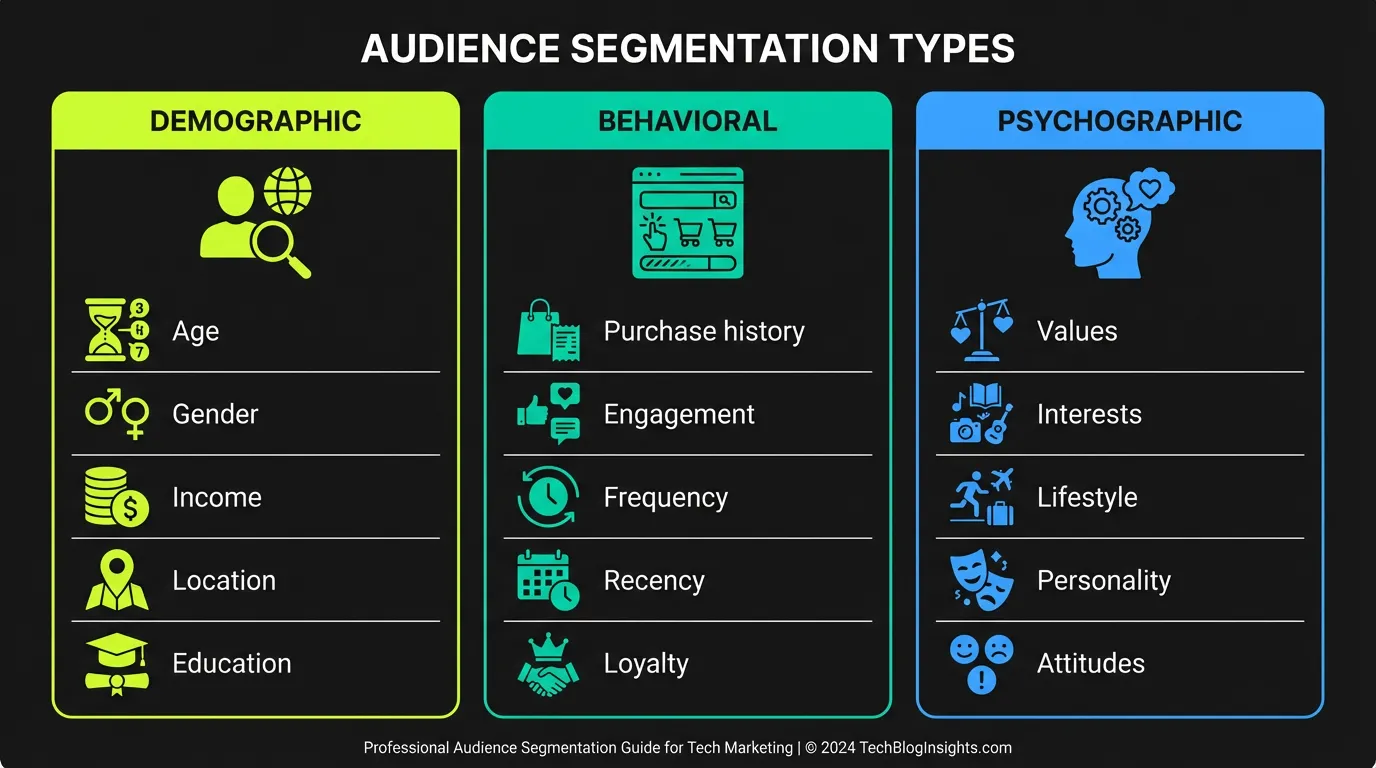
1. Demographic Segmentation
The foundation — but rarely sufficient alone.
| Factor | Examples | Use Case |
|---|---|---|
| Age | 18-24, 25-34, 35-44, etc. | Generational messaging |
| Gender | Male, female, non-binary | Product fit |
| Income | Brackets, HHI | Pricing sensitivity |
| Education | High school, college, graduate | Messaging sophistication |
| Occupation | Job titles, industries | B2B targeting |
| Location | Geo, urban/suburban/rural | Local relevance |
:::warning Demographic Alone Fails Two 35-year-old women with similar incomes can have completely different buying behaviors. Demographics set the table; behavior closes the deal. :::
2. Behavioral Segmentation
How users actually interact with your brand and category.
Key Behavioral Signals:
- Purchase history and frequency
- Website browsing patterns
- Email engagement (opens, clicks)
- App usage and feature adoption
- Cart abandonment patterns
- Customer service interactions
Behavioral Segments to Build:
| Segment | Definition | Strategy |
|---|---|---|
| Power Users | Top 10% by engagement | Loyalty, upsell |
| At-Risk | Declining engagement | Retention campaigns |
| Browsers | View but don't buy | Conversion incentives |
| Repeat Purchasers | 2+ transactions | Cross-sell, referral |
| Seasonal Buyers | Holiday-only purchases | Timely reactivation |
3. Psychographic Segmentation
Values, interests, and lifestyle — the "why" behind behavior.
- Values: Sustainability, convenience, status, family
- Interests: Hobbies, content consumption, passions
- Lifestyle: Active, homebody, traveler, minimalist
- Personality: Risk-taker vs. cautious, early adopter vs. mainstream
:::tip Finding Psychographics Survey data, social listening, and content engagement patterns reveal psychographic signals. Look at what content your customers consume, not just what they buy. :::
4. Technographic Segmentation
The technology stack and digital behavior patterns.
| Signal | What It Reveals |
|---|---|
| Device type | Mobile-first vs. desktop preference |
| Operating system | iOS = higher income correlation |
| Browser | Tech sophistication |
| Software used | B2B product fit |
| Social platforms | Content preferences |
5. Transactional Segmentation
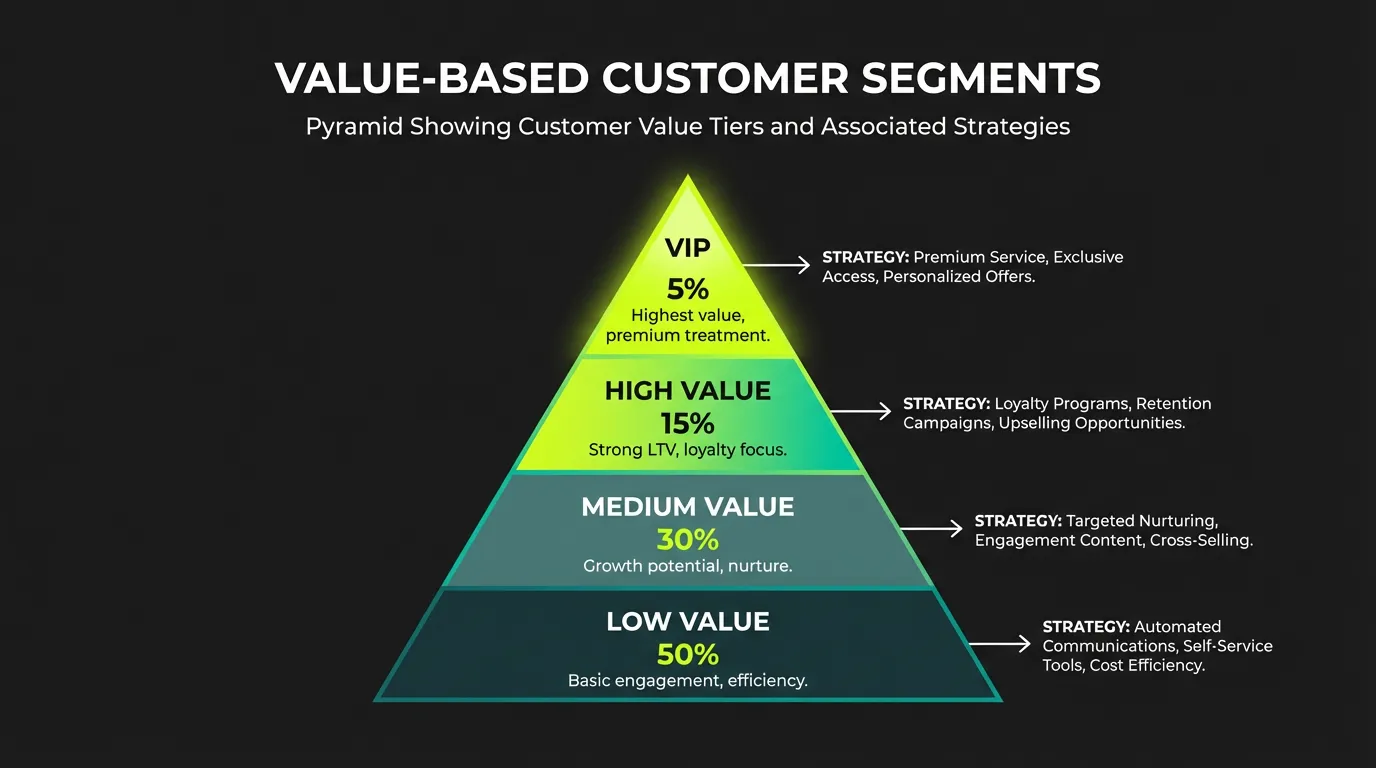
Purchase behavior and customer value.
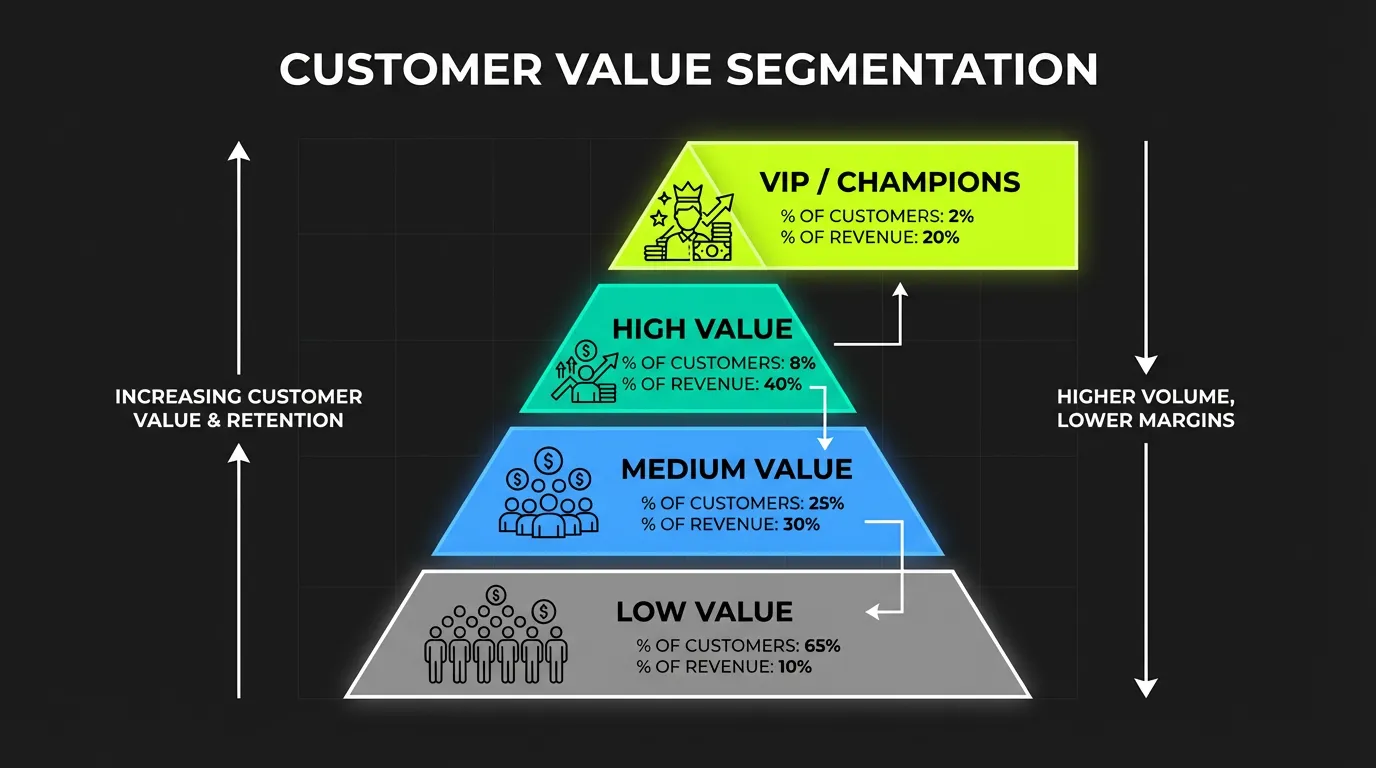
RFM Analysis:
- Recency: How recently they purchased
- Frequency: How often they purchase
- Monetary: How much they spend
| RFM Segment | Characteristics | Strategy |
|---|---|---|
| Champions | Recent, frequent, high-value | Exclusive offers, advocacy |
| Loyal | Consistent purchasers | Loyalty programs |
| At Risk | Previously active, now dormant | Win-back campaigns |
| New | First purchase recent | Onboarding, second purchase push |
| High-Potential | Infrequent but high-value | Engagement increase |
6. Contextual Segmentation
The environment and moment of engagement.
- Content context: What page/article they're viewing
- Time context: Day of week, time of day, season
- Device context: Mobile commute vs. desktop office
- Weather context: Conditions in their location
- Event context: Sports, holidays, news events
:::highlight Privacy-First Hero Contextual targeting doesn't require user tracking. It's privacy-compliant by design and increasingly effective as cookie-based targeting disappears. :::
7. Lifecycle Segmentation
Where customers are in their journey with your brand.
| Stage | Definition | Messaging Focus |
|---|---|---|
| Prospects | Aware, not yet customer | Education, value proposition |
| New Customers | First 30-90 days | Onboarding, feature discovery |
| Active Customers | Regular engagement | Cross-sell, deepening |
| At-Risk | Declining activity | Re-engagement, offers |
| Churned | No activity 90+ days | Win-back, feedback |
| Advocates | High NPS, referrers | Referral programs, UGC |
8. Predictive Segmentation
AI-powered segments based on predicted behavior.
What AI Predicts:
- Likelihood to purchase
- Predicted LTV
- Churn probability
- Next best product
- Channel preference
- Price sensitivity
"AI-powered audience segmentation is now a critical element for marketing success. By automating the analysis of vast datasets, AI empowers marketers to offer hyper-personalized experiences."
AI-Powered Segmentation Strategies
The AI Adoption Curve
| Year | AI Adoption in Marketing |
|---|---|
| 2022 | 55% of organizations |
| 2024 | 72% of organizations |
| 2026 | 85%+ projected |
AI has moved beyond buzzword status into practical application:
- Creative optimization — Testing thousands of variants automatically
- Audience modeling — Finding patterns in limited data
- Bid optimization — Real-time adjustments based on performance
- Segment discovery — Identifying audiences you didn't know existed
Building AI-Powered Segments
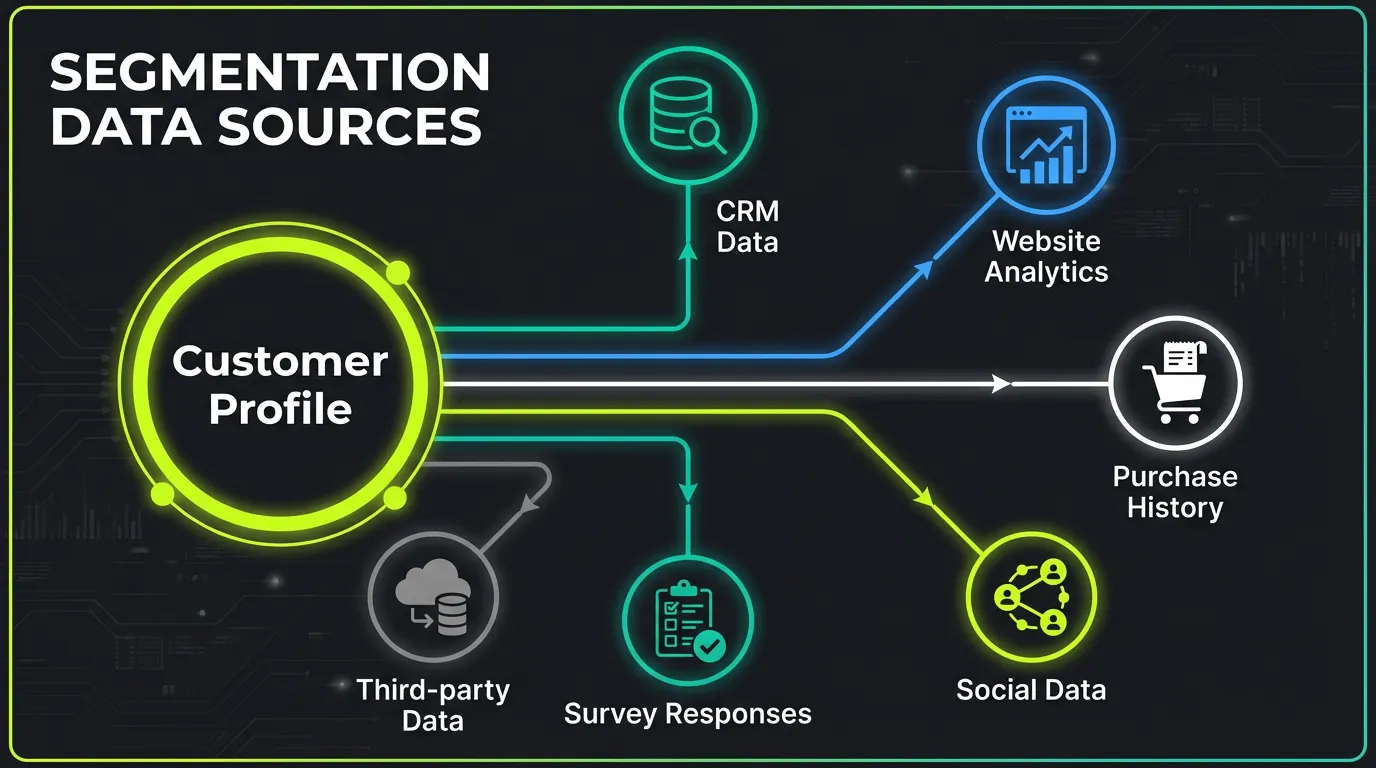
Data Inputs:
First-party data: CRM, website, app, email
Second-party data: Partner data, clean rooms
Third-party data: Data providers (privacy-compliant)
Contextual signals: Content, time, device
Transaction data: Purchase history, order values
Engagement data: Opens, clicks, time on site
AI Processing:
- Pattern recognition across millions of data points
- Cluster analysis to identify natural groupings
- Propensity modeling for predictive scores
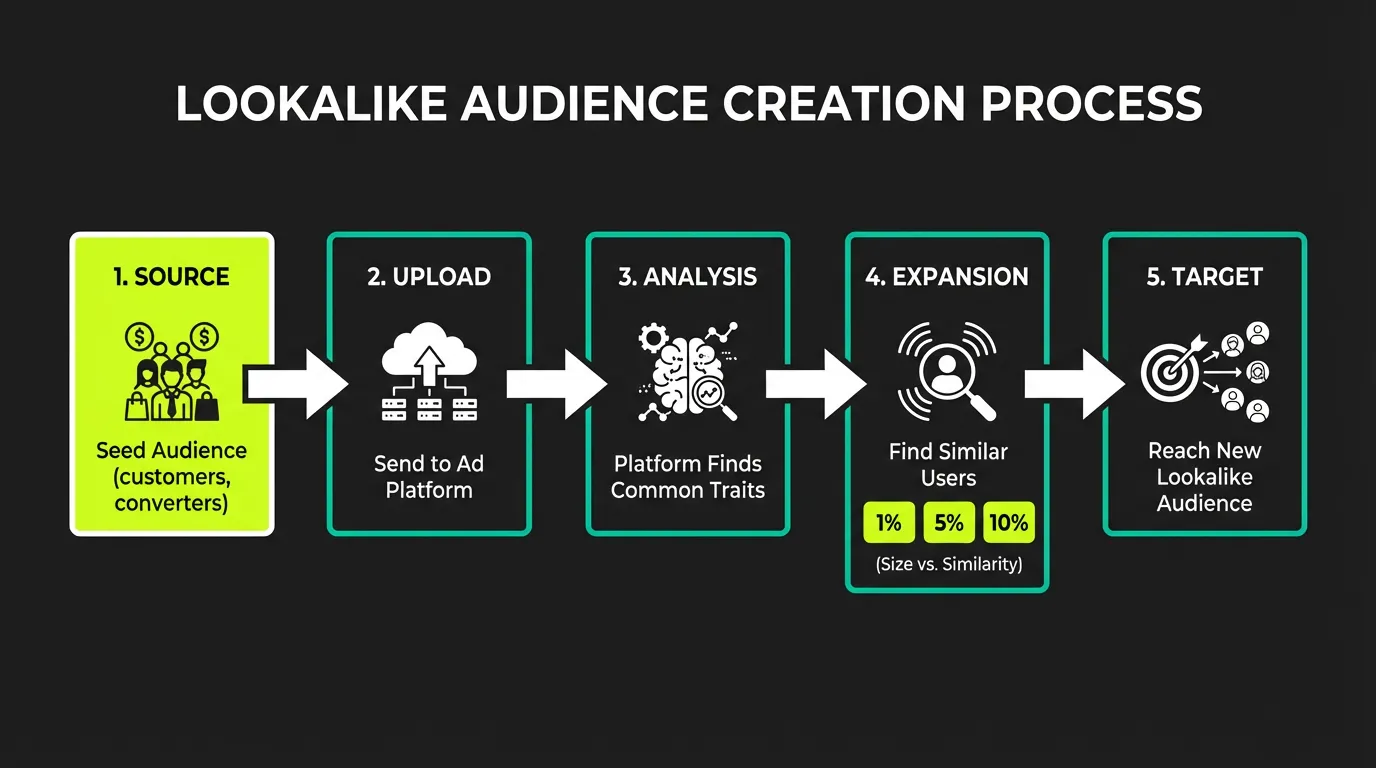
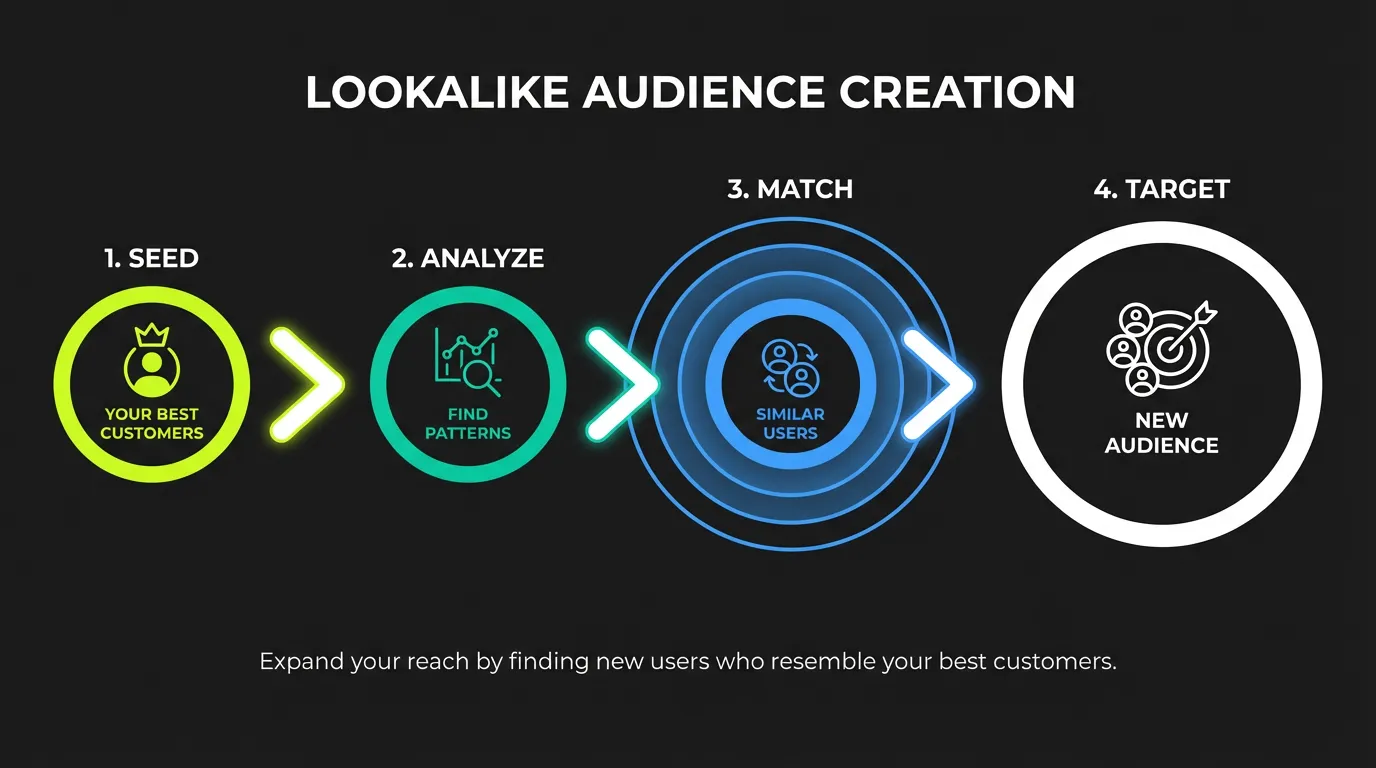
- Lookalike modeling for expansion
Segment Output:
- High-value prospect clusters
- Churn risk tiers
- Cross-sell opportunity groups
- Engagement potential scores
:::tip Data Source Diversity Research shows marketers with the most successful data strategies use 8 or more data sources to build their audiences (Salesforce). :::
Platform-Specific Segmentation
Meta Ads Manager
| Audience Type | How It Works | Best For |
|---|---|---|
| Custom Audiences | Your data (lists, pixels, app) | Retargeting, exclusions |
| Lookalike Audiences | Similar to your customers | Prospecting at scale |
| Saved Audiences | Interest + demographic targeting | Cold prospecting |
| Advantage+ | AI-optimized broad targeting | Maximum scale |
Meta Segmentation Tips:
- Upload customer lists segmented by LTV
- Create separate lookalikes from high-value vs. all customers
- Use pixel events for behavioral segments (AddToCart, Purchase)
- Layer exclusions to avoid audience overlap
Google Ads
| Audience Type | Signal Source | Application |
|---|---|---|
| In-Market | Search/browse signals | Active shoppers |
| Affinity | Long-term interests | Brand awareness |
| Custom Intent | Your keywords/URLs | Competitor conquesting |
| Similar Audiences | Your remarketing lists | Lookalike expansion |
| Customer Match | Uploaded lists | CRM targeting |
LinkedIn Ads
B2B segmentation powerhouse:
- Job title and function
- Seniority level
- Company size and industry
- Skills and certifications
- Group membership
- Company follower targeting
Privacy-Compliant Segmentation
The New Rules
| Old Approach | New Approach |
|---|---|
| Third-party cookies | First-party data + contextual |
| Cross-site tracking | Privacy Sandbox APIs |
| Device graphs | Probabilistic modeling |
| Unlimited data retention | Purpose limitation, consent |
First-Party Data Strategy
- Value exchange: Give users reasons to share data
- Progressive profiling: Collect incrementally over time
- Preference centers: Let users control their data
- Zero-party data: Ask directly what customers want
- Behavioral signals: Use owned touchpoints for insights
:::info Consent-Based Personalization Personalized yet privacy-conscious advertising has become standard. Leverage contextual signals, anonymized data, and first-party information. :::
Clean Rooms for Segmentation
Data clean rooms enable segment building without exposing user-level data:
- Match your CRM to platform data
- Build custom audiences without data transfer
- Measure overlap between datasets
- Comply with privacy regulations
Overlooked High-Value Segments
Life Events Segmentation
"New movers spend more in the first 6 months of a move than the average consumer will in three years."
Life Event Triggers:
- New home purchase/rental
- Marriage/engagement
- New baby
- Graduation
- Retirement
- Job change
Reactivation Segments
Dormant customers who previously engaged:
| Dormant Tier | Last Activity | Strategy |
|---|---|---|
| Recent dormant | 31-60 days | Gentle nudge, new products |
| Moderate dormant | 61-120 days | Stronger incentive |
| Long dormant | 121-365 days | Win-back offer |
| Churned | 365+ days | Re-introduction campaign |
Negative Segments (Exclusions)
Equally important — who NOT to target:
- Recent purchasers (waiting period)
- Returns/refund customers
- Complaints/negative feedback
- Unsubscribed users
- Out-of-service-area
- Competitors/employees
Segmentation Best Practices
1. Start with Business Objectives
Don't segment for segmentation's sake. Each segment should have:
- Clear business value
- Actionable differentiation
- Sufficient size for scale
- Measurable outcomes
2. Test Segment Performance
| Segment | Control | Test | Lift |
|---|---|---|---|
| High LTV lookalike | $2.50 CPA | $1.80 CPA | +28% |
| Intent signals | $3.00 CPA | $2.20 CPA | +27% |
| Lifecycle-based | $2.80 CPA | $2.00 CPA | +29% |
3. Continuously Refine
"The competitive advantage lies not in perfect segmentation but in continuous refinement. Brands that treat segmentation as an evolving strategic asset create sustainable differentiation."
Refinement Cadence:
- Weekly: Performance review, bid adjustments
- Monthly: Segment refresh, expansion testing
- Quarterly: Strategy review, new segment development
- Annually: Full audience audit, data quality check
4. Avoid Over-Segmentation
More segments ≠ better performance. Each segment needs:
- Enough volume for platform learning
- Distinct enough to warrant different treatment
- Resources to create differentiated creative/offers
:::warning Size Matters A segment of 1,000 people can't optimize effectively. Aim for 10,000+ per segment for Meta/Google, or consolidate smaller segments. :::
The Bottom Line
Effective audience segmentation in 2026 means:
- Use all 8 types — Demographic alone doesn't cut it
- Leverage AI — Pattern recognition at scale is table stakes
- Prioritize first-party data — Build your own audience assets
- Respect privacy — Consent-based, contextual-enhanced targeting
- Continuously refine — Segmentation is an ongoing process, not a one-time setup
- Test rigorously — Prove segment value with controlled experiments
"For mastering audience targeting in 2026: Start with AI automation, as manual targeting optimization is becoming less efficient."
AdBid segments your audiences automatically based on performance signals. See which segments drive results and which underperform. Analyze your audiences.