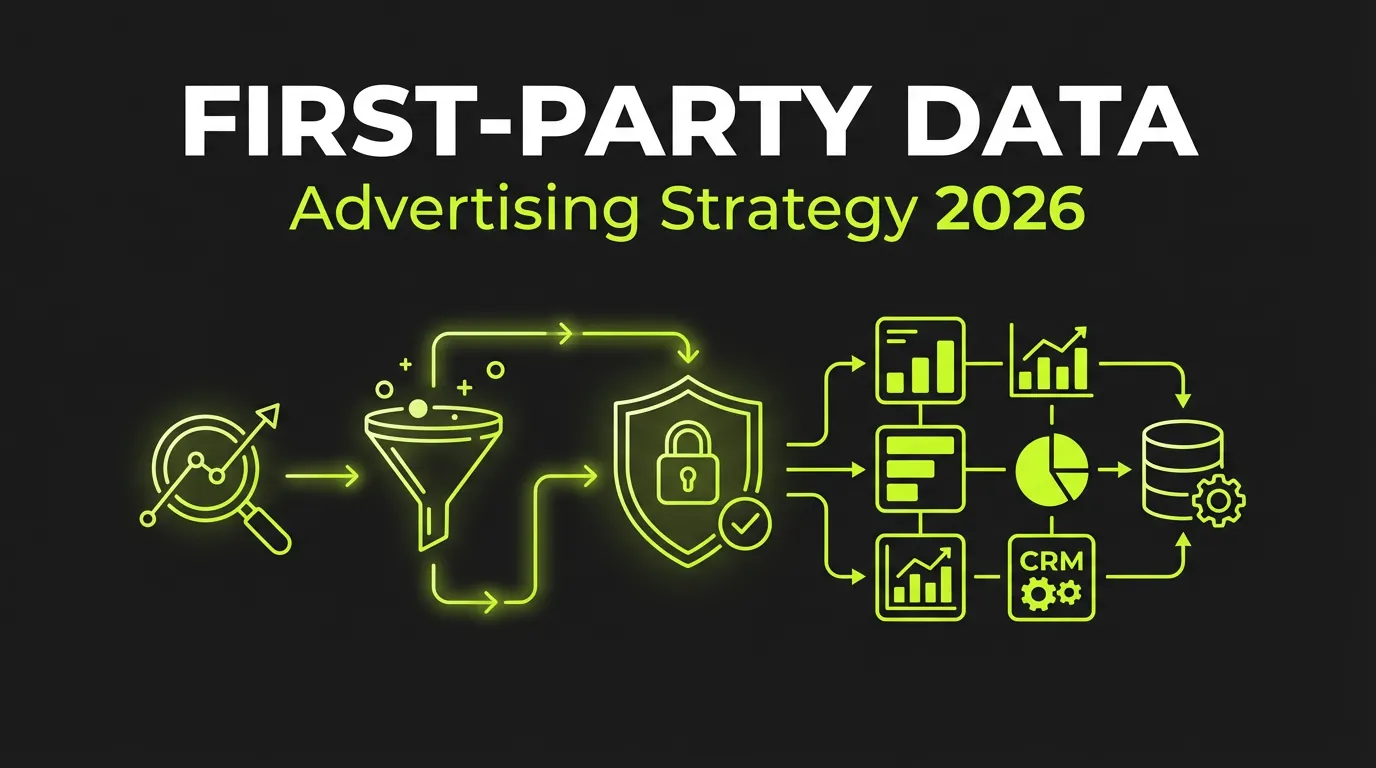

Key Takeaways
- 71% of publishers recognize first-party data as key to advertising success in 2026 (Digiday+ Research)
- Google didn't kill third-party cookies, but Safari and Firefox already block them
- Companies that invested in first-party data now have competitive advantages
- Zero-party data (explicitly shared) is even more powerful than first-party
- Data clean rooms enable collaboration without exposing raw user data
The First-Party Data Imperative
:::highlight The Reality Check Despite Google's reversal on cookie deprecation, first-party data remains critical. Safari and Firefox already block third-party cookies by default. Privacy regulations are only getting stricter. :::
Here's what I've seen repeatedly: companies that treated first-party data as "nice to have" are now scrambling. Companies that invested early are winning.
Turning these tactics into a repeatable acquisition system is where AdBid's AI ads manager earns its keep — planning, launching, and optimizing campaigns in one place.
The shift isn't just about cookies. It's about building direct customer relationships in a privacy-conscious world.
Why First-Party Data Wins
The Data Hierarchy
Third-Party Data (Lowest Value)
- Purchased from aggregators
- Unknown accuracy
- Declining availability
- No competitive differentiation
First-Party Data (High Value)
- Collected directly from your customers
- Accurate and timely
- Privacy-compliant when collected properly
- Competitors can't access it
Zero-Party Data (Highest Value)
- Explicitly shared by customers
- Preferences, intentions, interests
- No inference required
- Strongest foundation for personalization
"85% of publishers expect the role of first-party data in monetization to increase even more in 2026 (Digiday+ Research)."
The Competitive Advantage
Companies with strong first-party data can:
- Target more accurately without third-party cookies
- Build better lookalike audiences
- Personalize experiences effectively
- Measure attribution more reliably
- Reduce dependency on platform algorithms
Building Your Data Collection Engine
Collection Point Inventory
Map every customer touchpoint:
:::info Data Collection Points Digital:
- Website visits and behavior
- App usage
- Email engagement
- Chat interactions
- Social media engagement
Transactional:
- Purchase history
- Cart contents
- Wishlist items
- Subscription status
- Support tickets
Declared:
- Account registration
- Preference centers
- Surveys and quizzes
- Product reviews
- Newsletter sign-ups :::
Creating Value Exchange
People share data when they get value in return:
Value Exchanges That Work:
- Personalized recommendations → behavior data
- Discount codes → email and name
- Style quiz → detailed preferences
- Wishlist features → product interest
- Loyalty programs → comprehensive profiles
:::warning The Anti-Pattern Don't gate basic content behind data walls. Users resent it, and you collect low-quality data from people who just want access. :::
Technical Implementation
Essential Infrastructure:
1. Tag Management
- Google Tag Manager or equivalent
- Centralized event tracking
- Consistent naming conventions
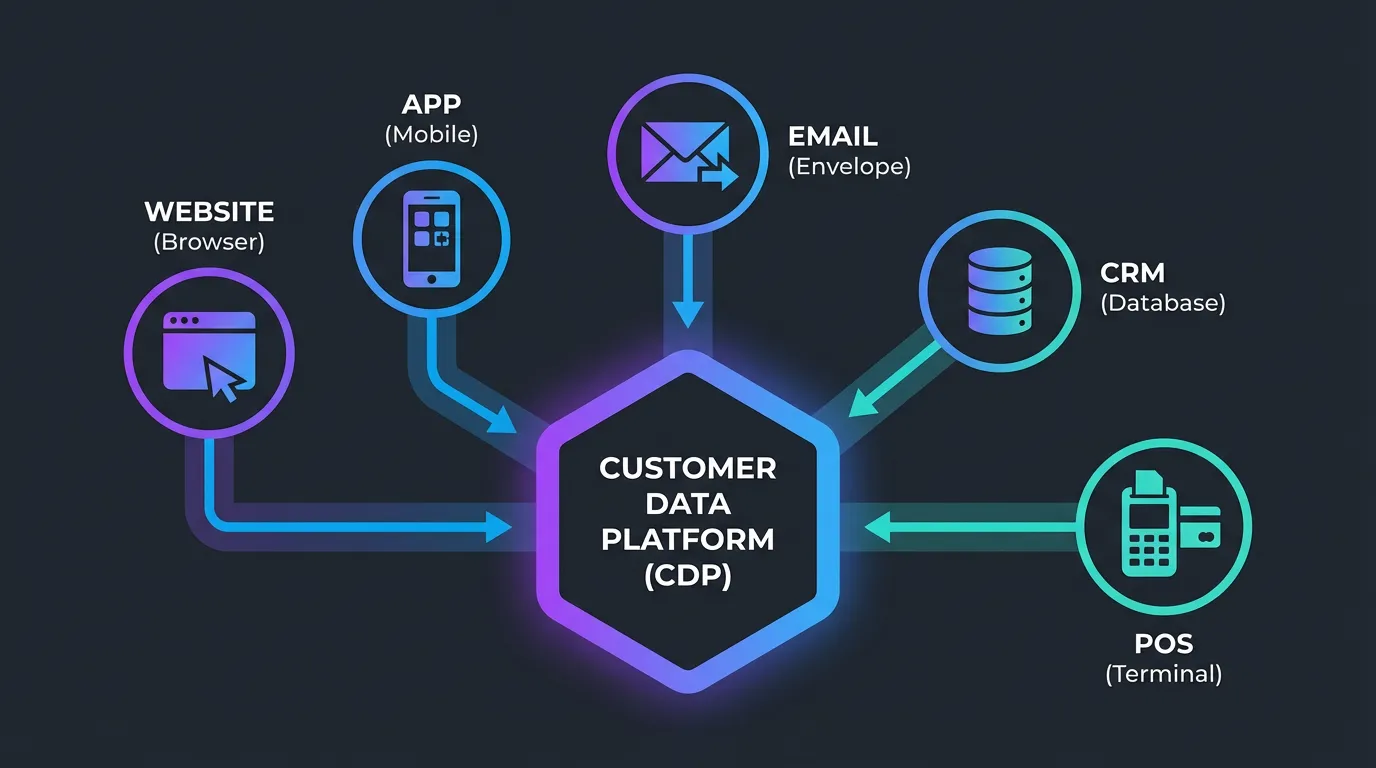
2. Customer Data Platform (CDP)
- Unified customer profiles
- Cross-channel identity resolution
- Audience segmentation
- Activation integrations
3. Server-Side Tracking
- Conversions API (Meta)
- Enhanced Conversions (Google)
- First-party cookie setting
- Better data quality
4. Consent Management
- GDPR/CCPA compliance
- Preference center
- Consent signals passed to platforms
- Audit trail
Data Activation for Advertising
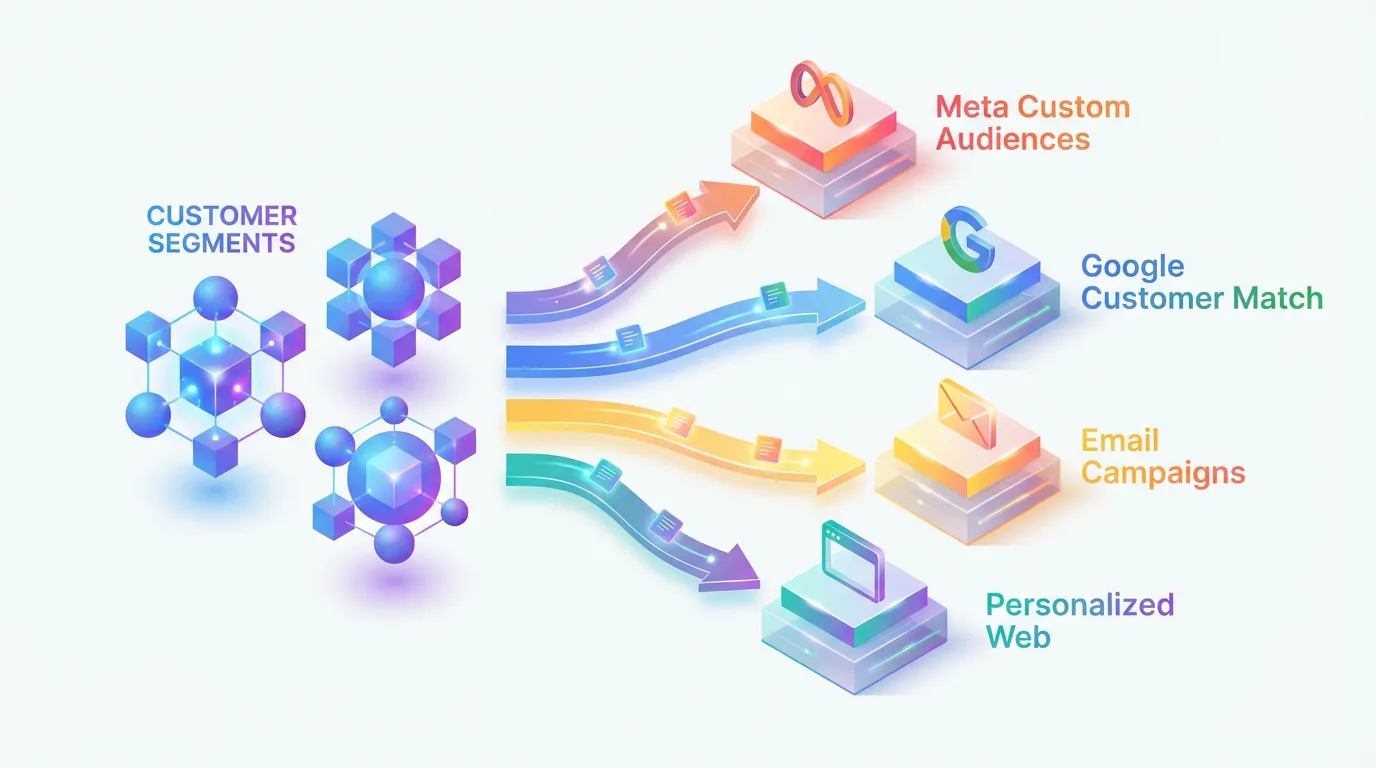
Platform Integration
Meta (Facebook/Instagram):
Use Custom Audiences with first-party data:
- Customer lists (email, phone)
- Website visitors (via pixel + CAPI)
- App activity
- Offline conversions
:::tip Meta Best Practice Implement Conversions API alongside pixel. This improves event match quality, which directly impacts ad delivery and performance. :::
Google Ads:
Enhanced Conversions implementation:
- Send hashed customer data with conversions
- Improves attribution accuracy
- Better audience matching
- Required for optimal performance
Programmatic:
Upload customer segments for:
- Suppression (don't target existing customers)
- Lookalike expansion
- Sequential messaging
- Cross-device targeting
Audience Strategy
First-Party Audiences to Build:
| Audience | Definition | Use Case |
|---|---|---|
| High-Value Customers | Top 20% by LTV | Lookalike source |
| Recent Purchasers | Bought last 30 days | Suppression |
| Cart Abandoners | Added to cart, didn't buy | Retargeting |
| Engaged Non-Buyers | High engagement, no purchase | Conversion campaigns |
| At-Risk Customers | Declining engagement | Retention campaigns |
| VIPs | Highest engagement + purchases | Special offers |
Lookalike Audiences 2.0
First-party data makes better lookalikes:
- Start with your highest-LTV customers (not all customers)
- Refresh seed audiences monthly (behavior changes)
- Test different seed sizes
- Layer with interest targeting initially
- Graduate to broad once algorithm learns
Zero-Party Data Strategies
What Zero-Party Data Looks Like
Data customers explicitly provide:
- "I prefer emails on Monday mornings"
- "My style is minimalist and modern"
- "I'm shopping for my home office"
- "My budget is $200-500"
- "I want to hear about sales, not new products"
:::highlight Zero-Party Power This data is powerful because it's explicit. No inference needed — customers told you directly what they want. :::
Collection Mechanisms
Interactive Quizzes:
- Product recommendation quizzes
- Style finders
- Needs assessments
- Fun, shareable quizzes
Preference Centers:
- Communication preferences
- Product interests
- Frequency preferences
- Channel preferences
Explicit Feedback:
- Post-purchase surveys
- Product reviews
- NPS surveys
- Support interactions
Activation Examples
Quiz-Based Personalization:
- User completes style quiz
- Answers stored in profile
- Create segment: "Modern minimalist"
- Target with relevant creative
- Personalize website experience
- Email recommendations match style
Data Clean Rooms
Why Clean Rooms Matter
:::info Clean Room Definition Data clean rooms provide a secure environment where multiple parties can collaborate on aggregated, anonymized data without exposing raw user information. :::
Use Cases:
- Publisher + advertiser collaboration
- Cross-brand audience analysis
- Measurement and attribution
- Competitive insights (aggregated)
Major Clean Room Options:
- Google Ads Data Hub
- Amazon Marketing Cloud
- LiveRamp
- Snowflake
- InfoSum
Clean Room Adoption
90% of B2C marketers report using a data clean room for marketing use cases. This isn't experimental anymore — it's standard practice for sophisticated advertisers.
Privacy Compliance
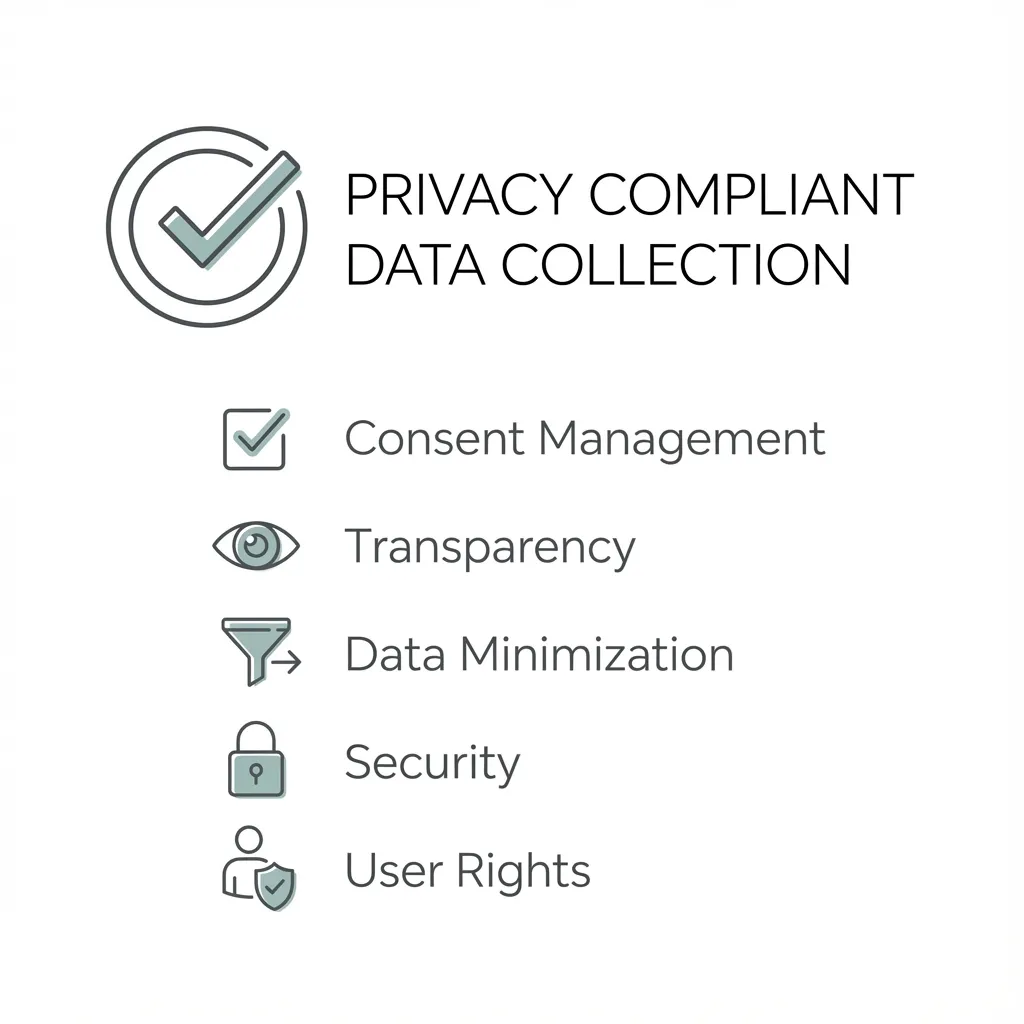
Building Compliance Into Your Process
Don't treat privacy as an afterthought:
Collection:
- Clear consent mechanisms
- Transparent data usage explanations
- Easy opt-out options
- Data minimization (collect only what you need)
Storage:
- Secure data practices
- Access controls
- Retention policies
- Regular audits
Usage:
- Honor stated purposes
- Respect preferences
- Enable data access requests
- Support deletion requests
Regulatory Landscape
| Regulation | Region | Key Requirement |
|---|---|---|
| GDPR | EU | Explicit consent, data rights |
| CCPA/CPRA | California | Disclosure, opt-out rights |
| LGPD | Brazil | Similar to GDPR |
| PDPA | Singapore | Consent, purpose limitation |
:::warning Compliance Reality "While Google's latest decision provides a temporary reprieve, it would be a critical mistake to view this as a return to business as usual. The fundamental shift towards privacy-first internet remains undeniable." :::
Measuring First-Party Data Impact
Key Metrics
Data Health:
- Email collection rate
- Profile completeness score
- Consent rate
- Data freshness
Activation Performance:
- Custom audience match rates
- Lookalike audience performance vs. interest-based
- First-party retargeting ROAS
- Customer list campaign performance
Business Impact:
- LTV of customers with complete profiles
- Conversion rate with personalization
- Retention rate by data richness
Attribution Considerations
With first-party data, you can better attribute:
- Cross-device journeys (unified profiles)
- Offline to online connections
- Long-term value, not just last-click
Building Your Roadmap
Phase 1: Foundation (Month 1-2)
- Audit current data collection points
- Implement consent management
- Set up server-side tracking
- Create data governance policy
Phase 2: Expansion (Month 3-4)
- Launch zero-party collection (quiz, preference center)
- Implement CDP or upgrade existing
- Create core audience segments
- Activate first campaigns with first-party data
Phase 3: Optimization (Month 5-6)
- Test lookalike audiences from different seeds
- Measure first-party vs. third-party performance
- Refine collection value exchanges
- Explore data clean room opportunities
Phase 4: Scale (Ongoing)
- Expand collection points
- Increase profile richness
- Advanced segmentation
- Predictive modeling on first-party data
The Bottom Line
First-party data isn't a nice-to-have anymore. It's the foundation of effective advertising in 2026 and beyond.
The companies winning today invested in data infrastructure when it seemed optional. Don't wait for the next privacy change to force your hand.
:::tip Start Here Audit your email collection rate this week. If less than 20% of your website visitors provide an email, you have a value exchange problem. Fix that first. :::
Ready to activate your first-party data across channels? AdBid integrates with your CDP to power smarter audience targeting and measurement. Start your free trial.