
Key Takeaways
- Creative is now the biggest lever for performance — targeting and bidding are largely automated
- Strategy is not execution — a good brief doesn't guarantee good creative
- Combine data (what and when) with empathy (why) for effective direction
- Test angles, not just formats — messaging matters more than visual polish
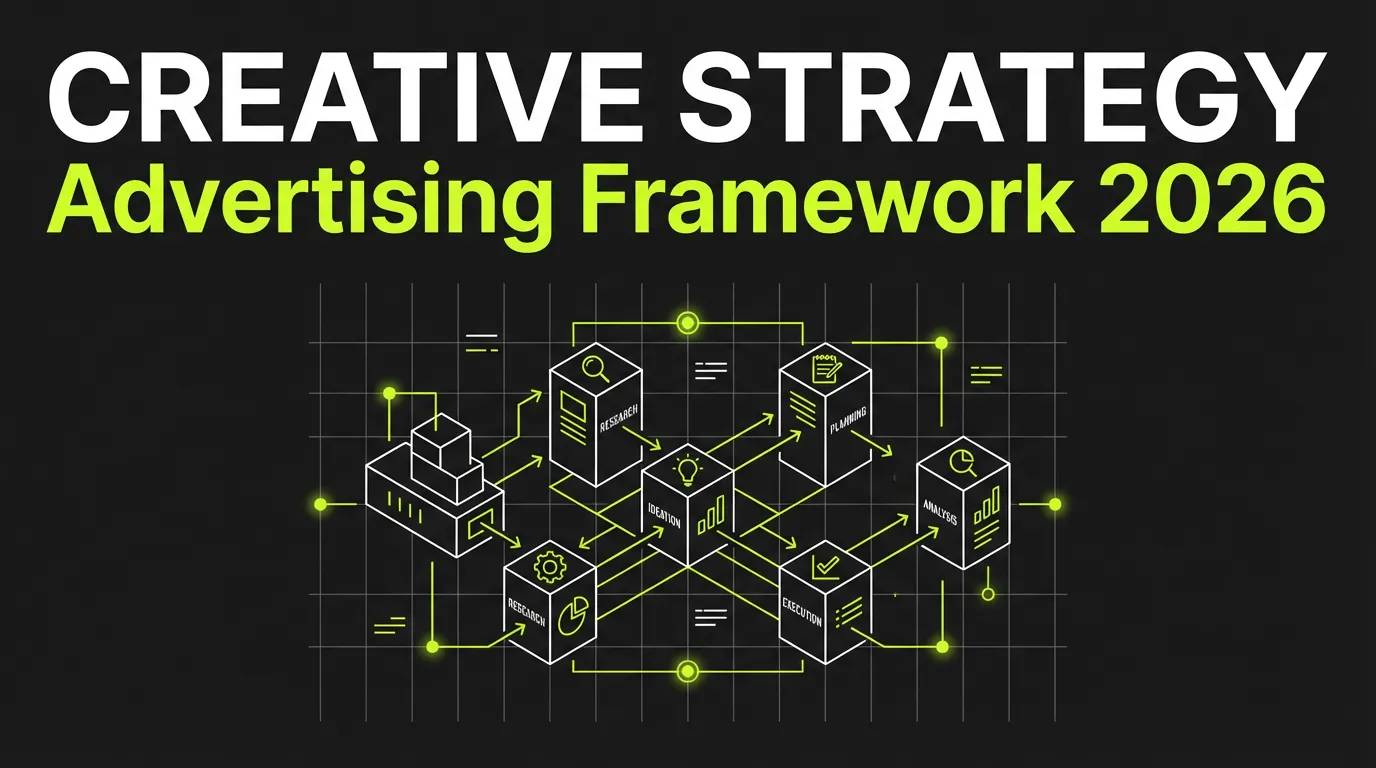
- Build a creative system, not a creative campaign
Why Creative Strategy Matters More Than Ever
:::highlight The New Reality As Meta, Google, and TikTok automate targeting and bidding, creative has become the primary differentiator. Your competitors use the same algorithms. They can't copy your creative strategy. :::
Here's what changed: In 2020, a skilled media buyer could create competitive advantage through targeting expertise. In 2026, that expertise is encoded into platform algorithms. What's left? Creative.
For teams that need more campaign-ready variations, AdBid's AI creative factory helps turn briefs into hooks, copy, and ad assets faster.
I've seen single creative changes drive 50%+ performance improvements. I've also seen million-dollar campaigns fail because the creative strategy was fundamentally wrong. The gap between good and bad creative strategy has never been wider.
What Creative Strategy Actually Is
Let's define terms:
Creative strategy = The plan for delivering the right message to the right audience in the right format, aligned with business objectives.
Creative execution = The actual ads, videos, and assets produced.
:::warning Common Mistake Many teams confuse execution for strategy. They produce lots of ads without a coherent framework for what they're testing and why. :::
Good strategy answers:
- Who are we talking to? (Audience)
- What do they need to hear? (Message)
- How should we say it? (Tone, format)
- Where will they see it? (Platform, placement)
- What does success look like? (KPIs)
The Elements of Scalable Creative Strategy
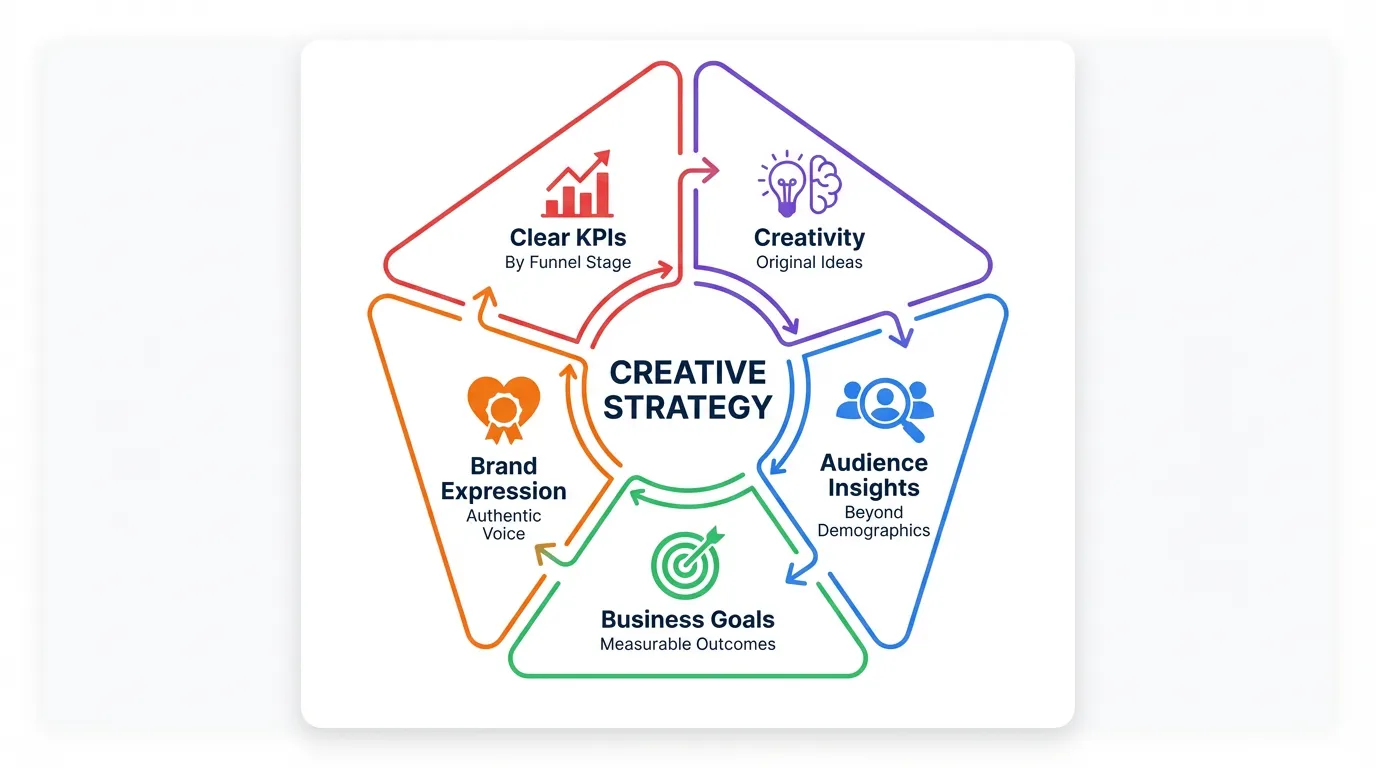
1. Creativity at the Root
This sounds obvious, but it's not. Creativity means finding new ways to communicate and solve problems. It means questioning assumptions, testing unconventional approaches, and being willing to fail.
"The best creative strategies don't just execute briefs — they challenge them."
2. Audience Insights Beyond Demographics
Demographics tell you who. They don't tell you why.
Data shows: Women 25-34 convert best Empathy reveals: They're buying for kids and need trusted quality assurance
The insight matters more than the data point. Build creative around the "why," not just the "who."
:::tip Research Methods
- Customer interviews (even 5-10 conversations reveal patterns)
- Review mining (what do customers praise/complain about?)
- Social listening (how do people talk about your category?)
- Support ticket analysis (what questions do people ask?) :::
3. Business Goals + Brand Expression
Creative must drive measurable outcomes while maintaining brand authenticity.
Business goals: Set the destination (conversions, ROAS targets) Brand expression: Shapes how the journey feels
Don't sacrifice brand for performance, but don't create "brand content" that doesn't convert. Find the intersection.
4. Clear KPIs by Funnel Stage
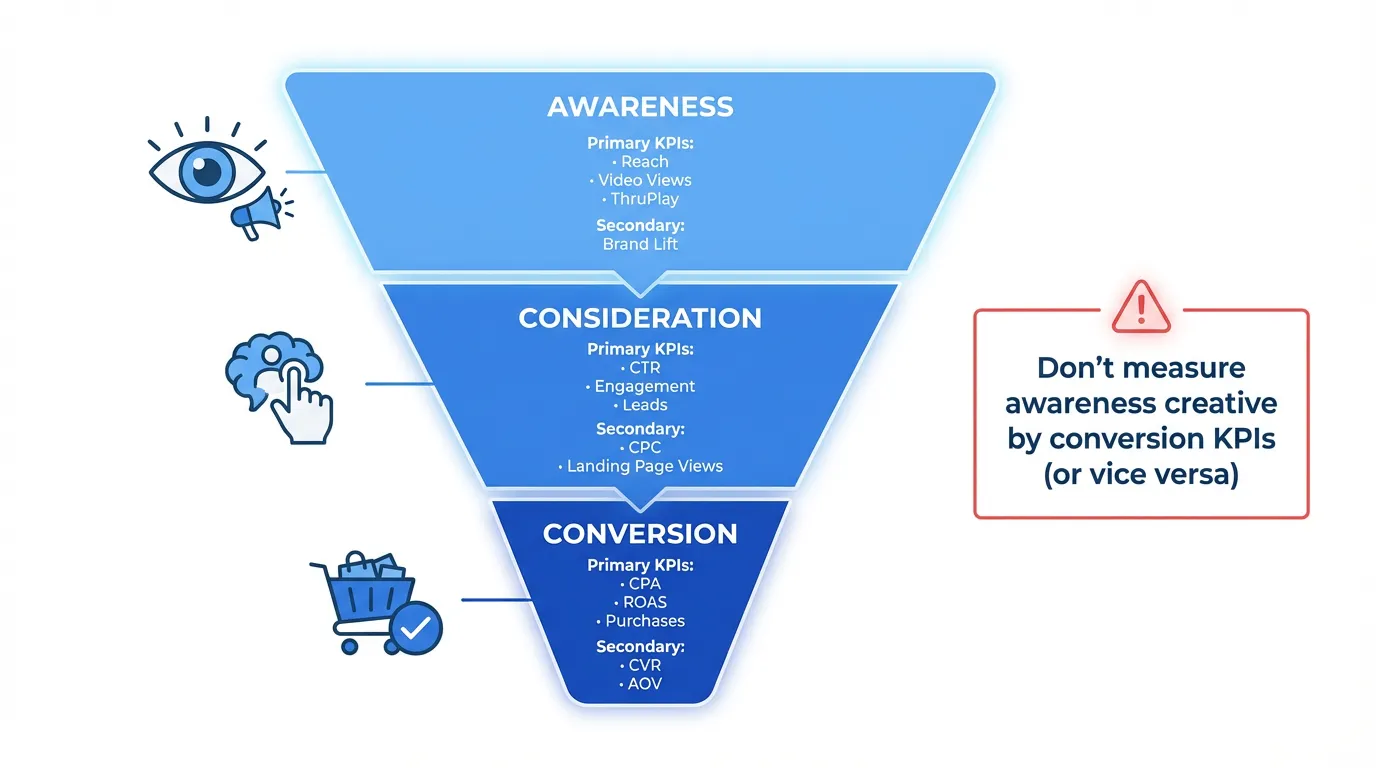
Different creative serves different purposes:
| Stage | Primary KPIs | Secondary KPIs |
|---|---|---|
| Awareness | Reach, Video Views, ThruPlay | Brand Lift |
| Consideration | CTR, Engagement, Leads | CPC, Landing Page Views |
| Conversion | CPA, ROAS, Purchases | CVR, AOV |
:::warning Measurement Mistake Don't measure awareness creative by conversion KPIs (or vice versa). You'll kill good top-of-funnel content that drives downstream performance. :::
What Makes Creative Resonate
After analyzing hundreds of campaigns, three qualities separate high-performers:
Originality
Not different for different's sake — different in a way that captures attention and memory.
Original: A finance app showing the anxiety of checking your account balance Not original: A finance app showing a happy person with a phone
Emotional Resonance
Ads that make people feel something are remembered. Logic convinces, emotion converts.
Emotional drivers:
- Fear of missing out
- Aspiration and possibility
- Belonging and identity
- Relief from pain/frustration
- Joy and delight
Storytelling Structure
Even 15-second ads can have narrative structure:
Beginning: Hook that stops the scroll Middle: Tension, problem, or journey End: Resolution and call to action
:::highlight The Test Watch your ad with sound off. Does it still communicate? Most social content is consumed silently. :::
The Creative Process
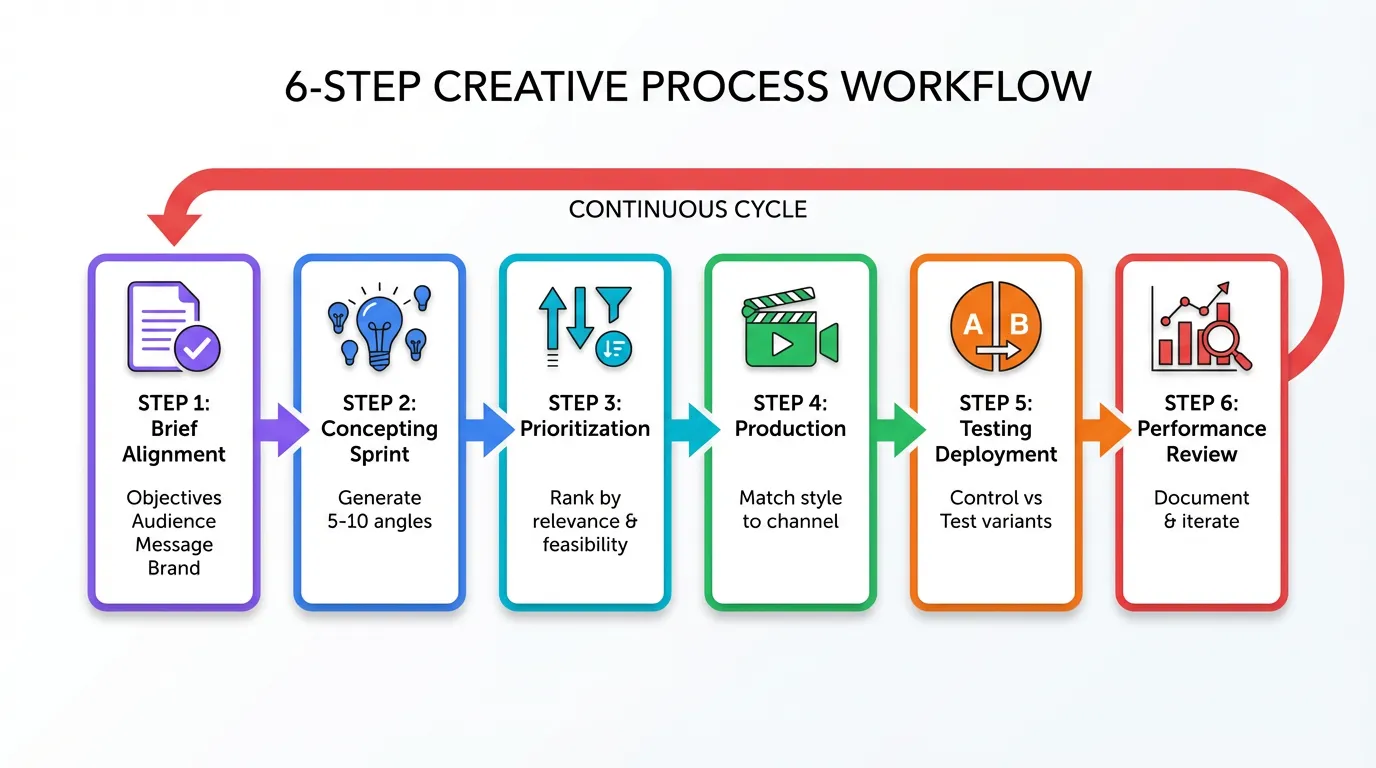
Step 1: Brief Alignment
Before concepting, ensure everyone agrees on:
- Business objective
- Target audience insight
- Key message hierarchy
- Brand guidelines and tone
- Deliverables and timeline
Step 2: Concepting Sprint
Generate 5-10 angles (not executions — angles). An angle is a messaging direction:
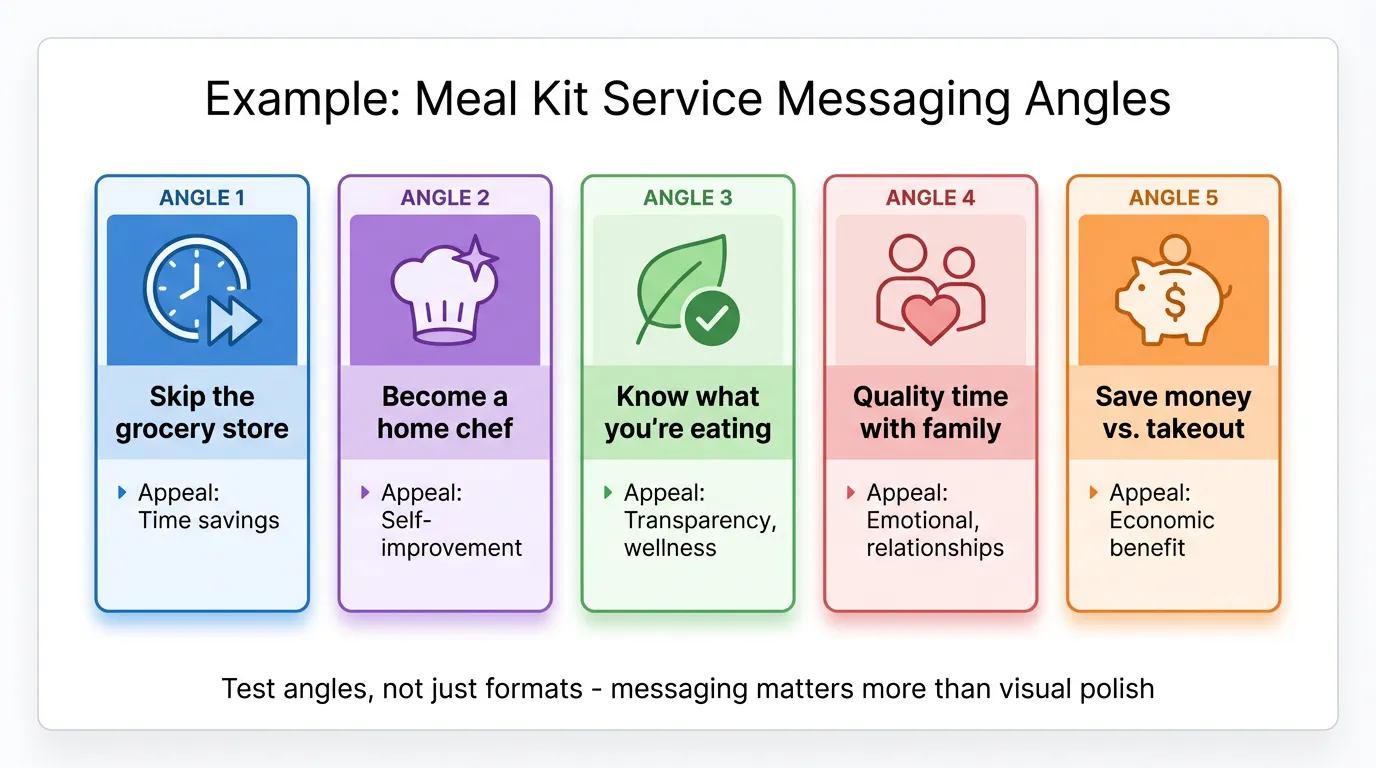
Angles for a meal kit service:
- "Skip the grocery store" (convenience)
- "Become a home chef" (aspiration)
- "Know what you're eating" (health/transparency)
- "Quality time with family" (connection)
- "Save money vs. takeout" (value)
Step 3: Prioritization
Rank angles by:
- Relevance to audience insight
- Differentiation from competitors
- Production feasibility
- Testing priority
Step 4: Production
Match production style to channel:
- TikTok: Creator-style, native, fast-paced
- Facebook Feed: Polished but authentic
- Instagram Stories: Full-screen, immediate
- YouTube: Longer-form, narrative
:::tip Production Tip Shoot once, edit multiple ways. Capture enough footage to create 5-10 variations from one production session. :::
Step 5: Deployment with Testing Structure
Don't just "launch creative." Structure your testing:
- Control: Your current best performer
- Test 1: New angle A
- Test 2: New angle B
- Equal budget allocation for clean comparison
Step 6: Performance Review
After sufficient data (usually 7+ days, 50+ conversions per variant):
- Identify winners
- Document learnings
- Feed insights into next round
Common Creative Strategy Mistakes
:::warning Mistake #1: Mistaking Execution for Strategy Producing lots of ads without a framework for what you're testing creates noise, not insights. :::
:::warning Mistake #2: Over-Structuring at Creativity's Expense Too many constraints kill originality. Leave room for creative leaps within strategic guardrails. :::
:::warning Mistake #3: Ignoring Post-Launch Iteration Creative strategy isn't a document — it's a process. The best strategies evolve based on performance data. :::
:::warning Mistake #4: Testing Formats Instead of Messages Testing "video vs. image" tells you less than testing "convenience angle vs. quality angle." Message matters more than format. :::
Building a Creative System
One-off creative is expensive. Build a system:
Creative Pillars
Establish 3-5 messaging pillars that can be executed across formats:
- Value/price pillar
- Quality/trust pillar
- Convenience pillar
- Social proof pillar
- Aspiration pillar
Modular Production
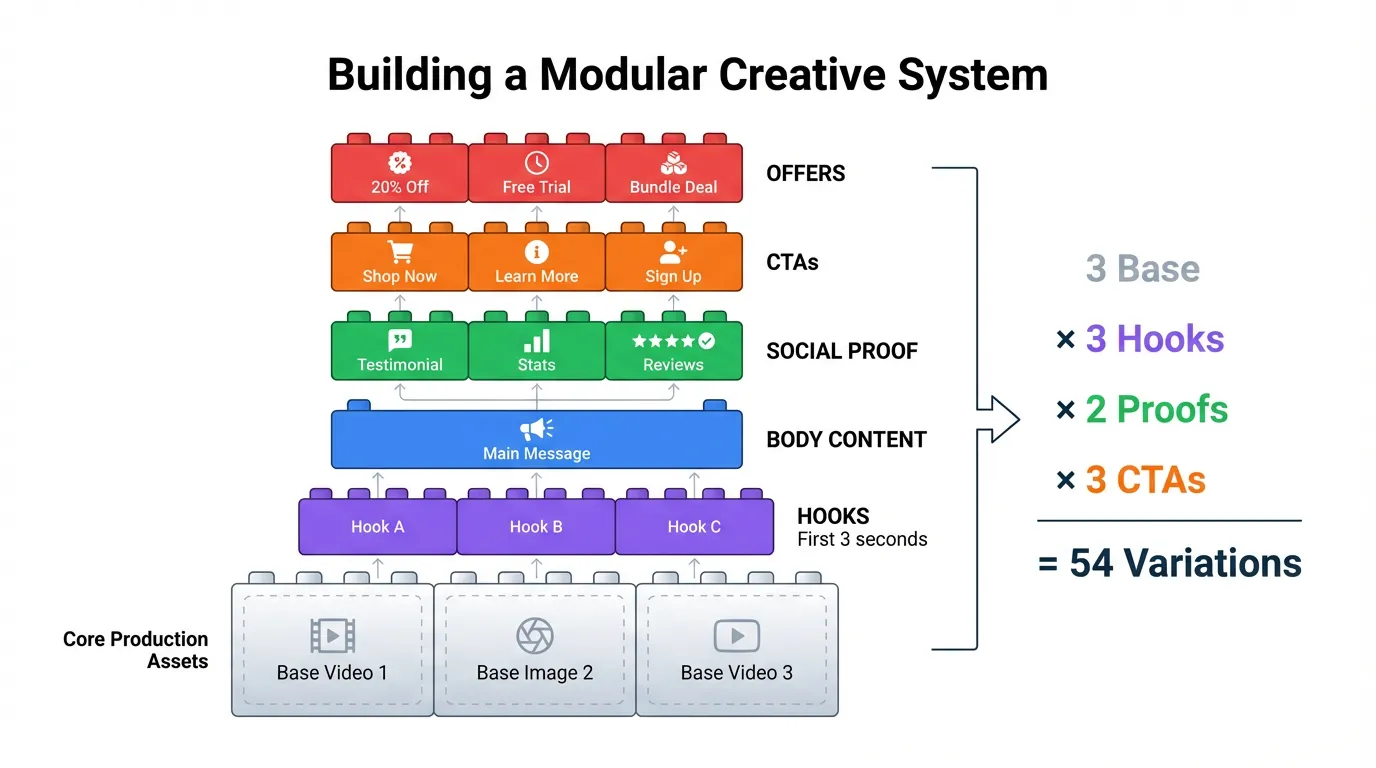
Design creative with swappable components:
- Different hooks (first 3 seconds)
- Different CTAs (end cards)
- Different social proof (testimonials, stats)
- Different offers
This lets you create dozens of variations from a handful of base assets.
Creative Calendar
Plan creative refreshes before you need them:
- New creative brief every 2-3 weeks
- Production pipeline running continuously
- Winners always have challengers in testing
The Bottom Line
Creative strategy isn't a luxury — it's the competitive advantage that scales. While your competitors bid on the same audiences through the same platforms, your creative can be completely unique.
:::tip Start Here Audit your current creative. For each ad, can you articulate the angle being tested? If not, you're running ads, not a strategy. Build the framework first, then execute against it. :::
The brands winning in 2026 aren't just making more creative — they're building creative systems that consistently produce winners.
Need to see how your creative performs across platforms? AdBid's creative analytics show performance by angle, format, and audience — so you can double down on winners. Try AdBid free for 14 days.