
Key Takeaways
- First-party data is now essential — third-party data is declining in reliability
- Four data types: identity, behavioral, experience, and operational
- Companies leveraging behavioral insights outperform peers by 85% in sales growth
- Collect only actionable data — avoid hoarding for its own sake
- Build compliance into your process from day one
Why Data Collection Matters More Than Ever
:::highlight The New Reality As third-party cookies disappear and privacy regulations tighten, the data you collect directly from customers becomes your primary competitive advantage. :::
Let me be blunt: if you're still relying primarily on third-party data for ad targeting and personalization, you're building on a crumbling foundation.
For teams that need cleaner measurement behind these decisions, AdBid's advertising attribution connects campaign performance, revenue, and channel data.
The brands winning in 2026 have robust first-party data strategies. Here's how to build yours.
Understanding Data Types
Not all customer data is equal. Understanding the four types helps you prioritize collection:
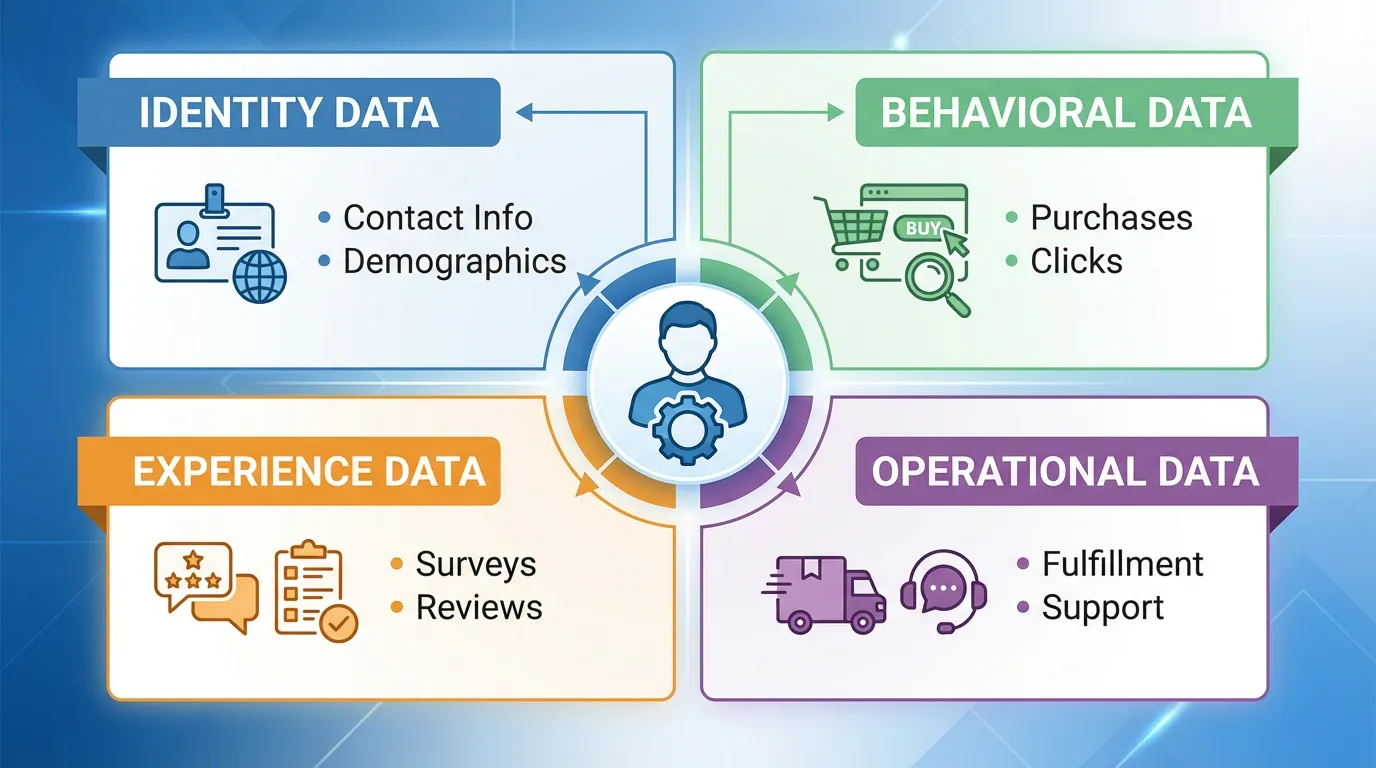
1. Identity Data
Who is your customer?
- Names and contact information
- Demographics (age, gender, location)
- Account IDs and login information
- Device identifiers
Use case: Basic targeting, personalization, attribution
2. Behavioral Data
What do they do?
:::info Behavioral Data Examples
- Website pages visited
- Products viewed and purchased
- Email opens and clicks
- App usage patterns
- Search queries
- Cart abandonment patterns :::
Use case: Predictive modeling, triggered campaigns, personalization
3. Experience Data
How do they feel?
- Survey responses
- NPS scores
- Product reviews
- Support interactions
- Social media sentiment
Use case: Product improvement, customer satisfaction, churn prediction
4. Operational Data
What happens behind the scenes?
- Order fulfillment times
- Support ticket resolution
- Inventory availability
- Delivery status
Use case: Process optimization, customer experience improvement
Collection Methods: First-Party vs. Zero-Party
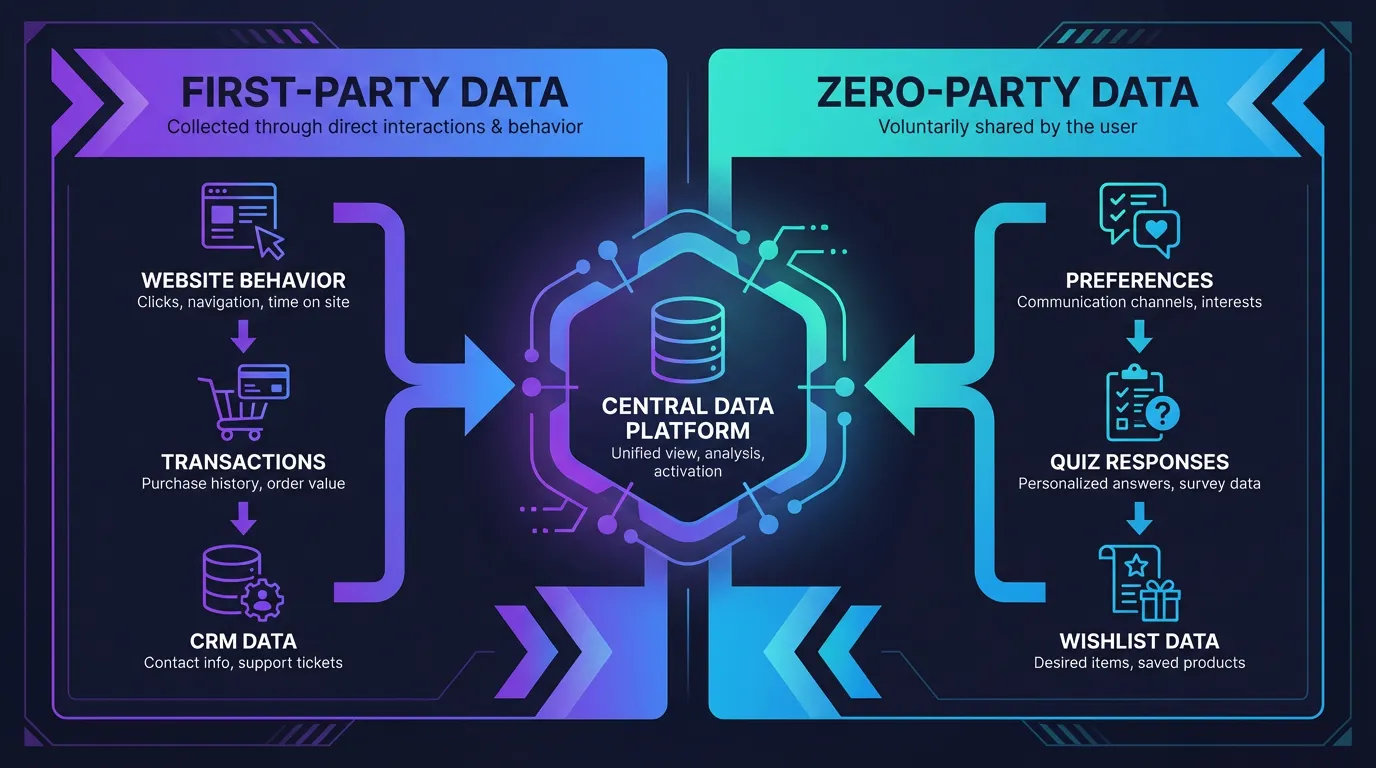
First-Party Data
Data you collect through direct interactions:
- Website behavior (via analytics and pixels)
- Transaction history
- CRM records
- Email engagement
- App activity
:::tip First-Party Data Advantage You own it. It's accurate. It's compliant (when collected properly). And competitors can't access it. :::
Zero-Party Data
Data customers voluntarily share:
- Preference center selections
- Quiz or survey responses
- Wishlist items
- Communication preferences
- Review content
"Customers willingly share this information, often for a better, personalized experience" — The Exchange
Zero-party data is powerful because it's explicit. No inference needed — customers told you directly.
Third-Party Data (Declining)
Data purchased from external sources:
- Diminishing accuracy due to privacy changes
- Increasingly restricted by regulations
- Less cost-effective than first-party alternatives
:::warning Third-Party Data Reality Don't eliminate third-party data entirely — it still has uses for prospecting. But shift your investment toward first-party sources. :::
Building Your Data Collection Strategy
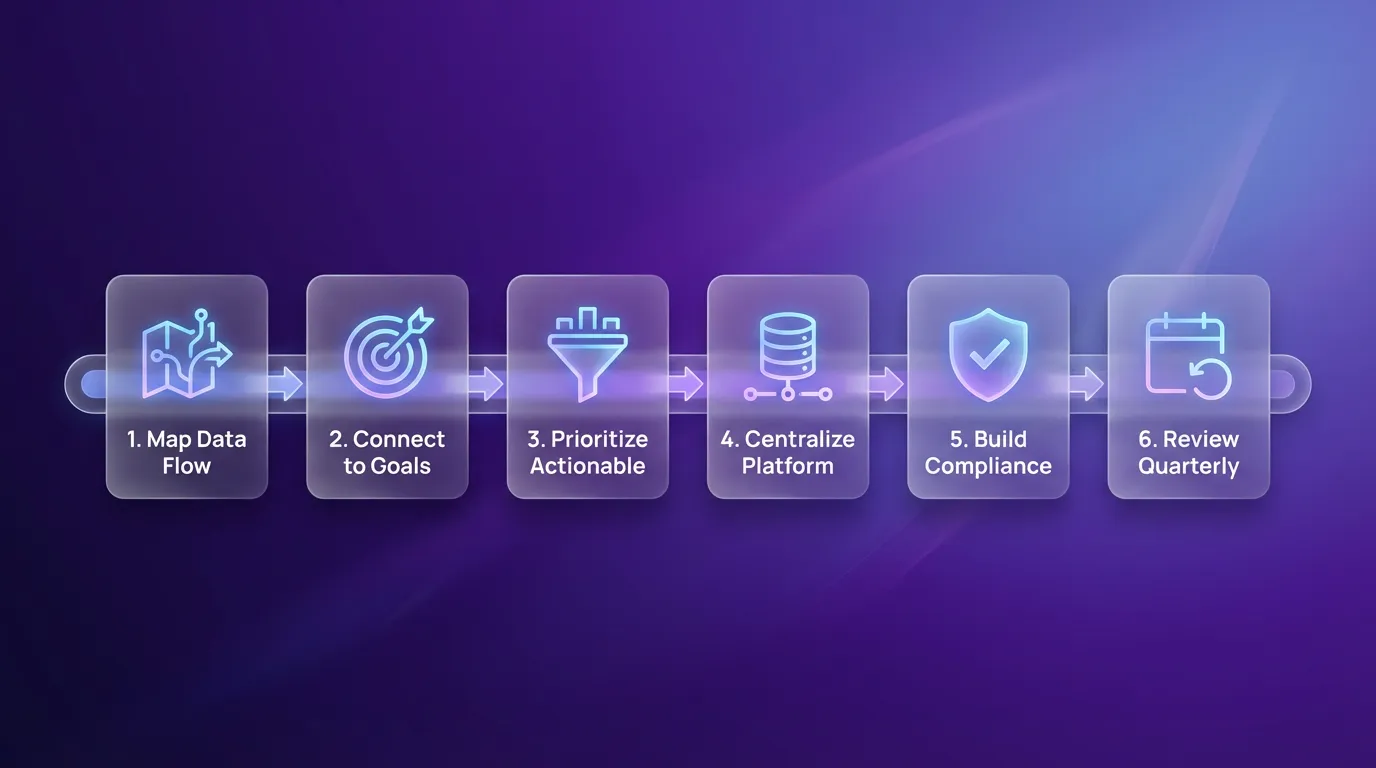
Step 1: Map Your Current Data Flow
Before collecting more, understand what you already have:
- What data sources exist?
- Where does data live? (CRM, analytics, CDP, spreadsheets?)
- How does data flow between systems?
- What gaps exist?
Step 2: Connect Data to Business Goals
Every data point should serve a purpose:
| Data Point | Business Use |
|---|---|
| Email address | Remarketing, lifecycle campaigns |
| Purchase history | Segmentation, recommendations |
| Browse behavior | Personalization, retargeting |
| Survey responses | Product development, satisfaction tracking |
:::warning Avoid Data Hoarding Collecting data without a plan creates liability without value. If you can't articulate why you need a data point, don't collect it. :::
Step 3: Prioritize Actionable Data
Focus on data that drives decisions:
High value: Purchase intent signals, product preferences, engagement patterns Lower value: Random demographic data without behavioral context
Step 4: Centralize in One Platform
Scattered data is useless data. Options for centralization:
- CDP (Customer Data Platform): Full-featured, expensive, complex
- CRM with integrations: Good for smaller operations
- Data warehouse: Technical, flexible, requires engineering
Step 5: Build Compliance In
Privacy isn't optional:
:::info Compliance Requirements
- Consent management: Clear opt-in for data collection
- Data access: Users can request their data
- Deletion rights: Users can request removal
- Storage limitations: Don't keep data indefinitely
- Purpose limitation: Only use data as described :::
Step 6: Review Quarterly
Data strategy isn't set-and-forget:
- Are you collecting data you're not using? Stop.
- Are there gaps preventing important analysis? Fill them.
- Have business needs changed? Adjust collection.
Practical Collection Tactics
Website Data Collection
Must-have:
- Analytics (GA4 or alternative)
- Conversion tracking pixels
- Event tracking for key actions
Nice-to-have:
- Heatmaps and session recordings
- A/B testing data
- Search query data
Email/Marketing Data
Capture:
- Opens, clicks, conversions
- Preference center selections
- Unsubscribe reasons
- Forward/share activity
Survey/Feedback Data
Best practices:
- Keep surveys short (5 questions max for most contexts)
- Ask at moments of engagement
- Offer value in exchange (discount, entry, early access)
- Close the loop — show customers you're listening
Offline Data
Don't forget non-digital touchpoints:
- Point-of-sale transactions
- In-store interactions
- Event attendance
- Call center conversations
- Direct mail responses
Activating Your Data
Collected data means nothing until you activate it:
For Advertising
- Build custom audiences from website visitors
- Create lookalikes from best customers
- Suppress existing customers from acquisition campaigns
- Personalize creative based on behavior segments
For Personalization
- Recommend products based on browse/purchase history
- Customize email content by preference
- Adapt website experience by segment
- Trigger campaigns based on behavior
For Product Development
- Identify feature requests from support data
- Understand usage patterns from behavioral data
- Prioritize based on customer segment value
The Business Impact
:::highlight McKinsey Research "Companies that leverage customer behavioral insights outperform peers by 85% in sales growth and 25% in gross margin (McKinsey)." :::
This isn't theoretical. Data-driven companies measurably outperform competitors.
The Bottom Line
First-party data collection isn't a project — it's a capability you build over time.
:::tip Start Here Audit your current data collection. Map what you have, identify what you need, and build a simple plan to close the gaps. Don't boil the ocean — start with the highest-impact data points and expand from there. :::
The brands winning in 2026 treat their customer data as a strategic asset, not an afterthought.
Ready to activate your first-party data for better ad targeting? AdBid integrates with your data sources to power smarter campaign optimization. Try AdBid free for 14 days.