
Holiday & Seasonal Advertising Guide 2026
The 2026 holiday season looks different from years past. Shoppers are cautious with their wallets, yet they are also turning to new tools to find gifts. Adobe predicts AI traffic to U.S. retail websites will surge by 520% this holiday season (Adobe). At the same time, 44% of social media users plan to reduce their holiday spending (Sprout Social). That tension, value-seeking buyers meeting AI-powered discovery, defines how advertisers should plan. This guide walks through timing, budgets, creative, and the post-peak window most brands ignore.
Key Takeaways
- 44% of social media users plan to reduce holiday spending (Sprout Social), so deals will be essential.
- AI traffic to U.S. retail sites is set to surge 520% this season (Adobe).
- Start prep in August and September, not November, to beat ad-approval delays.
- Phase your budget across lead-up, peak, and lead-out instead of spending it all at once.
- A strong post-BFCM plan extends holiday ROI through Q1.
When Should You Start Holiday Campaigns in 2026?
Start earlier than feels comfortable. According to Sprout Social, 44% of social users say they are more likely to buy from brands that launch fall and winter campaigns as early as August, and that number climbs to 63% for Gen Z (Sprout Social). Early activation builds audiences before competition spikes and lowers your cost of attention.
There is also a practical reason to move fast. Ad platforms slow down during peak periods, and review queues stretch out. Upload your Black Friday creative and audience setups well in advance, because platforms are slower to approve ads when everyone is launching at once.
Key Dates for the 2026 Season
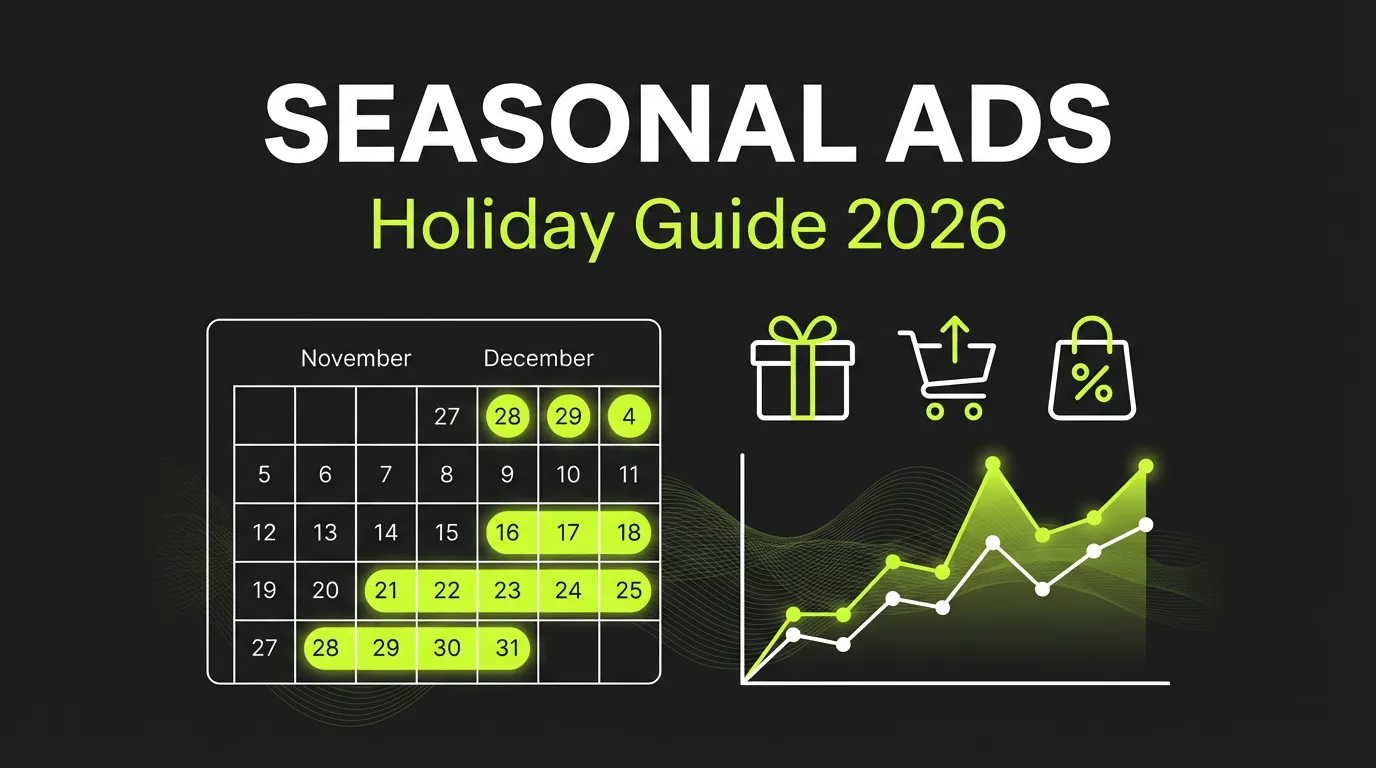
Thanksgiving falls late this year, on November 26, which compresses the December calendar. That means a higher concentration of sales squeezed into fewer December days.
| Event | Date | Notes |
|---|---|---|
| Halloween | October 31 | Warm-up period begins |
| Thanksgiving | November 26 | Late this year |
| Black Friday | November 27 | Peak shopping |
| Cyber Monday | December 1 | Digital peak |
| Christmas | December 25 | Shipping deadline pressure |
| New Year's | January 1 | New season opens |
The Three Campaign Phases
Think of Q4 in three distinct stages. Each phase has its own job, and mixing them up wastes budget.
Phase 1: Lead-Up (August to October). Build audiences, test creative angles, warm your pixel, and grow your email list. This is the cheap-traffic window. Use it to learn what resonates before costs climb.
Phase 2: Peak (November to December 15). Activate your full budget. Run promotional campaigns, retarget aggressively, and optimize in real time. This is where the lead-up work pays off.
Phase 3: Lead-Out (December 15 to January). Capture last-minute shoppers, push gift cards, and run post-holiday and year-end clearance offers. Many brands stop here, and that is a mistake.
For a deeper breakdown of the single biggest weekend, see our Black Friday advertising strategy guide.
What Do 2026 Holiday Shoppers Actually Want?
They want value, and they want it served through familiar channels. Sprout Social reports that 80% of social users plan to use social media as much, if not more, to find gifts this season (Sprout Social). Combine that behavior with tighter budgets, and the message is clear: lead with deals, and meet shoppers where they already scroll.
Budget-Conscious Buying
With 44% of shoppers planning to spend less (Sprout Social), discounts will do heavy lifting. Frame offers around savings, bundles, and clear value. Vague "shop now" messaging will lose to ads that show a concrete reason to buy today.
AI-Influenced Discovery
A new behavior is reshaping the funnel. Shoppers increasingly use AI assistants to research products and compare options before they ever reach your store. With AI traffic to retail sites projected to surge 520% (Adobe), clear product titles, structured descriptions, and consistent pricing matter more than ever. If an AI tool can read your catalog cleanly, it can recommend you.
Social Commerce Keeps Growing
Social is no longer just discovery. It is checkout. Since most users plan to shop socially as much or more (Sprout Social), your creative needs to work natively in-feed. Short video, shoppable posts, and creator content carry the load here. For the full channel playbook, our ecommerce advertising strategy guide for 2026 maps how each platform fits together.
How Should You Budget a Q4 Ad Spend?
Ramp up, do not dump. Spreading spend across phases lets you learn cheaply, then double down on what works when traffic peaks. Adobe expects U.S. online holiday spending to cross $250 billion (Adobe), so the demand is there. The trick is paying the right price for it at the right time.
A Sample Allocation Framework
Here is how a $50K Q4 budget might split across the season. Treat it as a starting point, then adjust to your data.
| Phase | Timing | Budget | Focus |
|---|---|---|---|
| Lead-Up | Aug to Oct | $10K (20%) | Testing, awareness |
| Pre-Peak | Nov 1 to 26 | $15K (30%) | Warming, consideration |
| Peak | Nov 27 to Dec 1 | $15K (30%) | BFCM conversion |
| Post-Peak | Dec 2 to 31 | $10K (20%) | Extended sales |
Don't Forget Retargeting
The lead-up phase fills your funnel with warm audiences. The peak phase is where you convert them. Retargeting connects the two, turning August browsers into November buyers at a far lower cost than cold prospecting. Our retargeting ads complete guide for 2026 covers how to segment those audiences and avoid ad fatigue during the busiest weeks.
Teams running this at volume lean on AdBid's AI campaign automation to plan, launch, and optimize across phases without juggling separate tools.
Why Does Real-Time Agility Win in Q4?
Because the calendar compresses and trends move in hours, not days. The brands that win treat TikTok and Instagram like a newsroom. When a sound, creator, or meme pops on Monday, they ship creative by Tuesday. With AI-driven discovery surging 520% (Adobe), the window to capture a trend is short, and slow approval cycles can cost you the moment entirely.
Build a small react team or workflow before the season starts. Pre-approve creative templates, keep audiences ready, and set up a fast path from idea to live ad. Speed is a competitive advantage when everyone else is stuck in review queues.
Extend Beyond BFCM
Most advertisers exhaust themselves by Cyber Monday and go quiet. That leaves money on the table. Late-December shoppers, gift-card redeemers, and Q1 self-gifters are all still buying. A simple email and retargeting sequence keeps revenue flowing after the peak. Our email marketing for ecommerce guide shows how to nurture those post-holiday buyers without heavy ad spend.
Frequently Asked Questions
When is the best time to start holiday advertising in 2026?
Start in August or September. Sprout Social found 44% of social users prefer brands that launch fall campaigns as early as August, rising to 63% for Gen Z (Sprout Social). Early activation also beats the ad-approval slowdowns that hit platforms during peak weeks.
How should I split my holiday ad budget?
Phase it. A common split sends roughly 20% to lead-up testing, 30% to pre-peak warming, 30% to the BFCM peak, and 20% to post-peak sales. This lets you learn cheaply, then scale spending toward proven creative when demand and competition both rise.
How is AI changing holiday shopping in 2026?
Shoppers increasingly use AI assistants to research and compare products. Adobe predicts AI traffic to U.S. retail sites will surge 520% this season (Adobe). Clean product titles, structured descriptions, and consistent pricing help AI tools surface and recommend your catalog.
Should I keep advertising after Cyber Monday?
Yes. Late-December shoppers, gift-card redeemers, and Q1 buyers keep spending well past the BFCM peak. With online holiday spending expected to cross $250 billion (Adobe), a post-peak email and retargeting sequence extends your ROI at low cost.
The Bottom Line
Holiday advertising in 2026 rewards planning, not panic. Start in August so your audiences and creative are ready before approval queues clog. Phase your budget across lead-up, peak, and lead-out instead of spending it all on Black Friday weekend. Lead with clear value, since 44% of shoppers plan to spend less (Sprout Social). Prepare your catalog for AI-driven discovery, stay fast enough to ride trends, and keep selling after Cyber Monday. The brands that treat Q4 as a structured season, not a single weekend, capture the most of that $250 billion in spend.
Ready to run a structured, multi-phase holiday campaign? Manage your Q4 campaigns in AdBid and optimize across every platform from one place.