
Key Takeaways
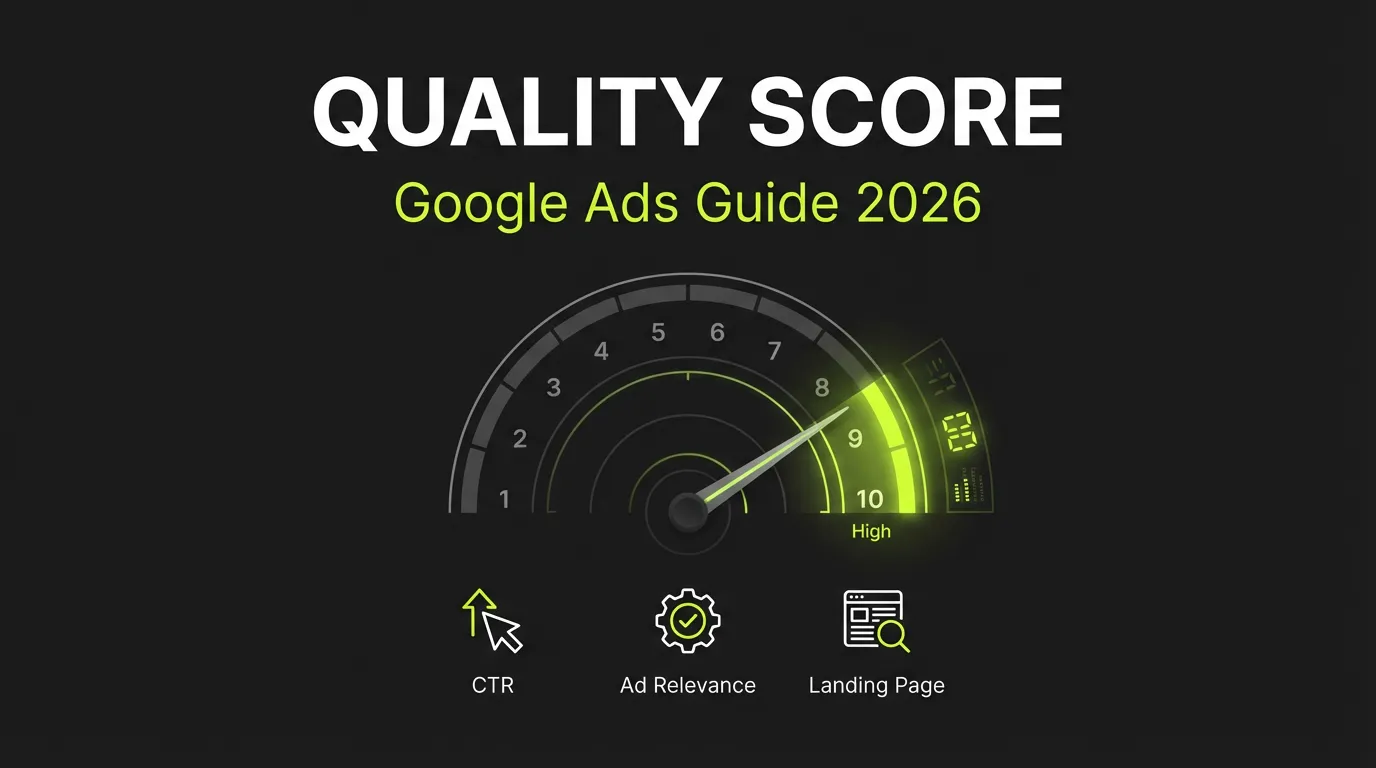
- Quality Score is a 1-10 diagnostic rating, not a direct auction input
- Three components: Expected CTR (39%), Landing Page (39%), Ad Relevance (22%)
- Score of 7+ is considered "good" — aim for this as baseline
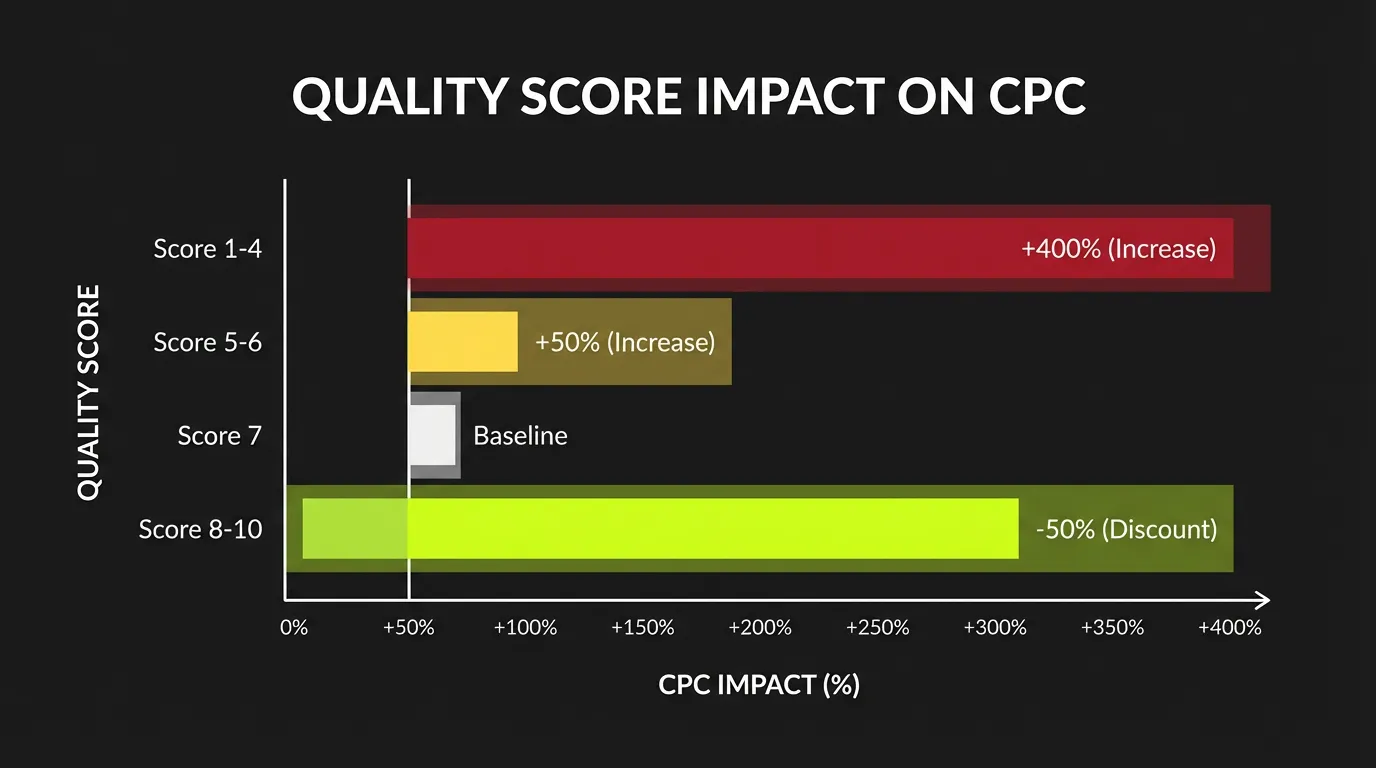
- Higher scores = lower CPCs and better ad positions
- Focus on landing page and CTR for biggest impact
What Is Quality Score?
Quality Score is Google's 1-10 rating of your ad quality. It reflects how relevant and useful your ad experience is to users.
Pricing scales with spend, not seats — see how AdBid works for teams running paid acquisition seriously.
:::warning Important Distinction "Quality Score is not a key performance indicator (Google Ads Help) and should not be optimized or aggregated with the rest of your data. Quality Score is not an input in the ad auction. It's a diagnostic tool to identify how ads that show for certain keywords affect the user experience." :::
Think of it as a health check, not a direct ranking factor.
The Three Components
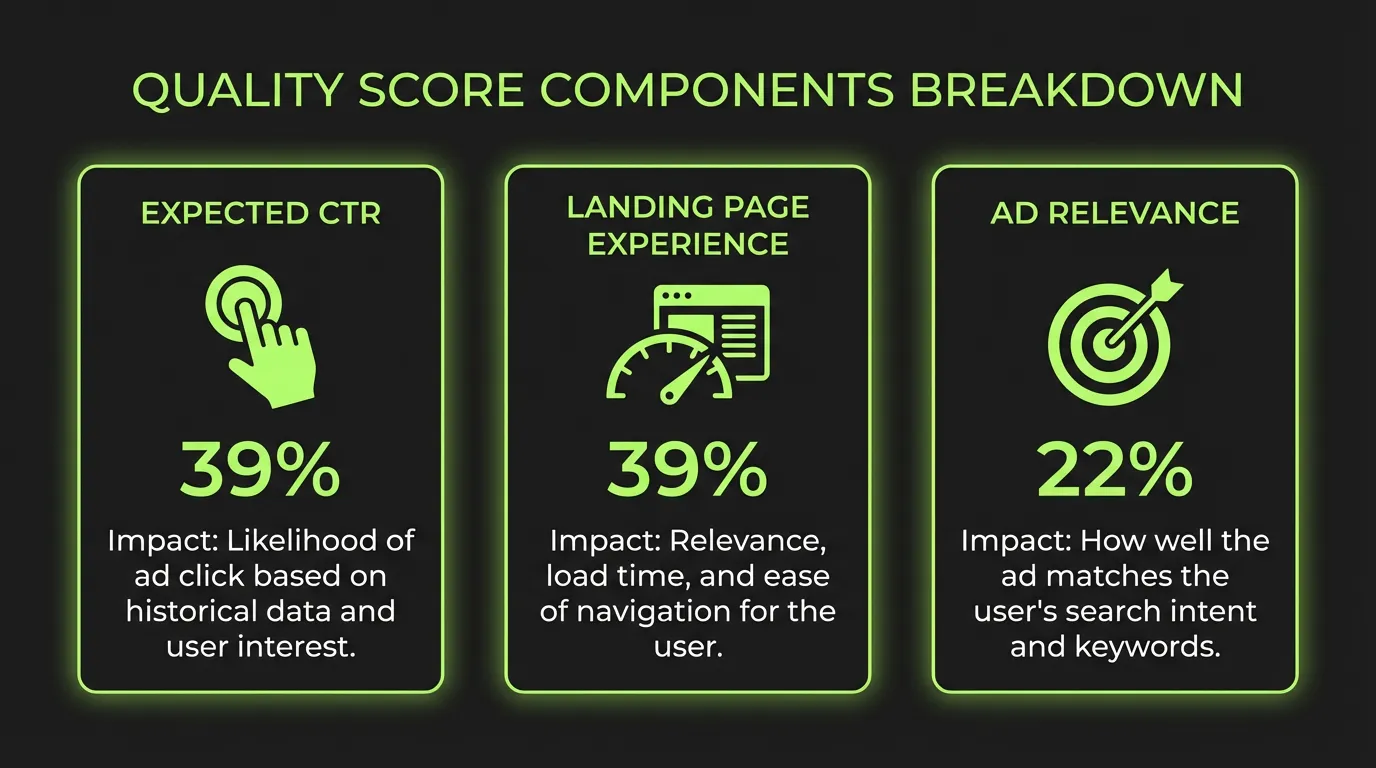
1. Expected Click-Through Rate (39% weight)
How likely users are to click your ad when shown.
Measured Against: Historical CTR performance for similar keywords
Statuses:
- Above Average ✓
- Average
- Below Average ✗
2. Landing Page Experience (39% weight)
How relevant and useful your landing page is to ad clickers.
Factors:
- Relevance to search intent
- Page load speed
- Mobile friendliness
- Original, useful content
- Easy navigation
3. Ad Relevance (22% weight)
How closely your ad matches the searcher's intent.
Factors:
- Keyword presence in ad copy
- Ad message alignment with search query
- Ad group organization
How Quality Score Affects Your Ads
Ad Rank Calculation
Ad Rank = Max Bid × Quality (+ Extensions + Format)
Higher Quality Score = Higher Ad Rank at the same bid.
CPC Impact
| Quality Score | CPC Impact |
|---|---|
| 10 | -50% vs. average |
| 7 | -16% vs. average |
| 5 | Average |
| 3 | +67% vs. average |
| 1 | +400% vs. average |
:::highlight The Math A Quality Score of 10 can reduce your CPCs by 50% compared to average. A score of 1 can increase CPCs by 400%. :::
Improving Expected CTR
Ad Copy Optimization
Include Keywords:
- Use target keyword in headline 1
- Include in description where natural
- Add to display URL
Highlight Benefits:
- Unique value proposition
- Specific numbers/results
- Free shipping, guarantees
Strong CTAs:
- "Shop Now," "Get Quote," "Learn More"
- Action-oriented language
- Urgency when appropriate
Negative Keywords
:::tip Relevance Through Negatives Adding negative keywords prevents your ads from showing for irrelevant searches, improving CTR by only showing to qualified searchers. :::
Common Negatives:
- "free" (if not offering free)
- "jobs," "careers" (if not hiring)
- Competitor names (unless targeting)
- "DIY," "how to" (if selling products)
Ad Extensions
Extensions make ads larger and more compelling, increasing CTR.
Essential Extensions:
- Sitelinks (additional page links)
- Callouts (key benefits)
- Structured Snippets (feature categories)
Improving Ad Relevance
Keyword Organization
Tightly Themed Ad Groups:
- 5-15 related keywords per ad group
- Keywords share common intent
- Allows for specific ad copy
Example:
- Bad: "shoes, running, sneakers, boots" in one group
- Good: "running shoes," "running sneakers," "jogging shoes" in one group
Ad Copy Alignment
:::tip Messaging Consistency "The messaging should be consistent from keyword to ad, and then ad to landing page. Ensure the keywords are present on the landing page and the landing page is consistent with what is being searched for." :::
Ad Copy Checklist:
- Primary keyword in headline
- Search intent addressed
- Benefit relevant to keyword
- CTA matches user goal
Responsive Search Ads
Use 10-15 headlines and 4 descriptions. Google tests combinations to find best performers.
Include:
- Keyword variations
- Different benefits
- Multiple CTAs
- Brand name
Improving Landing Page Experience
Relevance
Match Search Intent:
- Page content addresses what user searched
- Headline echoes ad message
- Product/service clearly presented
Example:
- Search: "blue running shoes"
- Ad: "Blue Running Shoes - Free Shipping"
- Landing Page: Category page filtered to blue running shoes (not homepage)
Page Speed
:::danger Speed Impact "A slow-loading page can drive visitors away. Aim for a page that loads in under 3 seconds." :::
Speed Optimization:
- Compress images (WebP format)
- Minimize JavaScript
- Use CDN
- Enable caching
- Reduce server response time
Testing Tools:
- Google PageSpeed Insights
- GTmetrix
- Lighthouse
Mobile Experience
Most searches are mobile. Pages must be:
- Responsive design
- Touch-friendly buttons (44px+)
- Readable without zooming
- Fast on mobile networks
Trust Signals
- SSL certificate (https)
- Clear contact information
- Privacy policy
- Trust badges/reviews
- Professional design
Navigation
- Clear path to conversion
- Easy to find information
- No aggressive pop-ups
- Simple form fields
Quality Score by Keyword Type
Branded Keywords
Typically high Quality Score (8-10) because:
- High CTR (users searching for you)
- Perfect relevance
- Your landing pages
Non-Branded Keywords
More challenging. Focus on:
- Tight keyword-ad alignment
- Specific landing pages
- Competitive CTR
Competitor Keywords
Often lower scores (4-6) because:
- Lower CTR (users wanted competitor)
- Relevance challenges
Strategy: Accept lower scores, ensure messaging differentiates.
Common Mistakes
Mistake 1: Obsessing Over Score
Quality Score is diagnostic, not a goal.
Fix: Focus on actual performance metrics (conversions, ROAS).
Mistake 2: Broad Match Keywords Only
Broad match = less relevance = lower scores.
Fix: Use phrase and exact match for better alignment.
Mistake 3: One Ad Group for All Keywords
Kills relevance and CTR.
Fix: Organize by theme, 5-15 keywords per group.
Mistake 4: Generic Landing Pages
Sending all traffic to homepage destroys landing page experience.
Fix: Dedicated landing pages for major keyword themes.
Mistake 5: Ignoring Mobile
Desktop-only optimization ignores majority of searches.
Fix: Mobile-first approach to ads and landing pages.
Quality Score Audit Checklist
- Keywords organized into tight themes
- Each ad group has relevant, keyword-specific ads
- Landing pages match ad promises
- Page speed under 3 seconds
- Mobile experience optimized
- Negative keywords added
- Ad extensions implemented
- Below-average components identified and addressed
The Bottom Line
Quality Score matters, but it's a symptom, not the disease.
Focus on creating genuinely good user experiences:
- Relevant ads that match search intent
- Fast, useful landing pages
- Tight keyword organization
The score will follow.
:::tip Start Here Check Quality Score column in Google Ads. Filter for keywords scoring below 5. Click each to see which component is "Below Average." Start fixes there. :::
Track your Google Ads performance alongside all your advertising channels. AdBid provides unified analytics for smarter optimization. Learn more.