
CTV Advertising in 2026: How to Plan, Buy, and Prove a Campaign
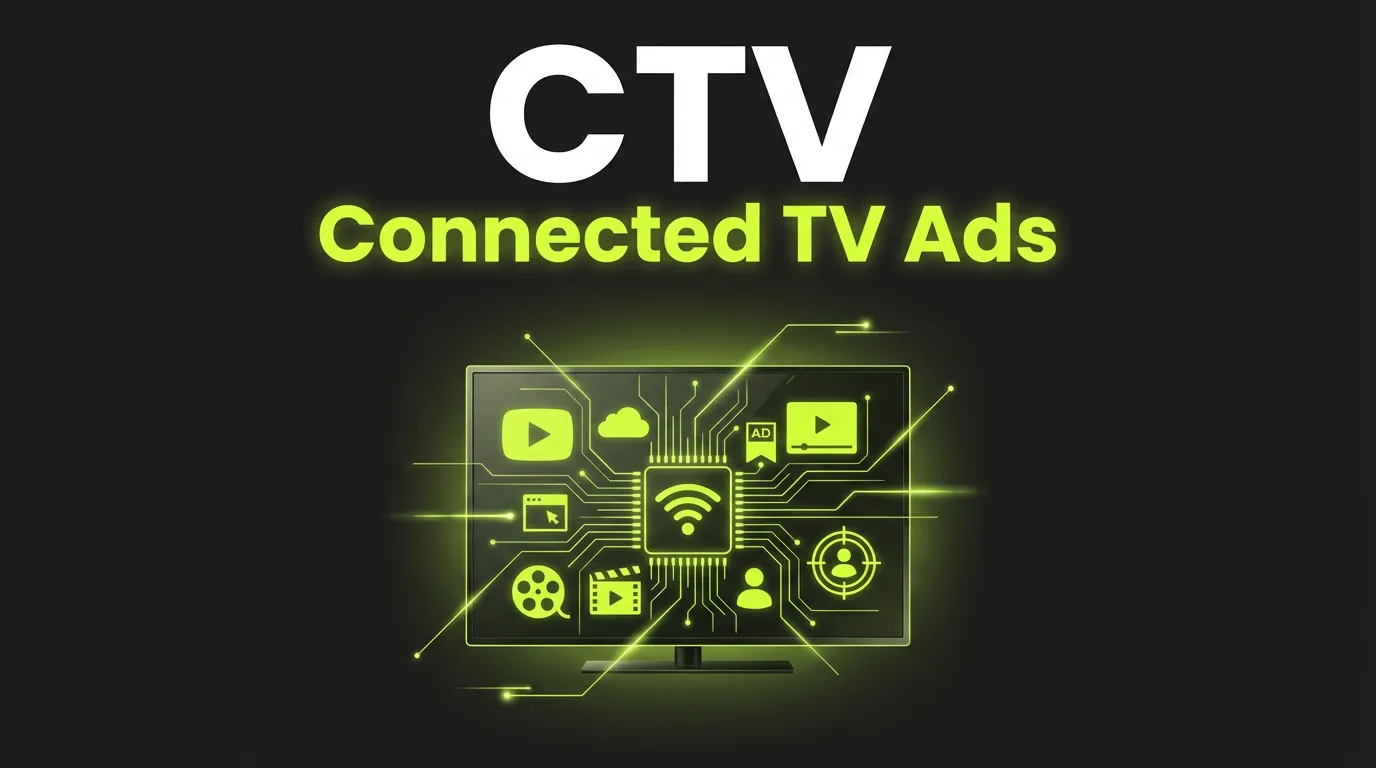
Connected TV advertising spending reached $30.1 billion in 2024 (EMARKETER), and the channel is heading past $40 billion by 2026. That growth is no longer the headline. The hard part now is execution: building a budget that scales, controlling frequency across fragmented apps, and proving CTV moved real outcomes. This guide skips the "what is CTV" basics and focuses on the operational decisions that separate a campaign that works from one that just spends.
Key Takeaways
Key Takeaways
- Streaming already accounts for 43.8% of all TV viewing (Nielsen The Gauge), so CTV is now a planning baseline, not an experiment.
- 75% of CTV transactions run programmatically (AdExchanger), making supply-path decisions central to cost control.
- Frequency management and incrementality testing matter more than chasing the lowest CPM.
How Should You Budget a CTV Campaign in 2026?
CTV ad spend hit $30.1 billion in 2024 (EMARKETER), but a fat market does not mean your budget is safe. The reality? Plenty of CTV money buys reach you already had. Budget around incremental audiences and a clear objective, not around impression volume alone.
Set a Floor Before You Set a Target
Start with reach math, not a round number. CTV needs enough frequency per household to register, so a budget that buys one impression per home wastes the channel's strength. Work backward: decide how many households you want to reach, multiply by your target frequency, then by an estimated CPM. That product is your realistic floor.
Split Budget by Job, Not by Platform
A common mistake is allocating dollars per app. Instead, allocate by what each dollar does. Roughly group spend into three buckets:
- Reach building on broad AVOD and FAST inventory, where CPMs run lower.
- Qualified reach on premium or content-targeted inventory for specific audiences.
- Closing and retargeting on cross-screen mobile and display, supporting the CTV exposure.
This keeps you from overpaying premium CPMs for impressions that only needed scale. For the buying mechanics behind these buckets, our programmatic advertising guide breaks down auction types and pacing.
Streaming now represents 43.8% of TV viewing (Nielsen The Gauge), so the reach bucket can carry more weight than it could two years ago without sacrificing audience quality.
Why Does Supply Path Decide Your Real CPM?
About 75% of all CTV transactions now happen programmatically (AdExchanger), which means most of your money flows through a chain of intermediaries. Each hop in that chain takes a cut and adds a place for the same impression to be resold. Your headline CPM and your effective CPM can differ sharply.
The Hidden Cost Between You and the Screen
When you buy through an open exchange, an impression can pass through multiple resellers before it reaches the viewer. You pay for that complexity twice: once in fees, once in duplicated bids on the same inventory. The fix is supply-path optimization, choosing the shortest, cleanest route to each publisher.
Practical Supply-Path Choices
| Path | When it fits | Trade-off |
|---|---|---|
| Direct / IO | Tentpole moments, brand-safe must-haves | Manual, less flexible |
| Programmatic guaranteed | Locked CPM on known inventory | Lower agility |
| Curated PMP | Vetted publishers, mid-scale audiences | Smaller pool |
| Open exchange | Maximum scale and discovery | Most fee leakage |
Favor curated deals and programmatic guaranteed for the bulk of premium spend, then use the open exchange for incremental scale. The two earlier playbooks in our connected TV advertising guide cover DSP selection in more depth if you are still choosing platforms.
How Do You Control Frequency Across Fragmented Apps?
The single biggest source of wasted CTV budget is uncontrolled frequency. A household streaming across Roku, Tubi, and a smart-TV app can see your spot far more often than intended, because each platform counts impressions on its own. Without household-level capping, you pay to annoy the same living room.
Cap at the Household, Not the App
Set frequency caps that span platforms, not just within one DSP or publisher. Identity solutions and household graphs let you treat one home as one audience. The goal is steady, useful exposure: enough to register, not so much that viewers tune out and your effective cost per outcome climbs.
Match Frequency to the Objective
Frequency is not one number. Tie it to what you want the campaign to do:
- Awareness: lighter, broad exposure to maximize unique households.
- Consideration: moderate, repeated exposure to build familiarity.
- Performance: tighter, concentrated exposure on in-market audiences.
When the same household appears across many apps, deduplicate before you cap. Otherwise your reported reach inflates and your real frequency hides. This is exactly where a consolidated view across channels earns its keep, which our 2025 CTV advertising guide discusses alongside creative fundamentals.
How Do You Prove CTV Actually Worked?
Streaming captures 43.8% of TV viewing (Nielsen The Gauge), yet measurement remains the hardest part of the channel. TV is a household, lean-back medium, so last-click logic falls apart. Prove value through incrementality and lift, not through clicks alone.
Start With a Holdout, Not a Dashboard
The strongest evidence is a controlled test. Hold back a comparable group of households or geographies, then compare outcomes against exposed groups. If exposed households convert, visit, or search at a higher rate, you have real lift. Dashboards full of completion rates feel reassuring, but completion is table stakes, not proof.
A Practical Measurement Stack
Layer three views rather than betting on one:
- Delivery quality: unique reach, deduplicated frequency, completion.
- Mid-funnel signal: site visits, search lift, QR scans tied to flights.
- Outcome lift: incrementality via holdouts or matched markets.
Give the campaign time. A meaningful read usually needs several weeks of flight before the lift signal stabilizes. Pulling budget after one week tells you almost nothing.
What Should a 2026 CTV Launch Checklist Include?
CTV is a "must-buy" for 68% of US advertisers (EMARKETER), so the bar for execution keeps rising. A repeatable pre-launch checklist prevents the avoidable mistakes that quietly drain budget. Run through these before any flight goes live.
Before You Launch
- Objective and KPI locked. One primary metric, agreed in advance.
- Reach and frequency math done. Budget floor justified by the numbers.
- Supply path chosen. Curated and guaranteed for premium, open for scale.
- Household frequency caps set. Cross-platform, deduplicated.
- Creative built for the big screen. Audio on, hook early, clear end card.
- Measurement plan in place. Holdout or matched market defined now, not later.
After You Launch
- Watch deduplicated frequency weekly, not just impressions served.
- Rebalance the three budget buckets toward what drives lift.
- Protect the holdout. Do not contaminate the control group mid-flight.
Shoppable formats add another execution layer worth planning early, which our shoppable video and CTV commerce guide walks through in detail.
Frequently Asked Questions
How much should a small advertiser budget for CTV?
There is no fixed minimum, but budget should clear a reach-times-frequency floor so each household sees enough exposure to register. Since CTV captures 43.8% of TV viewing (Nielsen The Gauge), even modest budgets can find efficient, deduplicated reach when frequency is capped tightly.
Is programmatic or direct buying better for CTV in 2026?
Most spend already flows programmatically, with 75% of CTV transactions automated (AdExchanger). Direct and programmatic-guaranteed deals still win for premium, brand-safe tentpoles. A common pattern uses guaranteed and curated deals for core inventory, then the open exchange for incremental scale.
Why is my CTV CPM higher than the quoted rate?
Quoted CPMs rarely include the full supply chain. With 75% of transactions programmatic (AdExchanger), impressions can pass through several intermediaries, each adding fees and duplicate bids. Supply-path optimization, favoring shorter routes to publishers, narrows the gap between quoted and effective CPM.
How long before I can judge CTV performance?
Give a flight several weeks before judging outcomes. Because CTV ad spend reached $30.1 billion in 2024 (EMARKETER) on lean-back, household viewing, lift signals build slowly. Use a holdout group and wait for the incrementality read to stabilize before reallocating budget.
Conclusion
CTV in 2026 is no longer about whether to buy the channel. It is about buying it well. The advertisers who win treat budget as reach-times-frequency math, choose the shortest supply path to each publisher, cap frequency at the household level across every app, and prove value with holdouts instead of completion-rate dashboards. None of that requires the biggest budget in the auction. It requires discipline at every step, from planning through measurement, and a single view of how CTV performs next to your other channels.
Ready to plan, launch, and measure CTV in one place? Try AdBid's AI Ads Manager and see your full-funnel performance in a single workspace.