
Amazon Ads: The Complete Guide for Sellers and Brands in 2026
Amazon is no longer just a store. It is one of the largest advertising businesses in the world, and shoppers arrive with their wallets already open. According to Amazon's 2024 full-year results (Amazon Q4 2024 release, 2025), advertising services generated billions in quarterly revenue and kept growing at double digits year over year. That growth tells you something simple: ads now decide who wins the buy box of attention.
This guide breaks down every Amazon ad format, how to set them up, and how to keep your costs under control in 2026. Whether you sell ten units a week or run a national brand, the same fundamentals apply. Let's walk through them.
Key Takeaways
- Amazon advertising revenue surpassed $56 billion in 2024 (Amazon 2024 10-K, 2025), making it the third-largest ad platform after Google and Meta.
- Sponsored Products is the entry point for most sellers and the easiest format to launch.
- ACoS measures ad efficiency; TACoS shows whether ads lift your total business.
- Brand Registry unlocks Sponsored Brands, Stores, and richer reporting.
- Start with automatic targeting, then graduate to manual once data accumulates.
Why Should You Advertise on Amazon in 2026?
Amazon advertising matters because intent is everything, and Amazon owns the highest-intent surface in retail. The company reported advertising revenue of $56.2 billion for full-year 2024 (Amazon 2024 10-K, 2025), up sharply from the prior year. People search Amazon to buy, not to browse, so your ad meets demand instead of creating it.
That difference reshapes your whole funnel. On social platforms you interrupt someone scrolling. On Amazon you appear at the exact moment a shopper compares products and reaches for a card. The competition is fierce, but so is the payoff when your listing converts.
Want the deeper playbook on bidding and structure? Our Amazon PPC advertising guide digs into campaign mechanics in detail.
What Makes Amazon Different From Google or Meta?
Amazon sits inside the purchase decision, not before it. Shoppers who click a Sponsored Product are often minutes from checkout. eMarketer projects Amazon will hold a growing share of US digital ad spend through 2026 (eMarketer, 2024), driven largely by this commerce-adjacent intent. That position is hard for general search or social to replicate.
What Are the Main Types of Amazon Ads?
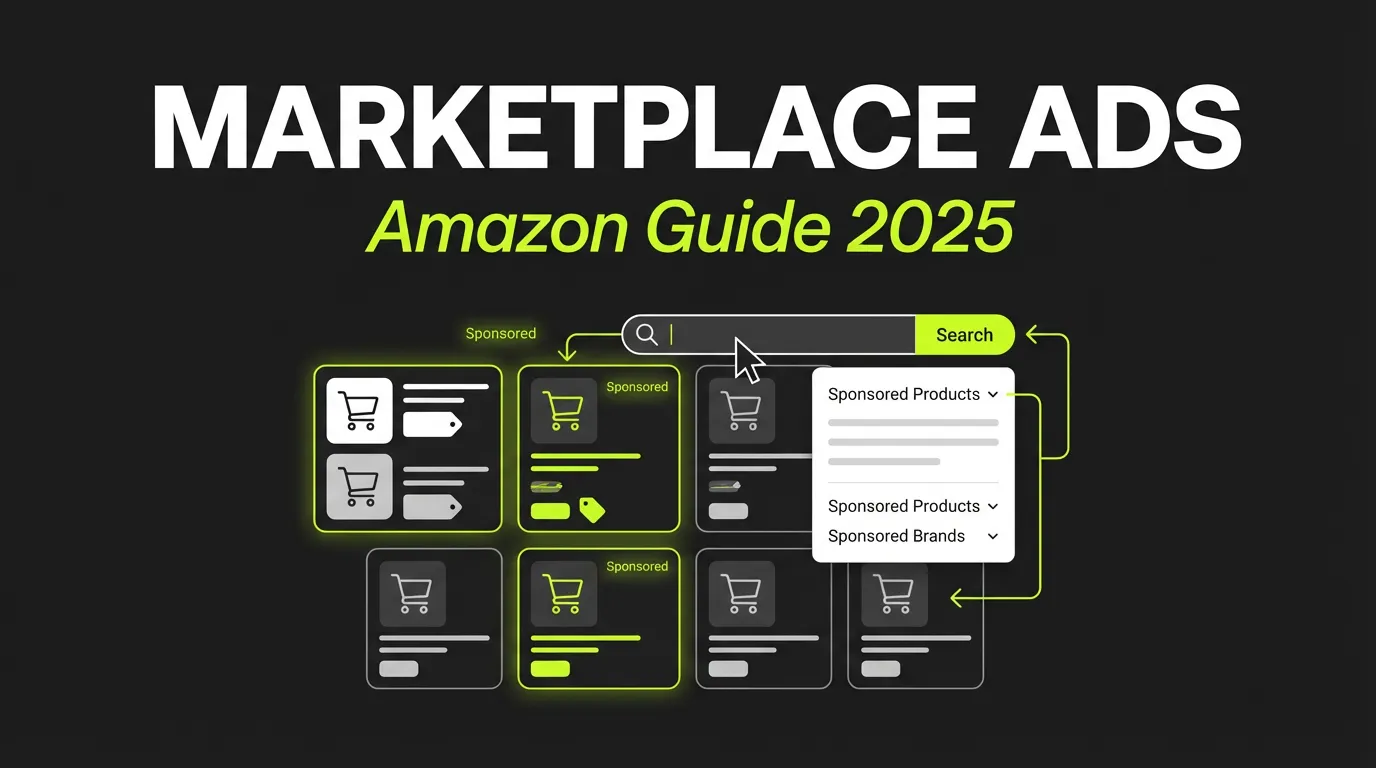
Amazon offers four core ad products, and each serves a distinct job in the funnel. Sponsored Products remains the workhorse, accounting for the majority of seller ad spend according to multiple industry surveys (Marketplace Pulse, 2024). Knowing which format fits your goal prevents wasted budget and messy account structure.
Here is how the formats compare at a glance.
| Format | Primary goal | Where it shows | Brand Registry needed |
|---|---|---|---|
| Sponsored Products | Drive sales | Search results, product pages | No |
| Sponsored Brands | Build awareness | Top of search, banners | Yes |
| Sponsored Display | Retarget and cross-sell | On and off Amazon | Yes |
| Amazon DSP | Programmatic reach | Web, apps, streaming | No (managed or self-serve) |
Sponsored Products
Sponsored Products are keyword and product-targeted ads that look almost identical to organic listings. They are the easiest place to start. Use them to launch new ASINs, defend your branded terms, and conquest competitor pages. Automatic targeting lets Amazon find converting search terms; manual targeting hands you the steering wheel later.
Sponsored Brands
Sponsored Brands are banner ads carrying your logo, a custom headline, and several products. They sit at the top of search results and shine for awareness and product-range storytelling. You need Brand Registry, at least three products, and a headline within Amazon's character limit. Video creatives in this format consistently earn strong engagement.
Sponsored Display and Amazon DSP
Sponsored Display retargets shoppers who viewed your products and reaches audiences both on and off Amazon. Amazon DSP goes further, buying programmatic display and video inventory across the open web and streaming. DSP historically suited larger budgets, though self-serve access has widened. For a broader view of these surfaces, see our retail media network advertising guide.
How Do You Set Up Your First Amazon Campaign?
Setting up Amazon ads takes three steps, and a beginner can launch in under an hour. Most new sellers should begin with a Sponsored Products automatic campaign at a modest daily budget. Industry guidance suggests new advertisers reach meaningful keyword data within a few weeks of consistent spend (Jungle Scout State of the Amazon Seller, 2024), so patience pays.
Step 1: Open a Professional Seller Account
Create a Seller Central account and choose the Professional plan, which carries a monthly subscription fee. Complete identity verification and add a payment method. Without an active selling account, you cannot run ads.
Step 2: Enroll in Brand Registry
If you own a registered trademark, enroll in Brand Registry. It unlocks Sponsored Brands, Stores, A+ Content, and stronger protection against listing hijackers. This step is optional for Sponsored Products but valuable for any serious brand.
Step 3: Launch and Structure
Open Campaign Manager, select Sponsored Products, and choose automatic targeting. Set a daily budget you are comfortable losing while you learn, add your products, and pick a sensible default bid. Then build a clean structure: separate campaigns by product category, match type, and performance tier so reporting stays readable.
How Do You Optimize ACoS and Keep Costs Down?
Optimization on Amazon revolves around two numbers: ACoS and TACoS. ACoS, or Advertising Cost of Sales, divides ad spend by ad-attributed revenue. TACoS divides ad spend by total revenue, including organic sales. Sellers who track TACoS alongside ACoS gain a clearer picture of how ads lift the whole business, a habit recommended across advertising analyses (Marketplace Pulse, 2024).
Cost-per-click varies widely by category, so benchmark against your own niche rather than a single industry average. Run these habits on a weekly cadence:
- Review Search Term Reports and add negative keywords to cut wasted spend.
- Move proven converting terms from automatic into dedicated manual campaigns.
- Adjust bids by match type, raising exact-match bids on high-intent terms.
- Watch TACoS over time; a steady decline signals healthy organic growth.
Should You Use Automatic or Manual Targeting?
Use both, in sequence. Automatic campaigns are discovery engines that surface search terms you would never guess. Once those terms prove themselves, harvest them into manual campaigns where you control bids and match types precisely. Skipping automatic targeting means starting blind and guessing at keywords.
Structuring Campaigns and Creatives
A disciplined structure keeps optimization sane. Group products logically, isolate match types, and tier campaigns by performance. The same structural discipline applies across channels, which is why a unified plan helps; our ecommerce advertising strategy guide shows how to align Amazon with Meta, Google, and TikTok. If you sell a large catalog, automated formats like those in our dynamic product ads guide reduce manual creative work.
What Are the Most Common Amazon Ads Mistakes?
The most common mistake is treating ads as a fix for a weak listing, and it quietly drains budgets every day. No bid strategy rescues poor titles, blurry images, or thin reviews, because conversion happens on the product page, not in the ad. Listing quality remains the single biggest lever sellers control, a point echoed in seller research (Jungle Scout State of the Amazon Seller, 2024).
Other frequent errors are easy to avoid once you name them:
- Launching with manual targeting only, before you have keyword data.
- Ignoring negative keywords and letting irrelevant clicks pile up.
- Applying one flat bid to every keyword regardless of performance.
- Running a single chaotic campaign with no category or match-type separation.
Fix these and most accounts improve without spending an extra dollar. Sometimes the cheapest optimization is simply cleaning up what you already run.
Frequently Asked Questions
What is a good ACoS on Amazon?
A good ACoS depends on your margins, not a universal number. Many sellers target an ACoS below their profit margin so each ad-driven sale stays profitable. During launches, a higher ACoS can be acceptable because you are buying ranking velocity and reviews. Track TACoS alongside it to confirm ads are lifting total revenue, not just shifting it.
How much should a new seller budget for Amazon ads?
Start with a budget you can sustain for several weeks, since campaigns need data before they optimize. New advertisers typically reach useful keyword signals within a few weeks of consistent spend (Jungle Scout State of the Amazon Seller, 2024). Begin with a modest daily cap on a single automatic campaign, then scale spend toward formats that prove profitable.
Do I need Brand Registry to run Amazon ads?
No, you can run Sponsored Products without Brand Registry. However, Sponsored Brands, Stores, Sponsored Display, and A+ Content all require enrollment. Brand Registry also unlocks richer analytics and protects your listings from hijackers. If you own a registered trademark, enrolling is one of the highest-value early steps you can take.
Is Amazon DSP worth it for smaller brands?
Amazon DSP can work for smaller brands now that self-serve and managed-service options have widened access. It excels at retargeting viewers and reaching audiences off Amazon across the open web and streaming. Smaller advertisers should first build a profitable Sponsored Products foundation, then layer DSP for incremental reach rather than starting there.
Conclusion
Amazon advertising rewards intent like no other channel, and 2026 only sharpens that edge as ad revenue keeps climbing past $56 billion a year (Amazon 2024 10-K, 2025). Start simple with Sponsored Products automatic campaigns, harvest your winning search terms into manual targeting, and expand into Sponsored Brands, Display, and DSP as your data justifies it.
The brands that win are not the ones with the biggest budgets. They are the ones that review reports weekly, manage bids with discipline, and keep their listings sharp. Treat optimization as a routine, not a one-time setup.
Ready to manage Amazon alongside Meta, Google, and TikTok from one place? Explore the AI agents ads manager and bring every channel under a single, intelligent workflow.