
AI Ad Generator: Best Tools & How to Create Ads with AI in 2026
Artificial intelligence has reshaped ad creation. What once took hours of design work and copywriting can now be accomplished in minutes with AI ad generators. This comprehensive guide covers everything you need to know about using AI to create high-performing advertisements.
Bringing this in-house? AdBid's ads manager consolidates planning, launch, and optimization into a single flow.
What is an AI Ad Generator?
An AI ad generator is a tool that uses artificial intelligence—including machine learning, natural language processing, and computer vision—to automatically create advertising content. These tools can generate:
- Ad copy: Headlines, descriptions, CTAs
- Images: Custom visuals, product photos, backgrounds
- Videos: Short-form video ads, animations
- Complete ads: End-to-end ad creation
How AI Ad Generation Works
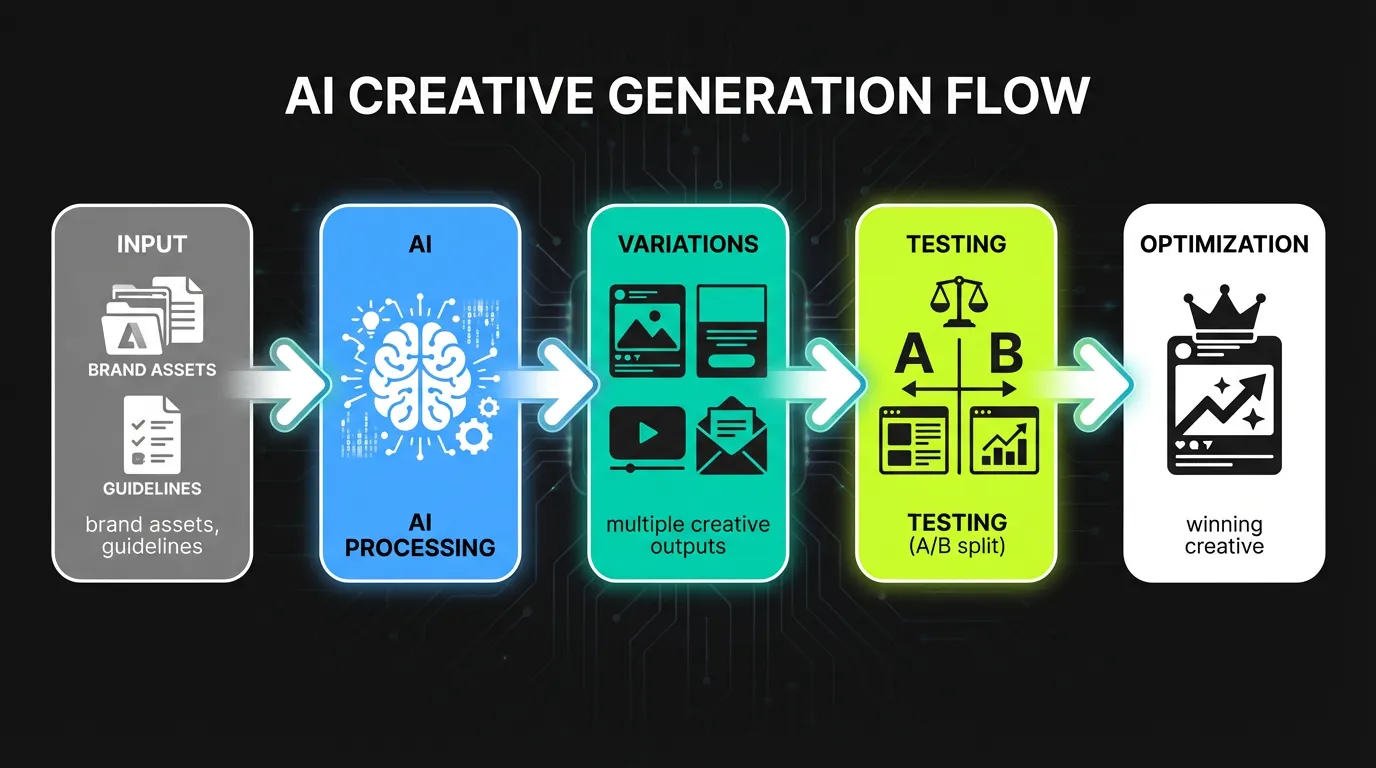
- Input: Provide product info, target audience, brand guidelines
- Processing: AI analyzes successful ads and patterns
- Generation: Multiple ad variations created
- Optimization: Performance data improves future generations
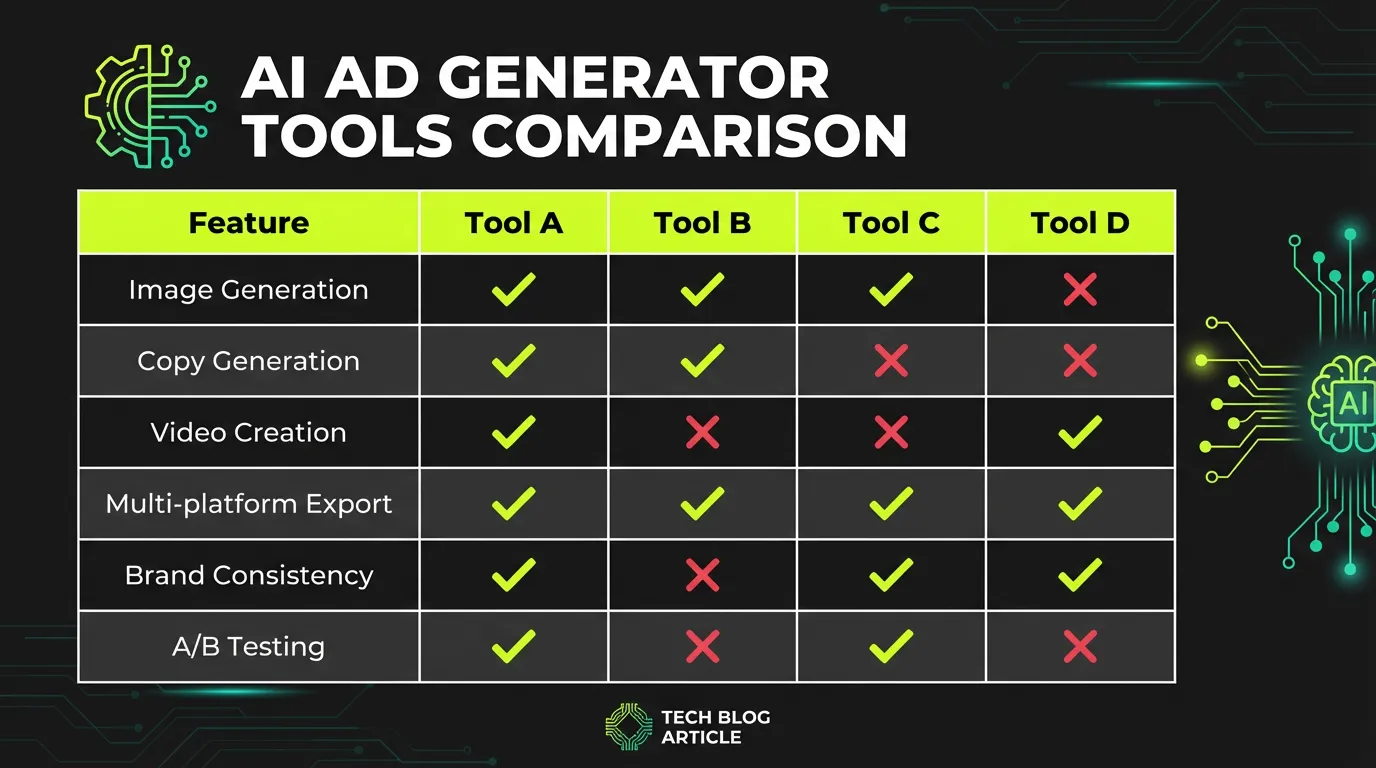
Top AI Ad Generator Tools in 2026
1. AdBid Creative Factory
Best for: Full-stack AI ad creation with campaign integration
Features:
- AI-generated images and videos
- Automated copy generation
- Multi-platform optimization
- Direct campaign deployment
- Performance-based learning
Pricing: Included with AdBid plans (starting $99/mo)
Pros:
- Integrated with campaign management
- Real-time performance optimization
- Multi-format generation
Cons:
- Requires AdBid subscription
2. AdCreative.ai
Best for: High-volume creative generation
Features:
- Conversion-focused creatives
- Brand kit integration
- A/B testing built-in
- 100+ templates
Pricing: From $29/mo
Pros:
- Large template library
- Good for beginners
- Affordable entry point
Cons:
- Limited video capabilities
- No campaign management
3. Pencil AI
Best for: Video ad generation
Features:
- AI video creation
- Performance prediction
- Winning ad identification
- Platform-specific formats
Pricing: Custom pricing
Pros:
- Strong video capabilities
- Predictive analytics
- Enterprise features
Cons:
- Higher price point
- Learning curve
4. Copy.ai
Best for: Ad copywriting
Features:
- Multiple copy frameworks
- Brand voice training
- Bulk generation
- 90+ languages
Pricing: Free tier available, Pro from $49/mo
Pros:
- Excellent for copy
- Easy to use
- Affordable
Cons:
- No image generation
- Copy-focused only
5. Midjourney / DALL-E
Best for: Custom ad imagery
Features:
- Photorealistic images
- Artistic styles
- Custom concepts
- High resolution
Pricing: Midjourney from $10/mo, DALL-E pay-per-use
Pros:
- Stunning visuals
- Unlimited creativity
- Unique imagery
Cons:
- Requires design skills
- Manual process
Types of AI-Generated Ads
Image Ads
Best practices:
- Use product-focused prompts
- Maintain brand consistency
- Test multiple variations
- Ensure text readability
Example prompt structure:
[Product] in [setting] with [lighting style],
[brand colors], professional advertising photography,
[emotion/mood], [target demographic appeal]
Video Ads
AI video generation options:
- Text-to-video: Generate from scripts
- Image-to-video: Animate static images
- Template-based: Fill in AI-generated content
- UGC-style: AI avatars and presenters
Best performing formats:
- Hook in first 2 seconds
- 15-30 second duration
- Clear CTA
- Mobile-first design
Copy Generation
Effective AI copy frameworks:
AIDA Framework:
- Attention: Grab with headline
- Interest: Present the problem
- Desire: Show the solution
- Action: Clear CTA
PAS Framework:
- Problem: Identify pain point
- Agitation: Amplify the issue
- Solution: Present your offer
Creating Effective AI Ads: Step-by-Step
Step 1: Define Your Inputs
Essential information:
- Product/service description
- Target audience demographics
- Key benefits (top 3)
- Brand voice guidelines
- Competitor differentiation
- Campaign objective
Step 2: Generate Multiple Variations
Recommended approach:
- Generate 10-20 initial concepts
- Create 3-5 variations per concept
- Test different angles:
- Benefit-focused
- Problem-focused
- Social proof
- Urgency-driven
- Emotional appeal
Step 3: Refine and Iterate
Optimization process:
- Review AI outputs critically
- Fact-check all claims
- Ensure brand alignment
- Add human touches
- Test with real audience
Step 4: Test and Scale
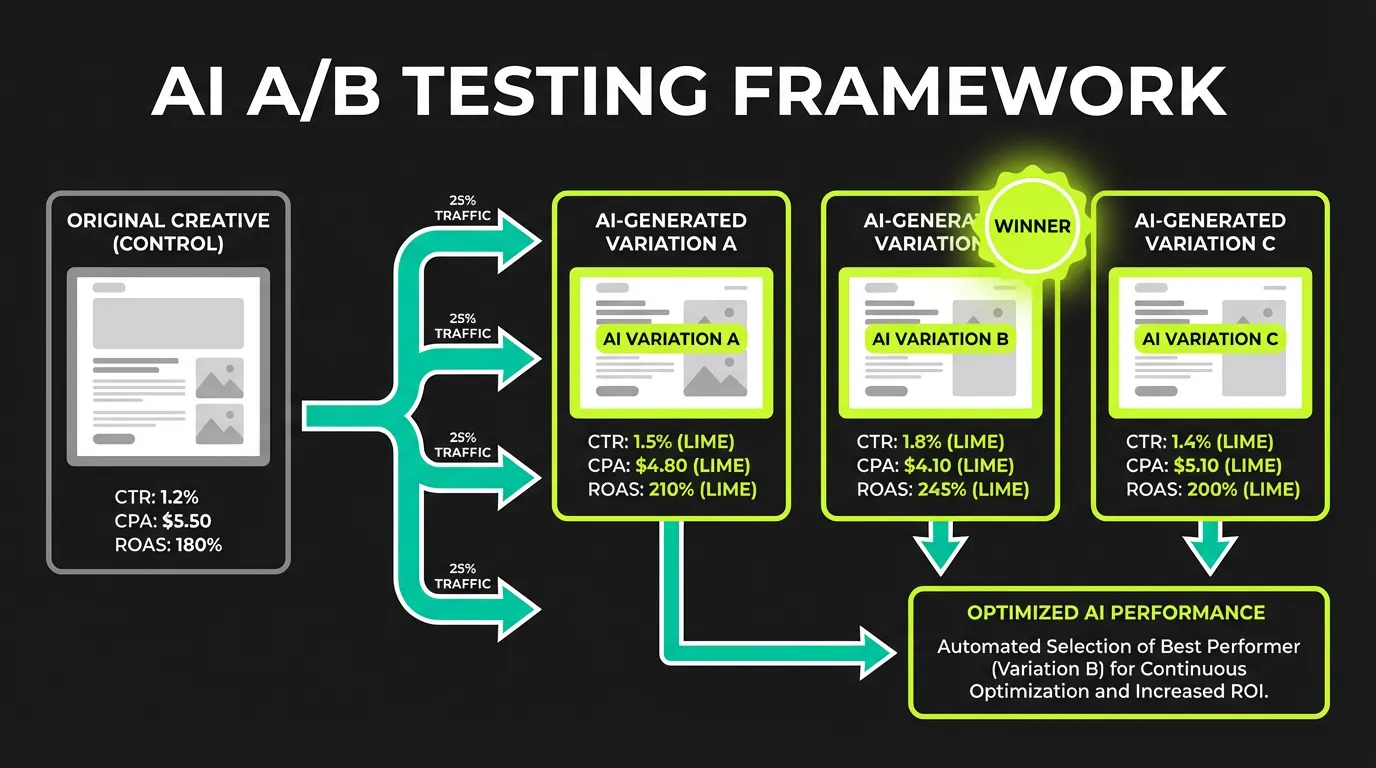
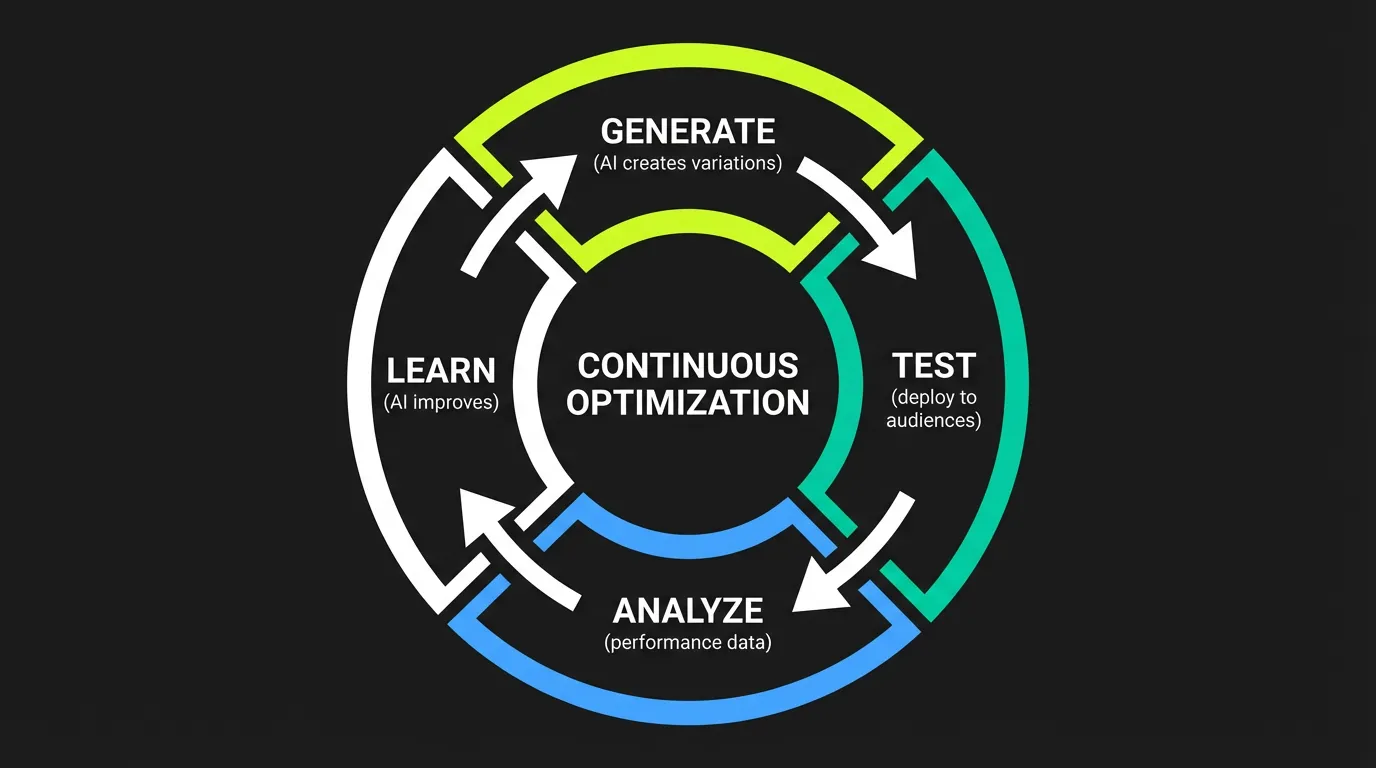
Testing framework:
- A/B test top variations
- Measure CTR, conversion, ROAS
- Identify winning patterns
- Feed learnings back to AI
- Scale winners automatically
AI Ad Generator Best Practices
Do's
✅ Provide detailed inputs: Better input = better output ✅ Generate many variations: Quantity leads to quality ✅ Maintain brand guidelines: Consistency builds trust ✅ Human review everything: AI makes mistakes ✅ Test relentlessly: Data beats assumptions ✅ Use platform-specific formats: Optimize for each channel ✅ Iterate based on performance: Continuous improvement
Don'ts
❌ Don't use AI output verbatim: Always edit and refine ❌ Don't ignore brand voice: AI can drift from guidelines ❌ Don't make false claims: Verify all statements ❌ Don't skip legal review: Especially for regulated industries ❌ Don't forget accessibility: Ensure ads are inclusive ❌ Don't rely solely on AI: Human creativity still matters
Platform-Specific AI Ad Strategies
Facebook/Instagram
AI optimization tips:
- Generate square and vertical formats
- Create carousel variations
- Test different hooks for Reels
- Use AI for dynamic creative
Recommended formats:
- Feed: 1:1, 4:5
- Stories/Reels: 9:16
- Carousel: 1:1 with 3-10 cards
Google Ads
AI for Google:
- Generate responsive search ad variations
- Create Performance Max assets
- Test multiple headlines (15+)
- Vary descriptions (4+)
Asset requirements:
- 3-15 headlines (30 chars)
- 2-4 descriptions (90 chars)
- Multiple images (various sizes)
TikTok
AI TikTok strategies:
- UGC-style AI avatars
- Native, authentic feel
- Hook in 0.5 seconds
- Trending audio integration
Best performing:
- Raw, unpolished look
- Problem-solution format
- Before/after reveals
- Tutorial style
B2B AI ads:
- Professional tone
- Data-driven claims
- Thought leadership angle
- Industry-specific messaging
Measuring AI Ad Performance
Key Metrics
Creative performance:
| Metric | Target | Calculation |
|---|---|---|
| CTR | >1.5% | Clicks / Impressions |
| Engagement Rate | >3% | (Likes+Comments+Shares) / Reach |
| Video View Rate | >25% | Video Views / Impressions |
| Conversion Rate | >2% | Conversions / Clicks |
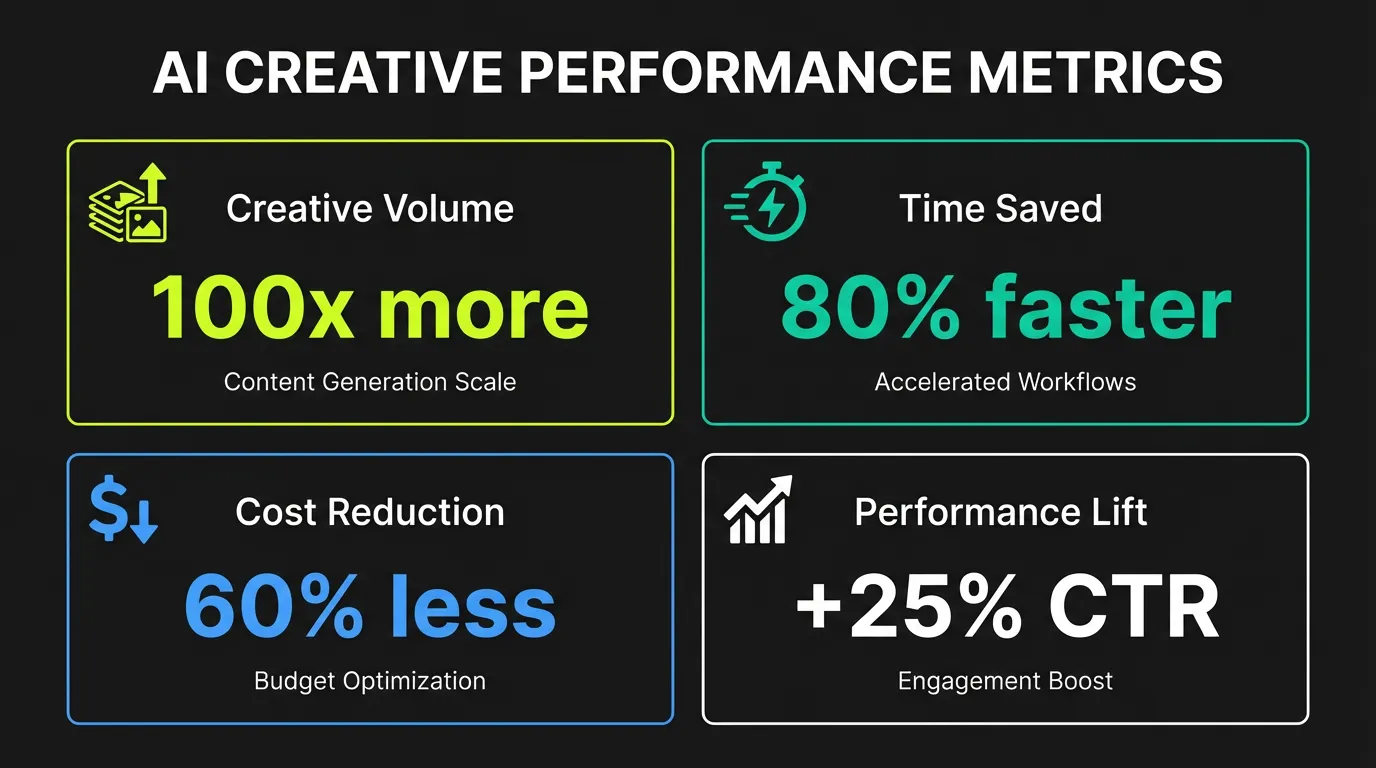
AI efficiency metrics:
| Metric | Description |
|---|---|
| Time Saved | Hours saved vs manual creation |
| Cost per Creative | Total cost / Creatives generated |
| Win Rate | Winning ads / Total ads tested |
| Iteration Speed | Time from concept to live |
Attribution
Tracking AI ad performance:
- UTM parameters for each variation
- Platform-native tracking
- Conversion API integration
- Multi-touch attribution
AI Ad Generator ROI Calculator
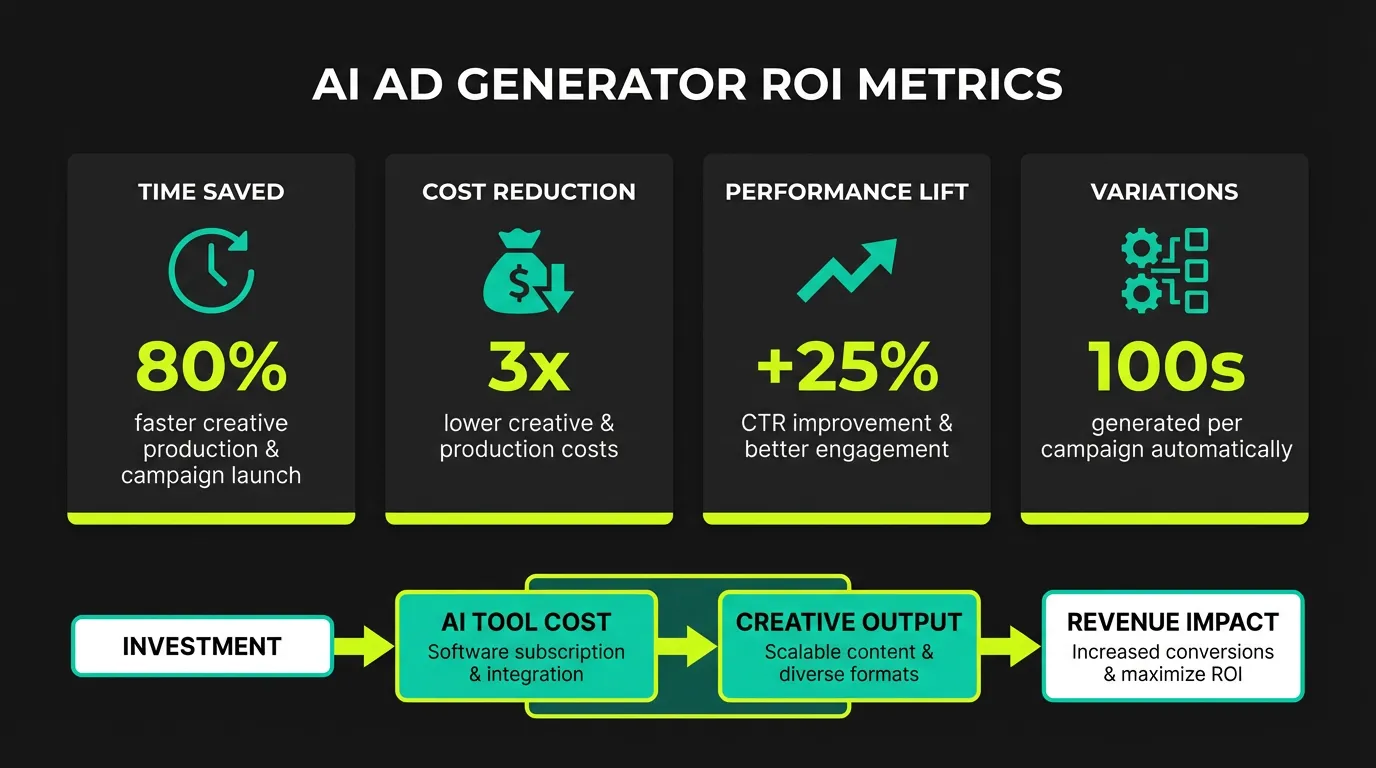
Example calculation:
| Factor | Manual | AI-Assisted |
|---|---|---|
| Creatives per month | 20 | 200 |
| Time per creative | 2 hours | 10 min |
| Total time | 40 hours | 33 hours |
| Designer cost | $2,000 | $400 |
| AI tool cost | $0 | $99 |
| Total cost | $2,000 | $499 |
| Savings | - | 75% |
Plus: More variations = better performance through testing
Future of AI Ad Generation
Emerging trends
- Real-time personalization: Ads generated on-the-fly for each user
- Predictive performance: AI predicts winners before launch
- Cross-platform automation: One input, all platforms
- Voice and audio ads: AI-generated audio content
- AR/VR ads: AI-created immersive experiences
Preparing for the future
- Build AI workflows now
- Train teams on AI tools
- Establish quality guidelines
- Collect performance data
- Stay updated on capabilities
Frequently Asked Questions
Is AI-generated ad content legal?
Yes, but with considerations:
- Verify all claims are accurate
- Respect copyright and IP
- Follow platform policies
- Disclose AI use where required
- Follow industry regulations
Will AI replace creative teams?
No, but it changes their role:
- Strategy becomes more important
- Focus shifts to direction and refinement
- Human oversight remains essential
- Creativity still drives differentiation
How do I maintain brand consistency?
Best practices:
- Create detailed brand guidelines for AI
- Use brand kit features when available
- Implement approval workflows
- Regular quality audits
- Training AI on brand examples
What's the best AI ad generator for beginners?
Start with:
- AdBid Creative Factory - All-in-one solution
- Copy.ai - Easy copy generation
- Canva AI - Familiar interface
How many AI ads should I test?
Testing recommendations:
- Minimum: 3-5 variations per ad set
- Optimal: 10-20 initial concepts
- Enterprise: 50+ for statistical significance
Key Takeaways
- AI accelerates creation: 10x faster than manual methods
- Quality requires curation: Human oversight is essential
- Test more, win more: AI enables unprecedented testing
- Platform matters: Optimize for each channel
- ROI is proven: Typical 50-75% cost savings
Conclusion
AI ad generators have moved from novelty to necessity. The brands winning in 2026 are those that effectively combine AI efficiency with human creativity and strategic thinking.
Start with clear objectives, provide quality inputs, generate many variations, and let performance data guide your decisions. The tools are powerful, but the strategy behind them determines success.
Ready to transform your ad creation? Try AdBid's AI Creative Factory →