
Key Takeaways
- Retail e-commerce sales projected to reach $8.1 trillion by 2026 (Statista)
- Rising CAC requires funnel-based creative mapping for efficiency
- Social commerce growing 34.4% — platforms like TikTok Shop changing the game
- First-party data strategies essential as privacy regulations tighten
- Multi-platform approach beats single-channel dependency
:::highlight The E-commerce Reality "Between privacy changes, rising customer acquisition costs, and new platforms constantly emerging, brands are feeling pressure to run more efficiently and effectively." — Every e-commerce advertiser in 2026 :::
The State of E-commerce Advertising in 2026
Global advertising spend is projected to reach $1.87 trillion in 2026, with e-commerce brands competing harder than ever for attention. The old playbook of "throw money at Facebook" doesn't work anymore.
For teams scaling across markets, AdBid's geo-scale localization helps adapt campaign structure, messaging, and creative by country.
Here's what changed:
| Challenge | Impact | Solution |
|---|---|---|
| Privacy restrictions | 40% less tracking data | First-party data infrastructure |
| Rising CAC | 30-50% increase since 2023 | Funnel-based creative optimization |
| Platform fragmentation | Attention split across 5+ platforms | Strategic platform selection |
| Ad fatigue | Creative lifespan shortened to 2-3 weeks | Higher creative velocity |
Platform-Specific Strategies
Facebook & Instagram
Facebook still delivers for e-commerce, but requires a sophisticated approach:
:::tip Effective Tactics
- Advantage+ Shopping Campaigns — Let Meta's AI optimize across the full catalog
- Customer testimonials — UGC-style content outperforms polished ads by 2-3x
- Retargeting sequences — Cart abandonment with escalating discounts
- Lookalike scaling — Start with 1% purchase lookalikes, expand to 5% gradually :::
Budget allocation: 40-50% of total ad spend for most e-commerce brands.
TikTok Shop & TikTok Ads
Social commerce on TikTok is expected to grow 67% by 2026. This isn't optional anymore.
"92% of users take action after viewing content on TikTok (TikTok For Business), whether that's visiting a website, making a purchase, or following a brand."
What works:
- Native content that doesn't look like ads
- Creator partnerships (micro-influencers perform best)
- Shop integration for frictionless checkout
- Trend-jacking with fast turnaround (24-48 hours)
Google Shopping & Performance Max
High-intent traffic from Google converts at 2-3x social rates:
- Optimize product feeds — Titles, descriptions, images matter
- Segment by margin — Separate high-margin products for aggressive bidding
- Performance Max — Works well for broad catalog visibility
- Brand terms — Protect your brand searches from competitors
Amazon Advertising
For brands selling on Amazon, advertising is table stakes:
- Sponsored Products — Core of most Amazon ad strategies
- Sponsored Brands — Build brand awareness in search results
- DSP — Retarget shoppers across the web
:::warning Amazon Reality Amazon's closed ecosystem means limited data export. Run your own attribution analysis to understand true incremental value. :::
Funnel-Based Creative Mapping
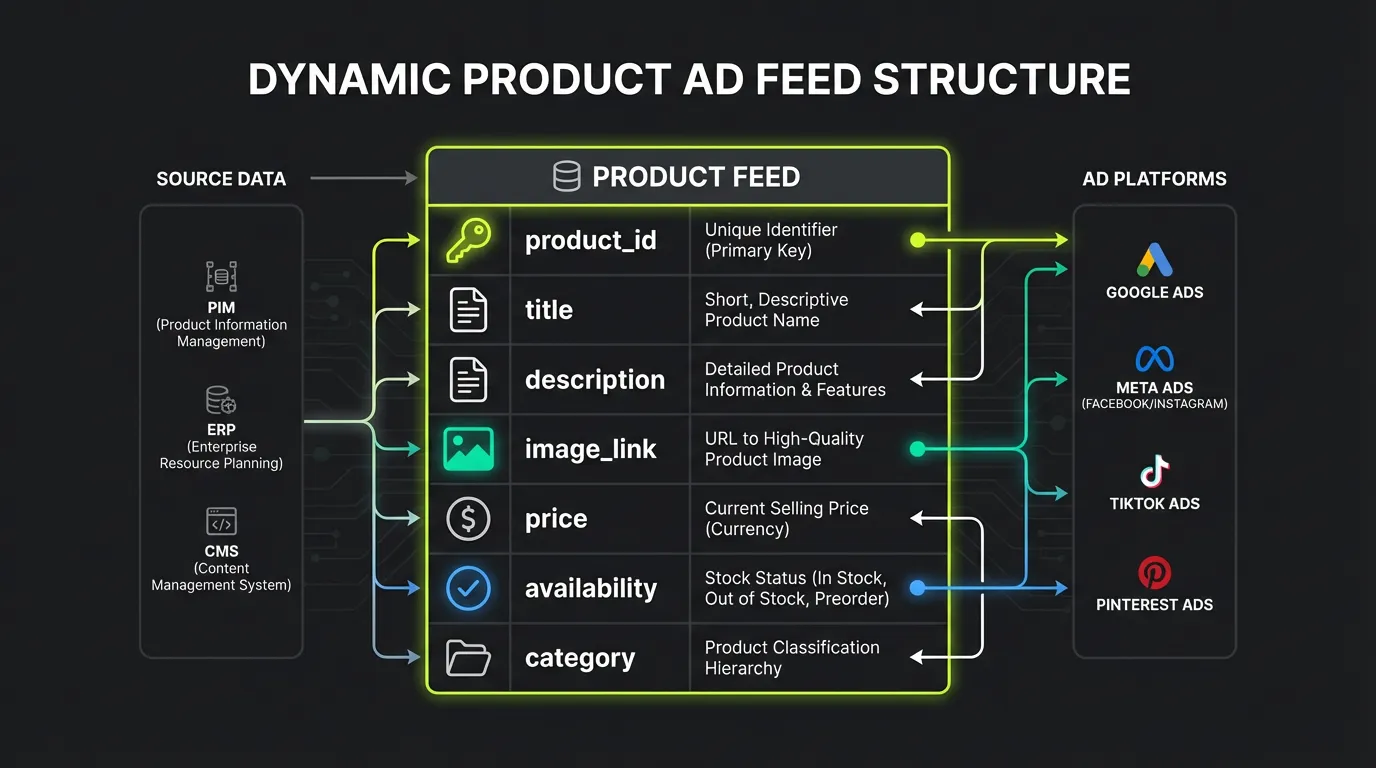
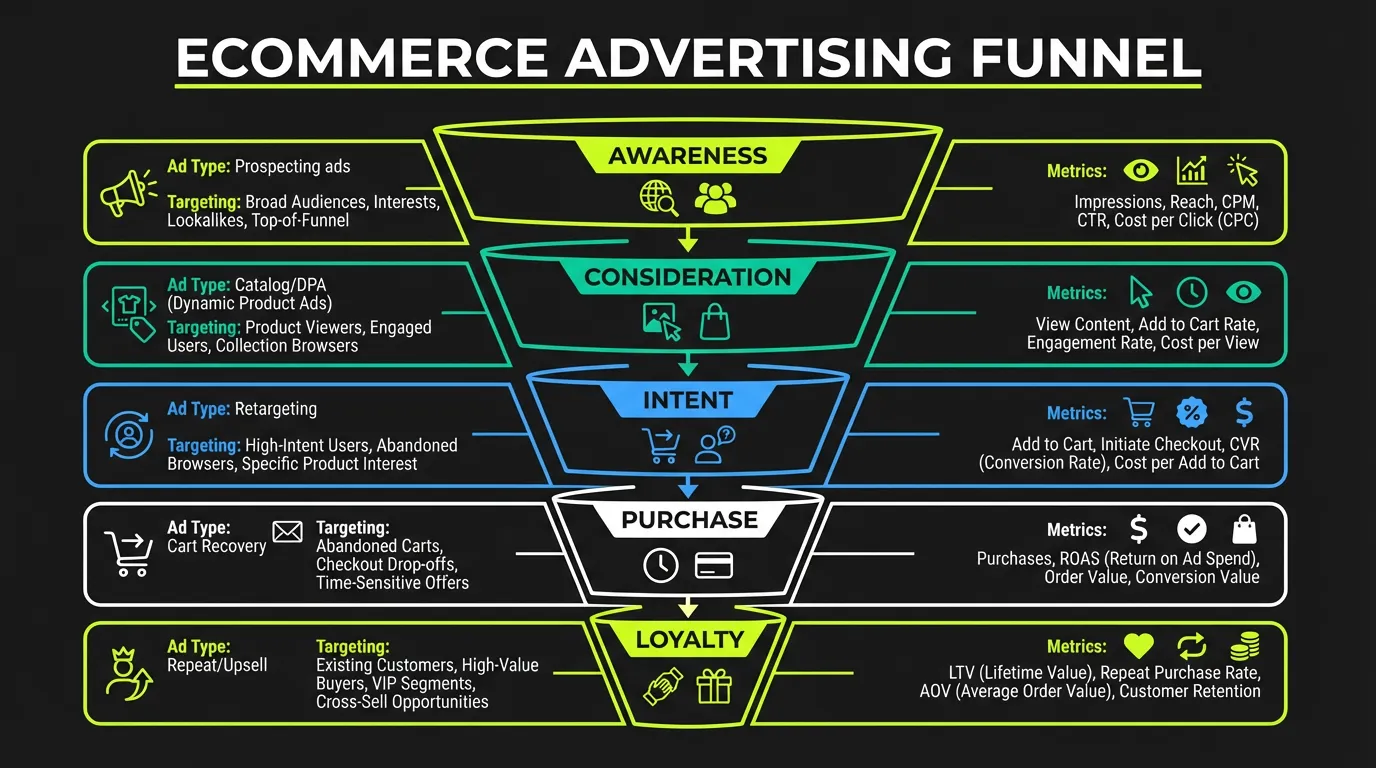
In 2026, with rising CAC and shorter attention spans, aligning creative to awareness stages is critical:
Top of Funnel (Awareness)
- Objective: Introduce brand, create curiosity
- Creative: Broad pain points, aspirational content, trend-based hooks
- Platforms: TikTok, YouTube, Instagram Reels
- Metrics: CPM, Video view rate, Engagement
Middle of Funnel (Consideration)
- Objective: Build trust, differentiate from competitors
- Creative: Product features, UGC testimonials, comparison content
- Platforms: Meta, Google Display, Retargeting
- Metrics: CTR, Landing page views, Add to carts
Bottom of Funnel (Conversion)
- Objective: Drive purchase, overcome objections
- Creative: Offers, urgency, social proof, cart abandonment reminders
- Platforms: Meta, Google Shopping, Email
- Metrics: ROAS, CPA, Conversion rate
Managing Rising Customer Acquisition Costs
CAC has increased 30-50% across most e-commerce categories since 2023. Here's how to fight back:
Strategy 1: Increase Average Order Value
Higher AOV means you can afford higher CAC. Tactics:
- Product bundles
- Free shipping thresholds
- Upsells and cross-sells
- Subscription options
Strategy 2: Improve Conversion Rate
Every percentage point of conversion improvement directly reduces effective CAC:
- Faster site speed
- Simplified checkout
- Better mobile experience
- Trust signals (reviews, guarantees)
Strategy 3: Extend Customer Lifetime Value
Retention is cheaper than acquisition:
- Email/SMS automation
- Loyalty programs
- Post-purchase engagement
- Exclusive offers for repeat customers
:::info The LTV Equation If your average customer makes 3 purchases over 2 years, you can afford 3x the CAC of a one-time buyer. Model this correctly. :::
Emerging Channels for 2026
Voice Commerce
Voice-based shopping projected at $164 billion by 2026. Optimize for:
- Conversational keywords in product listings
- Amazon Alexa and Google Assistant compatibility
- Simple, clear product names
AR/VR Integration
AR/VR device shipments increasing to 87.7 billion units. Applications:
- Virtual try-on (fashion, beauty)
- 3D product visualization (furniture, home goods)
- Immersive brand experiences
Affiliate Marketing
16% of e-commerce sales come from affiliates. Build partnerships with:
- Content creators and bloggers
- Comparison sites
- Cashback platforms
- Email publishers
Data Strategy in Privacy-First World
Zero and first-party data is your competitive advantage:
Data Collection Tactics
- Email capture — Exit intent, discount offers, content gates
- Quiz and surveys — Preference collection
- Account creation — Loyalty programs, purchase history
- Post-purchase surveys — Attribution and feedback
Data Activation
- Enhanced conversions for Google Ads
- Meta Conversions API for Facebook
- CDP integration for cross-channel
- Predictive analytics for audience building
Measurement Framework
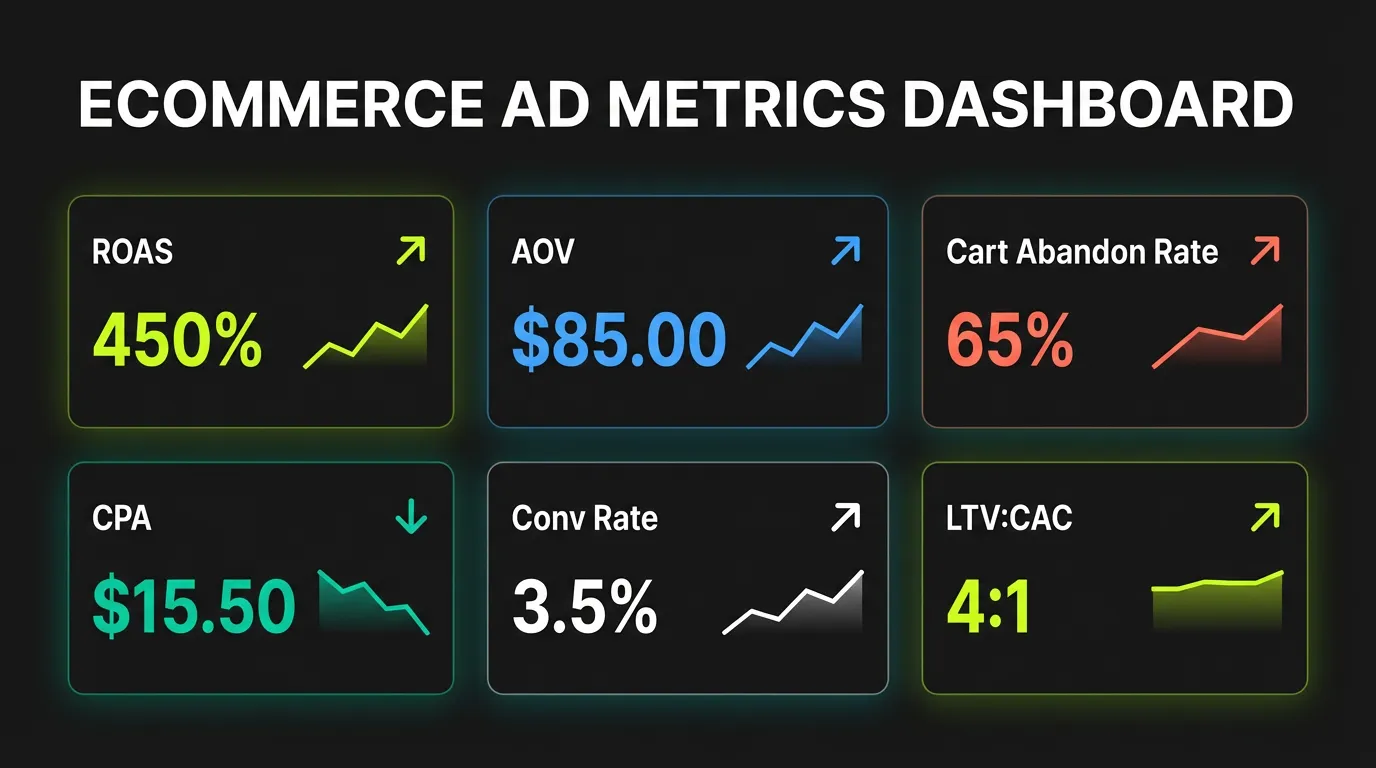
Key Metrics to Track
| Metric | Benchmark | Why It Matters |
|---|---|---|
| Blended CAC | Industry-specific | Total marketing cost / customers |
| MER (Marketing Efficiency Ratio) | 3-5x | Revenue / Total ad spend |
| ROAS by channel | Varies | Channel efficiency |
| LTV:CAC ratio | 3:1 minimum | Business sustainability |
| Contribution margin | 30%+ | True profitability |
Attribution Approach
Don't rely on platform reporting alone:
- Run incrementality tests quarterly
- Use post-purchase surveys for channel attribution
- Calculate blended metrics at business level
- Compare actual sales to platform-reported conversions
Budget Allocation Template
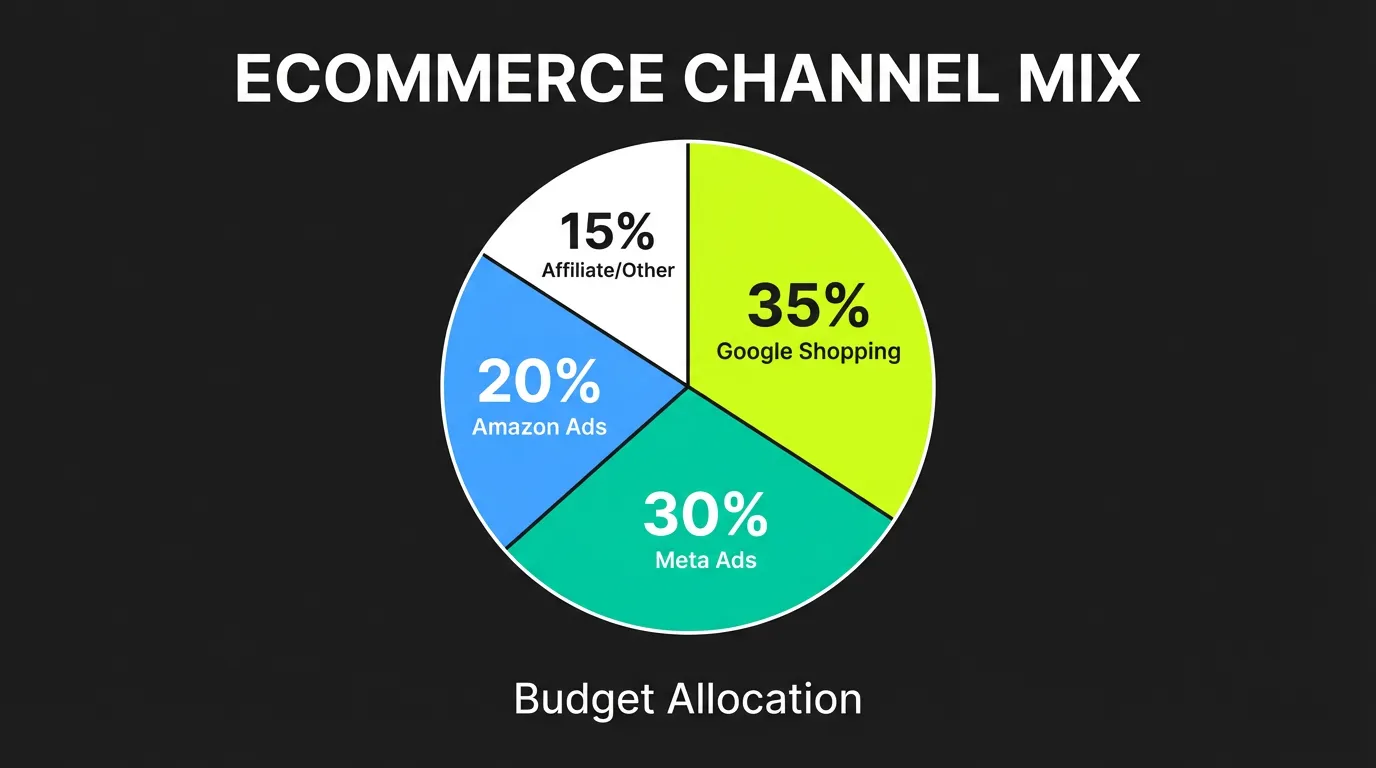
For a $50K/month e-commerce ad budget:
| Channel | Budget | Role |
|---|---|---|
| Meta (FB/IG) | $20K (40%) | Core acquisition and retargeting |
| $12.5K (25%) | High-intent capture | |
| TikTok | $7.5K (15%) | Awareness and social commerce |
| Amazon | $5K (10%) | Marketplace presence |
| Emerging | $5K (10%) | Testing new channels |
:::tip Start Conservative Begin with 70% in proven channels, 20% in growing channels, 10% in experiments. Shift based on performance data quarterly. :::
The Bottom Line
E-commerce advertising in 2026 requires:
- Platform diversification — Don't depend on single channel
- Funnel-aligned creative — Right message at right stage
- First-party data — Build your own competitive moat
- Efficiency focus — AOV, CVR, and LTV to offset rising CAC
- Constant testing — Creative velocity and channel experimentation
The brands winning in 2026 aren't necessarily spending more — they're spending smarter.
AdBid connects all your e-commerce advertising data for clearer insights. Stop switching between platforms. See the unified view.